






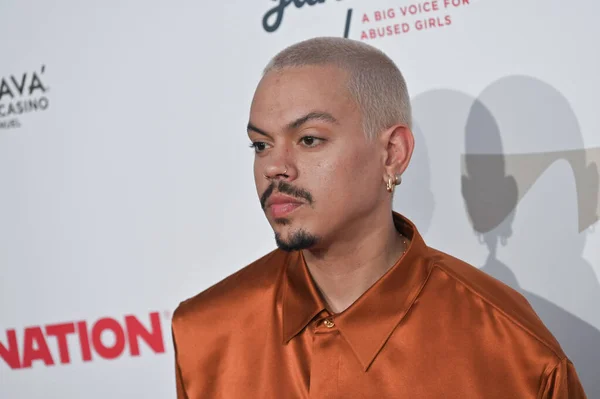
Evan Ross Unmasked: A Career Defined by Legacy, Reinvention, and Spotlight Moments
A Familiar Name, A Distinct Path
When Evan Ross stepped onto the stage of The Masked Singer as the mysterious Stingray, the reveal felt less like a surprise and more like a reaffirmation. Known both for his lineage—being the son of music icon Diana Ross—and his own evolving career, Ross once again demonstrated his ability to navigate entertainment’s shifting terrain.
- A Familiar Name, A Distinct Path
- The “Masked Singer” Moment: A Reveal Years in the Making
- A Career Shaped by Proximity to Greatness
- The Episode Context: Competition, Clues, and Eliminations
- Inside Season 14: Scale and Industry Impact
- Evan Ross Beyond the Mask: Identity and Evolution
- Cultural Significance: Why This Moment Matters
- What Comes Next for Evan Ross?
- Conclusion: More Than a Reveal
His unmasking during Season 14’s “Star Trek Night” episode on March 18, 2026, marked not just a television moment, but a cultural checkpoint—where legacy, talent, and personal identity converged.
The “Masked Singer” Moment: A Reveal Years in the Making
Ross’ participation in the show unfolded as a layered narrative, blending performance, nostalgia, and subtle personal storytelling. Performing under the Stingray costume, he delivered a series of songs that highlighted both vocal range and stylistic versatility:
-
“Stayin’ Alive” by the Bee Gees
-
“Momma Song” by Benson Boone
-
“Bad Habits” by Ed Sheeran
-
Final performance: “Starboy” by The Weeknd
The clues embedded in his performances were deliberate. One of the most telling hints—a plaque reading:

“I hereby give my child Stingray my endless love. Signed, Mother Supreme.”
—directly referenced his connection to Diana Ross, famously dubbed “Mother Supreme” during her time with The Supremes.
Ross himself reflected on the influence of his upbringing:



“I had a guiding light early in my life, and now my wife is my sun and my shining moon in my life.”
The panel, which included Robin Thicke, Ken Jeong, Jenny McCarthy-Wahlberg, and Rita Ora, ultimately identified him correctly before the official reveal.
A Career Shaped by Proximity to Greatness
Ross’ clue referencing Michael Jackson added another dimension to his story:
“I’ve been surrounded by a lot of amazing people since I was very young. Michael was one of them, but the best part about him is he always made me believe that everything is magic.”
This statement underscores a recurring theme in Ross’ career—early exposure to legendary figures, which shaped both his artistic sensibilities and his expectations of performance.
However, proximity to greatness often comes with its own pressures. For Ross, the challenge has been to balance inheritance with individuality—building a career that acknowledges his roots without being defined solely by them.

The Episode Context: Competition, Clues, and Eliminations
Season 14, Episode 10 of The Masked Singer featured a double elimination that removed both Stingray (Ross) and 14 Karat Carrot, later revealed as Greg Mathis.
Mathis offered his own revealing clue prior to unmasking:
“It’s ironic being on this side of a panel of judges, when I’m usually the one doing the judging.”
The themed episode leaned heavily into Star Trek imagery, with panelists appearing in character and performances aligned with the sci-fi motif. Following the eliminations, five contestants remained:
-
Pangolin
-
Galaxy Girl
-
Cat Witch
-
Pugcasso
-
Crane
The competition now moves toward its semi-final stage, scheduled to air on March 25.
Inside Season 14: Scale and Industry Impact
The broader scale of Season 14 reflects the show’s continued dominance in entertainment:
-
18 masked contestants participated
-
Combined achievements include:
-
94 million records sold
-
47 Teen Choice Award nominations
-
12 Emmy nominations
-
1 Academy Award nomination
-
1 Tony Award win
-
2 Hollywood Walk of Fame stars
-
Hosted by Nick Cannon, the show continues to evolve with new elements, including “America’s Insider,” featuring Kylie Cantrall, who provides behind-the-scenes clues while secretly competing as Cat Witch.
Thematically, the season has leaned into cross-franchise nostalgia, with episodes inspired by:
-
Star Trek
-
Clueless
-
Teenage Mutant Ninja Turtles
-
Twilight Saga
-
A tribute to Ozzy Osbourne
Evan Ross Beyond the Mask: Identity and Evolution
Ross’ appearance on the show reflects a broader pattern in his career—strategic reinvention through diverse platforms. From acting roles to music releases and now reality television, he has consistently repositioned himself within the entertainment ecosystem.
Unlike traditional career trajectories, Ross’ path is non-linear. It incorporates:
-
Legacy influence (Motown heritage)
-
Cross-genre artistic exploration
-
Television exposure as a means of reintroducing his brand
In this sense, The Masked Singer becomes more than a competition—it acts as a narrative device, allowing artists to reconnect with audiences under conditions that prioritize performance over identity.
Cultural Significance: Why This Moment Matters
Ross’ unmasking resonates beyond the show for several reasons:
1. Legacy Reframed
His identity as Diana Ross’ son is acknowledged but not dominant. Instead, the performance-first format shifts focus to talent and interpretation.
2. Nostalgia Meets Modern Media
References to figures like Michael Jackson and Motown-era influence connect multiple generations of entertainment.
3. Reality TV as Career Catalyst
Shows like The Masked Singer continue to function as platforms for rebranding, particularly for artists with established but evolving careers.
What Comes Next for Evan Ross?
While his journey on the show has ended, the timing suggests strategic positioning. As the entertainment industry continues to favor multi-platform visibility, appearances like this often precede new projects—whether in music, film, or television.
The semi-finals of The Masked Singer will proceed without him, but Ross exits with renewed visibility and a reinforced public narrative: an artist grounded in legacy, yet actively defining his own space.
Conclusion: More Than a Reveal
Evan Ross’ unmasking as Stingray was not merely a television twist—it was a moment that encapsulated years of artistic navigation. Through performance, storytelling, and carefully placed clues, he transformed a reality show appearance into a reflection of identity, influence, and continuity.
In an industry that often prioritizes reinvention, Ross’ approach remains measured: evolve, but remain rooted. That balance continues to define his career—and likely, its next chapter.
