






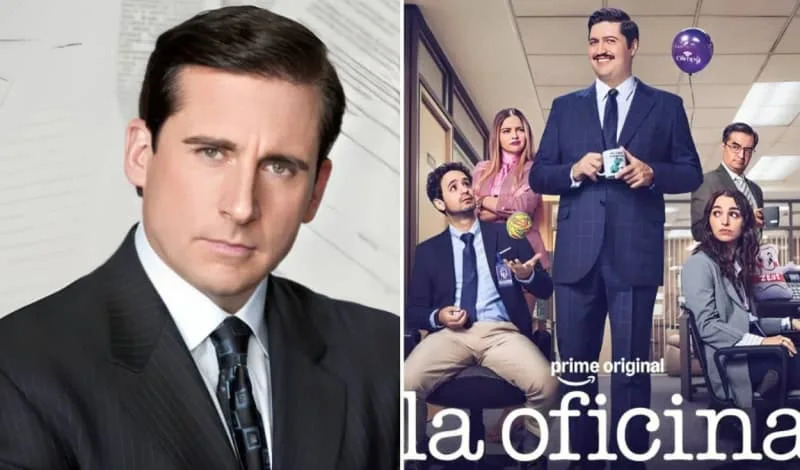
La Oficina: How Mexico Reimagined a Global Comedy Phenomenon
A Familiar Workplace, Rewritten for a Different Reality
When La Oficina debuted on Prime Video, it marked more than just another adaptation of a globally recognized format. It represented a deliberate shift in how international television concepts are localized—moving away from imitation and toward reinterpretation.
- A Familiar Workplace, Rewritten for a Different Reality
- Inside Olimpo: A Workplace That Feels Uncomfortably Real
- Improvisation as a Structural Tool
- When Fiction Mirrors Reality—and Vice Versa
- Production Scale and Platform Strategy
- Why La Oficina Works: A Cultural Analysis
- The Broader Implications for Global Content
- Conclusion: A Comedy That Understands Its Audience
Directed by Gaz Alazraki and inspired by the original concept created by Ricky Gervais and Stephen Merchant, the Mexican version does not attempt to replicate the tone of its UK or US predecessors. Instead, it constructs its identity around the cultural, bureaucratic, and social absurdities that define everyday office life in Mexico.
The result is a series that feels less like an adaptation and more like a translation of experience.
Inside Olimpo: A Workplace That Feels Uncomfortably Real
Set in Aguascalientes, the series unfolds within the fictional soap company Olimpo—a workplace that mirrors the routines and dysfunctions familiar to anyone who has navigated bureaucratic environments.


At the center is Jerónimo Ponce III, played by Fernando Bonilla. As a regional manager and heir to the company, Jerónimo embodies a leadership paradox: a boss desperate to be liked but consistently failing to earn genuine respect.
Around him, the office becomes a microcosm of workplace archetypes:



-
Sales executives entangled in petty rivalries
-
Customer service staff surviving monotony through sarcasm
-
An IT worker limited to basic technical fixes
-
A secretary who quietly holds institutional power
-
A human resources officer enforcing rules no one follows
This ensemble—featuring actors such as Edgar Villa, Fabrizio Santini, Elena del Río, Armando Espitia, Alejandra Ley, Alexa Zuart, Erika de la Rosa, and Guillermo Quintanilla—creates a dynamic ecosystem where the humor emerges organically from interaction rather than scripted punchlines.
Improvisation as a Structural Tool
One of the defining features of La Oficina is its reliance on improvisation. Rather than tightly controlled dialogue, the production allows actors to shape scenes in real time, reinforcing authenticity and unpredictability.
For Bonilla, whose background includes theater and discomfort-driven comedy, this approach is central to the show’s effectiveness. It enables performances that feel less performed and more observed—aligning closely with the documentary-style tone that has defined the franchise globally.
When Fiction Mirrors Reality—and Vice Versa
The cultural relevance of La Oficina extends beyond its narrative. Its reception has been amplified by real-world parallels that blur the line between satire and reality.



Following the show’s success, Bonilla took to X (formerly Twitter) with a message that encapsulates this dynamic:
“Hola, a todas las personas que han estado tuiteando que les gustó #LaOficina”
He followed it with a satirical remark referencing clientelist political practices:
“les recuerdo que hoy las esperamos afuera del metro Popotla para darles su torta, su Frutsi, un bote de pintura y una tarjeta Monex con 140 pesos. Saludos”
The post deliberately echoed familiar electoral imagery, reinforcing the show’s thematic overlap with political culture.
Bonilla further commented on a viral moment involving journalist Carlos Pozos—also known as Lord Molécula—during a conference led by Clara Brugada. Referring to the incident, Bonilla wrote:
“La vida imita al arte”
“Lord Molécula es una extraña combinación entre Jero y Aniv”
The incident itself drew controversy, prompting Pozos to issue a public apology:
“Ofrezco una disculpa sincera a las compañeras reporteras y a todas las mujeres que se hayan sentido ofendidas por el comentario que realicé durante la conferencia de prensa de la Jefa de Gobierno de la Ciudad de México”
This interplay between fiction and reality has strengthened the show’s resonance, positioning it not just as entertainment but as social commentary.
Production Scale and Platform Strategy
Produced by Amazon MGM Studios and Máquina Vega, La Oficina launched its first season with eight episodes, all available simultaneously on Prime Video.
The decision to release the entire season aligns with contemporary streaming strategies, allowing audiences to engage with the narrative in a compressed timeframe—an approach particularly effective for comedy series driven by character dynamics.
As of now, there is no official confirmation regarding a second season. However, the strong reception and cultural traction suggest that continuation remains a plausible outcome.
Why La Oficina Works: A Cultural Analysis
Localization Over Replication
Unlike previous adaptations of global formats, La Oficina prioritizes cultural specificity. Its humor is rooted in recognizable social patterns—bureaucracy, hierarchy, and informal power structures—rather than universal comedic tropes.
Satire with Context
The series does not rely on exaggerated absurdity alone. Instead, it amplifies realities that already exist, making the humor sharper and more grounded.
Performance-Driven Narrative
The emphasis on improvisation shifts the focus from plot to interaction. Characters evolve through behavior rather than exposition, reinforcing the documentary-style aesthetic.
The Broader Implications for Global Content
La Oficina reflects a broader trend in the entertainment industry: the move toward culturally adaptive storytelling rather than direct replication.
For streaming platforms, this model offers clear advantages:
-
Increased regional relevance
-
Stronger audience identification
-
Higher potential for viral cultural moments
For creators, it opens space to reinterpret global formats through local lenses, preserving structure while redefining substance.
Conclusion: A Comedy That Understands Its Audience
La Oficina succeeds because it understands that the modern workplace—especially in bureaucratic contexts—is inherently theatrical. By capturing that reality with precision and restraint, the series transforms everyday frustration into narrative material.
It is not simply a Mexican version of a known format. It is a reconfiguration of that format, shaped by cultural nuance and contemporary context.
In doing so, it demonstrates that the most effective adaptations are not those that imitate—but those that translate.