






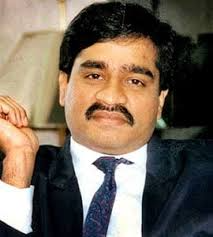
Dawood Ibrahim: Anatomy of a Global Crime Network
Introduction: The Enduring Shadow of an Elusive Figure
Few names in the history of organized crime carry the same weight and notoriety as Dawood Ibrahim. For decades, he has remained one of the most wanted fugitives in the world—an individual whose influence has extended far beyond the underworld, intersecting with geopolitics, terrorism, and global finance.
- Introduction: The Enduring Shadow of an Elusive Figure
- Origins: From Mumbai Streets to Criminal Enterprise
- The Rise of D-Company: Structure and Expansion
- The 1993 Mumbai Blasts: A Turning Point
- International Pursuit and Alleged Safe Havens
- Financial Networks: The Engine Behind Influence
- Cultural and Media Influence
- Public Perception and Controversy
- The Strategic Implications: Organized Crime in a Globalized World
- Future Outlook: Decline, Continuity, or Transformation?
- Conclusion: A Legacy That Redefined Organized Crime
This analytical feature examines the rise of Dawood Ibrahim, the evolution of his criminal empire, and the enduring implications of his operations on international security and organized crime dynamics.
Origins: From Mumbai Streets to Criminal Enterprise
Dawood Ibrahim’s story begins in Mumbai (formerly Bombay), where he was born into a modest family. His father served as a police constable, a detail that adds a stark contrast to his eventual trajectory.
In the late 1970s and early 1980s, Mumbai’s underworld was fragmented, dominated by local gangs involved in smuggling, extortion, and black-market trade. Dawood entered this ecosystem at a time when economic restrictions in India had created lucrative opportunities for illegal imports, particularly gold and electronics.


Early Catalysts
-
Exposure to street-level crime and smuggling networks
-
Strategic alliances with existing gang leaders
-
A sharp understanding of logistics and enforcement gaps
By the mid-1980s, Dawood had begun consolidating power, gradually forming what would later become one of the most sophisticated criminal organizations in Asia.
The Rise of D-Company: Structure and Expansion
Dawood Ibrahim’s criminal network, commonly referred to as D-Company, marked a transition from localized gang activity to a transnational crime syndicate.



Key Features of D-Company
-
Centralized leadership with decentralized operations
-
Diversification into narcotics, extortion, arms trafficking, and real estate
-
Global reach, with operations spanning the Middle East, Africa, and Europe
Unlike traditional gangs, D-Company operated with corporate-like efficiency. It leveraged financial networks, informal banking systems (such as hawala), and political connections to maintain resilience.
The 1993 Mumbai Blasts: A Turning Point
The defining moment in Dawood Ibrahim’s global notoriety came with the 1993 Mumbai serial bombings, one of the deadliest terrorist attacks in India’s history.
Impact of the Attacks
-
Hundreds of fatalities and widespread destruction
-
A shift in Dawood’s profile—from crime lord to alleged terrorist collaborator
-
International attention and intensified law enforcement efforts
Authorities accused Dawood and his associates of orchestrating the attacks in retaliation for communal riots. This marked a critical transition: organized crime had merged with ideological violence.
International Pursuit and Alleged Safe Havens
Following the 1993 attacks, Dawood Ibrahim fled India and reportedly relocated to multiple countries over time.



Allegations and Diplomatic Tensions
-
India has long claimed that Dawood resides in Pakistan, particularly in Karachi
-
Pakistan has repeatedly denied these claims
-
Interpol and various international agencies have issued notices, yet no confirmed capture has occurred
This geopolitical dimension has complicated efforts to apprehend him, turning his case into a subject of diplomatic friction.
Financial Networks: The Engine Behind Influence
One of the most critical aspects of Dawood Ibrahim’s longevity is his financial infrastructure.
Revenue Streams Attributed to D-Company
-
Drug trafficking routes across Asia and Africa
-
Real estate investments in key urban centers
-
Money laundering through shell companies and informal channels
These systems allowed D-Company to function as both a criminal enterprise and a shadow financial network, capable of adapting to enforcement pressure.
Cultural and Media Influence
Dawood Ibrahim’s story has permeated popular culture, particularly in Indian cinema and literature.
Representation in Media
-
Films and series loosely inspired by his life and operations
-
Portrayals that oscillate between villainy and complex anti-hero narratives
-
Continued public fascination with his elusive status
This cultural presence has contributed to the mythologizing of his persona, even as authorities continue to treat him as a high-priority target.
Public Perception and Controversy
Public opinion on Dawood Ibrahim is sharply divided, though predominantly negative due to his association with violence and terrorism.
Key Themes in Public Discourse
-
Accountability for the 1993 attacks
-
Questions about international cooperation in his capture
-
Speculation regarding his current status and health
The lack of definitive information has fueled ongoing speculation, reinforcing his image as an almost untouchable figure.
The Strategic Implications: Organized Crime in a Globalized World
Dawood Ibrahim’s operations highlight broader trends in modern organized crime:
Structural Shifts
-
Integration of crime with global financial systems
-
Increased overlap between criminal networks and political interests
-
Use of technology and informal banking to evade detection
His case demonstrates how criminal organizations can evolve into transnational entities with significant geopolitical implications.
Future Outlook: Decline, Continuity, or Transformation?
Despite decades of pursuit, Dawood Ibrahim’s network has shown resilience.
Possible Scenarios
-
Gradual decline due to age and internal fragmentation
-
Continuation under successors, maintaining the D-Company brand
-
Transformation into decentralized cells, reducing reliance on a central figure
Regardless of his personal status, the systems he built are likely to outlast him.
Conclusion: A Legacy That Redefined Organized Crime
Dawood Ibrahim remains a defining figure in the study of organized crime. His journey—from a local gangster in Mumbai to the alleged head of a global criminal network—illustrates how illicit enterprises can scale across borders and influence international affairs.
His story is not just about one individual, but about the evolution of crime in an interconnected world—where finance, politics, and violence increasingly intersect.
