





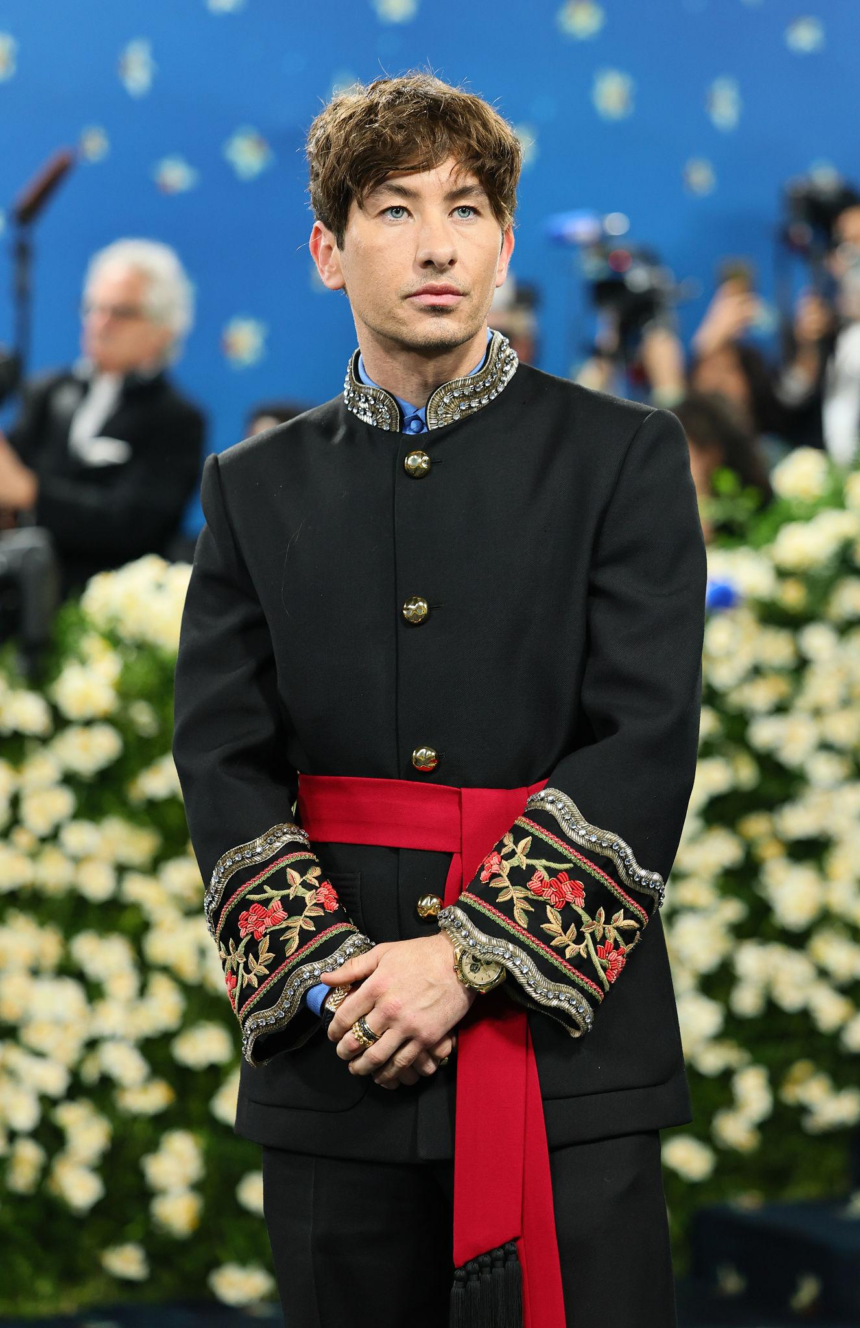
Barry Keoghan’s Quiet Retreat: When Stardom Meets the Weight of Public Scrutiny
A Sudden Step Back from the Spotlight
For an actor whose rise has been defined by intensity, unpredictability, and raw emotional depth, Barry Keoghan has recently taken an unexpected turn—one marked not by new roles or accolades, but by withdrawal.
- A Sudden Step Back from the Spotlight
- The Accumulation of Online Criticism
- When Criticism Crosses Boundaries
- A Father’s Concern: The Next Generation
- A Pattern of Public Response
- The Broader Context: Fame in the Digital Age
- Artistic Impact: When Criticism Affects Creativity
- Industry Implications: Responsibility and Reform
- What Comes Next for Barry Keoghan?
- Conclusion: A Personal Story with Industry-Wide Resonance
In a candid revelation, Keoghan confirmed that he has stepped back from acting and public appearances, citing the growing toll of online hostility. The decision signals a rare moment of pause in a career that has otherwise been accelerating steadily through Hollywood’s ranks.
What makes this development particularly significant is not just the personal dimension, but what it reveals about the evolving pressures of fame in the digital era.
The Accumulation of Online Criticism
“Confidence Knocked Out”
Keoghan did not frame his retreat as a temporary break for creative recalibration. Instead, his explanation points to something more personal and disruptive: sustained online criticism, particularly targeting his appearance.
He acknowledged that the intensity of negative commentary has altered his behavior in tangible ways. Public events, once integral to an actor’s career, have become sources of discomfort. Even everyday activities—simply going outside—have been affected.
The phrase that stands out most is his admission that his confidence has effectively been “knocked out.” It reflects not isolated criticism, but a cumulative erosion of self-assurance.

When Criticism Crosses Boundaries
From Digital Abuse to Real-World Intrusion
The issue extends beyond online platforms. According to Keoghan, the hostility has, at times, moved into physical spaces—raising more serious concerns.
He revealed that critics crossed personal boundaries by approaching:
- His grandmother’s home
- The residence where his young son lives
This escalation from online commentary to real-world intrusion marks a critical shift. It transforms criticism into harassment, blurring the line between public figure and private individual.
Such incidents reinforce a broader concern: the inability of public figures to maintain a protected personal sphere in an era of constant connectivity.
A Father’s Concern: The Next Generation
Protecting Brando from the Fallout
Beyond his own experience, Keoghan’s concerns are deeply rooted in his role as a father. His three-year-old son, Brando, represents the future—and a potential future exposure to the same scrutiny.
Keoghan has openly questioned how the current wave of online abuse might affect his child as he grows older. The fear is not hypothetical. In a digital environment where content persists indefinitely, today’s commentary can easily become tomorrow’s inherited burden.
This adds another layer to his decision: it is not solely about personal well-being, but about shielding his family from long-term psychological and social impact.
A Pattern of Public Response
Revisiting His 2024 Statement
This is not the first time Keoghan has addressed online hostility. In December 2024, he issued a direct appeal for respect, condemning what he described as:
“absolute lies, hatred, disgusting commentary”
At the time, his statement also highlighted criticism directed at his character and parenting—areas that extend far beyond professional critique.
The recurrence of these themes suggests that the problem has not subsided, but intensified, ultimately leading to his current withdrawal.
The Broader Context: Fame in the Digital Age
The Cost of Visibility
Keoghan’s experience reflects a wider industry pattern. The relationship between celebrities and audiences has shifted dramatically, driven by social media’s immediacy and reach.
Key dynamics shaping this environment include:
- Permanent visibility: Public figures are constantly accessible and scrutinized
- Unfiltered commentary: Platforms enable direct, often anonymous criticism
- Blurred boundaries: The distinction between professional work and personal life continues to erode
For actors like Keoghan—whose work often relies on emotional vulnerability—this environment can be particularly destabilizing.
Artistic Impact: When Criticism Affects Creativity
A Threat to Performance
One of Keoghan’s most striking admissions is that the online hate is beginning to affect his art.
For an actor, confidence is not merely a personal attribute—it is a functional requirement. Performance depends on risk-taking, immersion, and emotional openness. Persistent negativity can disrupt all three.
If left unchecked, such conditions could lead to:
- Reduced creative output
- Hesitation in taking challenging roles
- Long-term disengagement from the industry
This raises a critical question for the entertainment sector: how can creative talent be sustained in an environment that increasingly undermines it?
Industry Implications: Responsibility and Reform
Where Accountability Lies
Keoghan’s situation underscores the need for systemic responses, not just individual resilience.
Potential areas of focus include:
- Platform moderation: Stronger enforcement against harassment
- Industry support systems: Mental health resources for performers
- Public discourse standards: Encouraging responsible engagement from audiences
While none of these solutions are simple, the absence of intervention risks normalizing the very conditions driving artists away.
What Comes Next for Barry Keoghan?
A Pause, Not a Conclusion
Keoghan’s withdrawal does not necessarily signal the end of his career. Rather, it appears to be a protective step—an attempt to regain control over both his personal life and creative identity.
Future developments may depend on:
- Whether the intensity of online criticism diminishes
- The effectiveness of support systems around him
- His ability to rebuild confidence away from public pressure
For now, the focus remains on recovery rather than reinvention.
Conclusion: A Personal Story with Industry-Wide Resonance
Barry Keoghan’s decision to step back from acting is more than a personal milestone—it is a case study in the evolving challenges of modern fame.
His experience highlights a fundamental tension: the same digital platforms that amplify success can also magnify vulnerability. When criticism escalates into harassment, the consequences extend beyond reputation, affecting mental health, family life, and artistic expression.
As the entertainment industry continues to navigate this landscape, Keoghan’s story serves as a reminder that behind every public persona is a private individual—one whose limits, once reached, can reshape an entire career trajectory.