





Rashed Al-Majed: A Sudden Silence at the Peak of Anticipation
Inside the Unexpected Cancellation That Stunned Fans
Introduction: When Celebration Turned to Concern
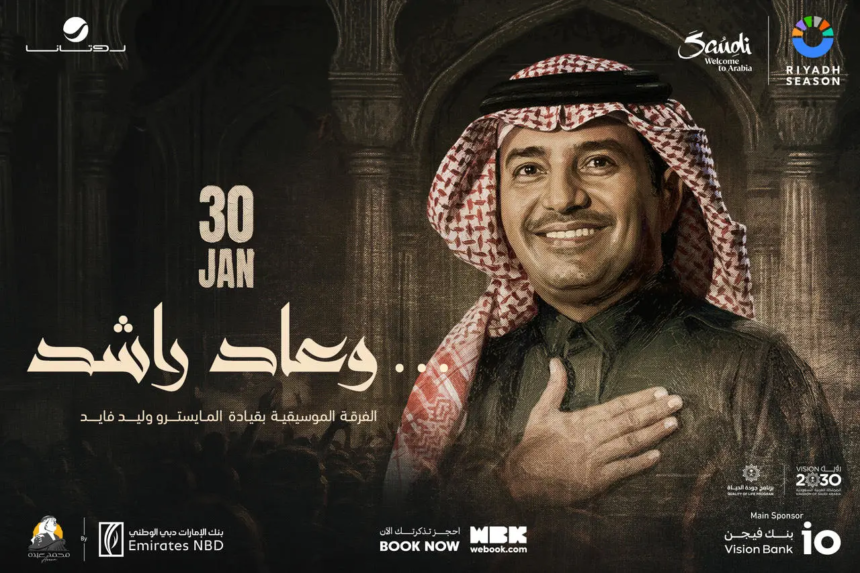
In what was expected to be one of the standout musical moments of the Eid season, the sudden cancellation of a highly anticipated concert by Rashed Al-Majed has shifted public attention from celebration to concern. Scheduled for Monday, March 23, 2026, the performance was part of major Eid festivities in Saudi Arabia—an event that had already generated strong audience demand and extensive preparation behind the scenes.
- Inside the Unexpected Cancellation That Stunned Fans
- The Announcement: A Decision Framed by Health Priorities
- What Happened Behind the Scenes
- Audience Impact: Refunds and Response
- Cultural Context: Why This Concert Mattered
- Industry Implications: The Cost of Last-Minute Disruptions
- A Pattern of Momentum Interrupted
- Public Reaction: Sympathy Over Speculation
- What Comes Next: Uncertainty and Anticipation
- Conclusion: A Pause, Not an End
Instead, the announcement came abruptly: the concert would not proceed. The reason—an emergency health condition affecting the artist—immediately raised questions, sparked reactions across cultural circles, and highlighted the fragile intersection between live entertainment and human unpredictability.
The Announcement: A Decision Framed by Health Priorities
The cancellation was formally confirmed by event organizers and stakeholders, including Rotana Audio Visual Company, who issued a clear and concise explanation.
According to the official statement:
“Due to artist Rashed Al-Majed suffering from an emergency health condition, it has been decided to cancel his performance at the Eid concert, which was scheduled to take place tomorrow, Monday, March 23, as part of the Eid celebrations.”
The language of the announcement reflected two priorities: safeguarding the artist’s health and maintaining transparency with the public. Organizers emphasized that the decision was made “out of concern for the artist’s safety,” while also extending wishes for a “speedy recovery and return to his audience soon.”
What Happened Behind the Scenes
While the public learned of the cancellation in a single announcement, developments behind the scenes suggest a far more dramatic sequence of events.


Reports indicate that the situation escalated rapidly. Rashed Al-Majed was expected to travel from London to Riyadh ahead of the performance. However, emergency health circumstances prevented him from arriving in Riyadh from the British capital, London, effectively halting the event at the final stage.
This disruption came at a critical moment:
- The orchestra, led by Maestro Walid Fayad, had already completed final rehearsals.
- Technical teams had finalized stage design, broadcasting arrangements, and logistics.
- Performers and crew were reportedly already at the venue preparing for the final run-through.
The sudden reversal forced organizers to halt operations and instruct participants to return to their accommodations—an unusual scenario for a concert that had reached near-execution readiness.
Audience Impact: Refunds and Response
From a logistical standpoint, organizers moved quickly to manage the consequences for ticket holders.



The process was structured to eliminate friction:
What the refund process achieves
It ensures immediate financial reassurance for attendees while minimizing administrative burden, preserving trust in event organizers and digital ticketing systems.
Key details:
- Ticket values are automatically refunded
- Refunds are processed through electronic wallets linked to user accounts
- No manual action is required from buyers
The use of the WeBook application for automated refunds reflects a broader shift toward integrated digital event management systems in the region, where efficiency and user experience are increasingly prioritized.
Cultural Context: Why This Concert Mattered
Rashed Al-Majed is not merely another performer on the regional music circuit. With a career spanning decades, he is widely regarded as one of the defining voices of contemporary Gulf music.
His concerts—particularly those tied to major occasions like Eid—serve a broader cultural function:
- They anchor national celebrations in shared artistic experiences
- They attract multi-generational audiences
- They reinforce the role of live music in public cultural life
The cancellation therefore carries weight beyond a single event. It interrupts a moment of cultural continuity and highlights the reliance of large-scale entertainment ecosystems on individual performers.
Industry Implications: The Cost of Last-Minute Disruptions
From an industry perspective, the incident underscores several structural realities:
1. High dependency on headline artists
Major events are often built around a single performer, creating concentrated risk.
2. Complex logistical chains
Concerts at this scale involve synchronized operations—travel, rehearsal schedules, technical setup, and broadcast coordination—making late-stage disruptions particularly costly.
3. Reputation management
How organizers respond—especially in terms of communication and refunds—can influence public trust and future attendance.
In this case, the rapid issuance of refunds and clear communication likely mitigated reputational damage.
A Pattern of Momentum Interrupted
The cancellation is particularly notable given that Rashed Al-Majed had recently performed in Bahrain just weeks earlier. That appearance had reinforced his continued relevance and active presence in the regional music scene.
This context makes the sudden health-related interruption more striking: it disrupts not only a single event but a broader phase of active engagement with audiences.
Public Reaction: Sympathy Over Speculation
Unlike controversies driven by logistical failures or organizational missteps, this incident has been met largely with understanding.
The absence of detailed information about the nature of the illness has not significantly fueled speculation. Instead, public sentiment has centered on:
- Well-wishes for recovery
- Appreciation for transparency
- Anticipation of the artist’s return
This response reflects the longstanding relationship between Rashed Al-Majed and his audience—a dynamic built over years of consistent output and public presence.
What Comes Next: Uncertainty and Anticipation
At present, no official timeline has been provided for rescheduling the concert or for the artist’s return to live performances. This creates a short-term period of uncertainty.
However, several likely developments can be anticipated:
- A potential rescheduling once the artist recovers
- Continued reliance on digital communication channels for updates
- Sustained audience interest, particularly given the abrupt nature of the cancellation
In the broader sense, the incident reinforces a recurring theme in live entertainment: even the most meticulously planned events remain vulnerable to unforeseen human factors.
Conclusion: A Pause, Not an End
The sudden cancellation of Rashed Al-Majed’s Eid concert serves as a reminder that behind every large-scale cultural event lies a network of dependencies—none more critical than the health and availability of the artist at its center.
While the immediate outcome was disappointment, the response from organizers and audiences suggests resilience within the system. Efficient refund mechanisms, clear communication, and widespread goodwill have collectively reframed the situation.
For now, the stage remains set—but silent. And when Rashed Al-Majed returns, the anticipation is likely to be even greater than before.