







Truth Social in the Spotlight: Politics, Satire, and the Power of Platform
Introduction: A Social Network at the Center of Global Conversation
In an era where digital platforms increasingly shape political narratives, Truth Social has emerged as more than just another social media app. It has become a stage where geopolitics, media, and culture intersect—often in unpredictable ways.
- Introduction: A Social Network at the Center of Global Conversation
- From Platform to Political Tool
- The Viral Moment: Satire Meets Statecraft
- Context: A Strained Political Relationship
- Truth Social as a Narrative Amplifier
- Entertainment, Politics, and the Blurring Lines
- Strategic Silence: The Power of No Caption
- Broader Implications for Media and Politics
- The Future of Truth Social
- Conclusion: A Platform Redefining Political Expression
A recent moment underscores this reality. US President Donald Trump used Truth Social to share a satirical video mocking UK Prime Minister Keir Starmer, pulling a comedy sketch into the heart of international political discourse. The incident highlights not only the platform’s growing influence but also its role in amplifying narratives that extend beyond traditional political communication.
This article examines how Truth Social operates within today’s media ecosystem, using this latest episode as a lens to understand its broader impact.
From Platform to Political Tool
Truth Social was launched as an alternative social media network positioned around free speech principles. Its core appeal lies in its direct, unfiltered communication style—particularly for political figures seeking to bypass traditional media channels.
The platform gained prominence largely through its association with Donald Trump, who uses it as a primary outlet for statements, commentary, and, increasingly, cultural content.
Unlike conventional platforms that often moderate political messaging heavily, Truth Social’s structure allows high-profile users to engage audiences with minimal mediation. This creates a space where political messaging, personal commentary, and entertainment frequently blend.

The Viral Moment: Satire Meets Statecraft
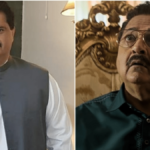
The latest example of Truth Social’s influence came when Donald Trump reposted a comedy sketch from the debut episode of the UK version of Saturday Night Live.
The skit depicted a fictionalized version of Keir Starmer inside 10 Downing Street, visibly anxious about receiving a phone call from the US president. In the scene, Starmer—portrayed by George Fouracres—asks:
“What if Donald shouts at me?”
The comedic narrative escalates as the character hangs up on Trump, referring to him as a “scary, scary, wonderful president,” while attempting to manage the diplomatic tension surrounding military decisions in the Strait of Hormuz.
Notably, Trump shared the video on Truth Social without any accompanying comment. The absence of context allowed the content to speak for itself—effectively turning satire into a political signal.



Context: A Strained Political Relationship
The repost does not exist in isolation. It reflects an ongoing tension between the US and UK leadership, particularly in the context of the Middle East conflict.
Trump has repeatedly criticized Starmer’s approach to the crisis, especially his reluctance to allow US warplanes to use UK bases for strikes against Iran. His remarks have been direct and pointed:
“This is not Winston Churchill that we’re dealing with.”
“I’m disappointed with Keir.”
“I like him, I think he’s a nice man, but I’m disappointed.”
By sharing a comedic portrayal that reinforces this narrative, Trump effectively merges entertainment with political messaging—leveraging humor to underscore criticism.
Truth Social as a Narrative Amplifier
This episode illustrates a key function of Truth Social: amplification without interpretation.
Unlike traditional media, which contextualizes and analyzes events, Truth Social allows users—particularly influential ones—to distribute content in its raw form. The meaning is left open, shaped by audience perception rather than editorial framing.
In this case, a comedy sketch becomes:
- A critique of leadership dynamics
- A commentary on international diplomacy
- A reflection of personal political tensions
The platform’s design enables such multi-layered interpretations, increasing the reach and impact of even seemingly lighthearted content.
Entertainment, Politics, and the Blurring Lines
The involvement of Saturday Night Live UK adds another dimension to the story. The show itself represents a cultural institution attempting to adapt an American format for a British audience.
Its debut episode, which attracted 226,000 viewers and a 3.2% audience share, received mixed but generally positive reviews. Critics noted its willingness to “push the envelope,” even if not all jokes landed effectively.
However, the moment the sketch was reposted on Truth Social, it transcended its original purpose. What began as entertainment became part of a global political conversation.
This shift highlights a broader trend: the erosion of boundaries between media genres. Comedy, news, and political messaging increasingly coexist within the same digital spaces.
Strategic Silence: The Power of No Caption
One of the most notable aspects of Trump’s post is what it lacks—any written commentary.
This strategic silence serves several purposes:
- It avoids direct diplomatic escalation
- It allows plausible deniability
- It encourages audience interpretation and engagement
By not framing the content explicitly, Trump enables supporters and critics alike to project their own meanings onto the video, increasing its viral potential.
Broader Implications for Media and Politics
The incident raises several important questions about the role of platforms like Truth Social in shaping public discourse:
1. Who Controls the Narrative?
Without editorial mediation, high-profile users can set narratives directly, bypassing traditional gatekeepers.
2. What Counts as Political Communication?
A comedy sketch, when shared by a head of state, can function as a political statement.
3. How Do Audiences Interpret Content?
The absence of context places greater responsibility on audiences to interpret meaning—often leading to polarized reactions.
The Future of Truth Social
As Truth Social continues to evolve, its role in global communication is likely to expand. Several trends are already emerging:
- Increased use by political figures seeking direct audience engagement
- Greater integration of cultural content into political messaging
- Heightened scrutiny over its influence on public opinion
The platform’s trajectory suggests it will remain a significant player in the intersection of media, politics, and technology.
Conclusion: A Platform Redefining Political Expression
The reposting of a satirical sketch may appear minor on the surface, but it encapsulates a larger shift in how political communication operates.
Truth Social is not merely a platform for statements—it is a space where narratives are constructed, contested, and amplified in real time. By enabling direct, unfiltered sharing, it transforms content—whether serious or comedic—into tools of influence.
In this environment, even a single video can carry diplomatic weight, demonstrating that in today’s digital landscape, the line between entertainment and politics is no longer clearly defined.