






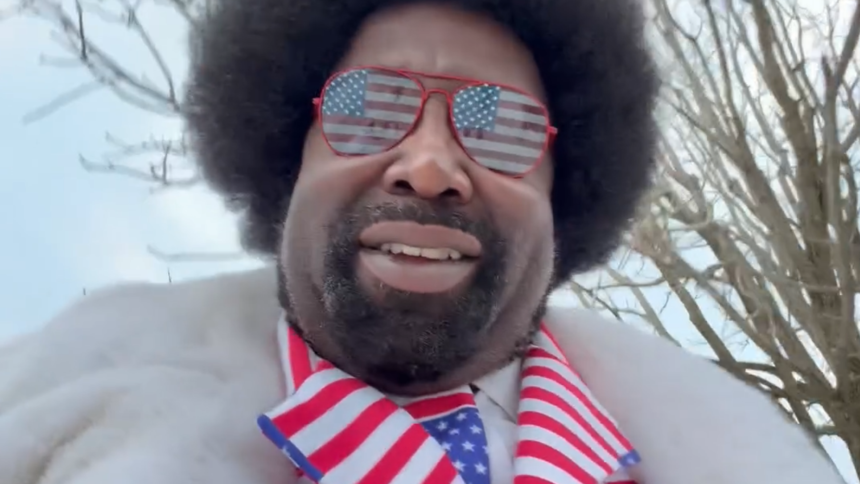
Afroman, Free Speech, and a Viral Raid: A Cultural Flashpoint in Court
When Music Becomes Evidence
The courtroom in Adams County, Ohio, has become an unlikely stage for one of the most unusual cultural and legal clashes in recent years. At the center of it is Afroman—the artist best known for the early 2000s hit Because I Got High—now entangled in a high-profile civil trial that raises deeper questions about satire, free speech, and the power of viral media.
- When Music Becomes Evidence
- The 2022 Raid That Sparked It All
- From Surveillance Footage to Viral Music
- The Lawsuit: Defamation, Privacy, and Emotional Distress
- A Courtroom Charged with Emotion
- The Defense: A Case About Free Speech
- The Prosecution’s Position: Real Harm in a Digital Age
- Cultural Significance: When Viral Content Meets the Law
- What Comes Next?
- Conclusion: A Modern Legal Test Case
What began as a police raid in August 2022 has evolved into a case that blurs the line between art and alleged defamation. The dispute is no longer just about a search warrant—it is about who controls the narrative when real-life events become content.
The 2022 Raid That Sparked It All
The origins of the case trace back to an August 21, 2022, police operation at Afroman’s home in Ohio. Acting on a warrant citing suspected drug trafficking and kidnapping, law enforcement officers conducted a search of the property.
The result: no evidence of criminal activity and no charges filed.
However, the raid itself was far from inconsequential. According to Foreman, deputies broke down a front gate, forced entry into his home, and caused what he described as “significant damage.” Surveillance cameras installed around the property captured the entire incident—from officers entering with rifles drawn to movements inside the house.
Foreman was not even present during the raid. He later stated he was in Chicago when neighbors alerted him that “the police were all over my property.”


From Surveillance Footage to Viral Music
Instead of pursuing a traditional legal-only route, Afroman took a different approach: he turned the footage into music.
His song “Lemon Pound Cake”—named after an officer’s remark about a cake seen in his kitchen during the raid—used real surveillance clips from the incident. The accompanying video quickly gained traction, surpassing 3 million views since its release in December 2022.
The artist was explicit about his intent. The project, he said, was meant to generate income to cover damages caused by the raid.
“All of this is their fault,” Foreman testified in court.
“If they hadn’t wrongly raided my house, there would be no lawsuit… and there would be no songs … my money would still be intact.”



But what Afroman framed as creative expression and financial recovery, law enforcement officers viewed very differently.
The Lawsuit: Defamation, Privacy, and Emotional Distress
A group of Adams County Sheriff’s Office personnel—four deputies, two sergeants, and a detective—filed a civil lawsuit against the rapper. Their claims include:
-
Defamation
-
Violation of constitutional privacy rights
-
Intentional infliction of emotional distress
Their argument centers on the use of their likenesses in the music video without consent and the subsequent online attention that followed.
Court filings and testimony indicate that some officers felt publicly humiliated and reported receiving threats after the video went viral.
A Courtroom Charged with Emotion
The trial itself has been marked by tension and unexpected emotional moments.
One of the most notable incidents occurred when Adams County Deputy Sheriff Lisa Phillips took the stand. Called in to assist with the raid despite being off duty, she became a recurring subject in Afroman’s satirical content.
During the proceedings, a 13-minute music video featuring suggestive innuendos directed at Phillips was played in court. She broke down in tears while it was shown.
Another officer, Sgt. Randy Walters, testified about harassment he claimed to have experienced. When asked whether he had been called a “son of a bitch,” he confirmed the insult—but noted it had not been posted online at that time.
Hours later, after court adjourned, Afroman uploaded a video to social media in which he sang:
“Randy Walter’s a son of a bitch.”
The incident underscored the central tension of the case: where does artistic expression end, and harassment begin?
The Defense: A Case About Free Speech
Afroman’s legal team has framed the lawsuit as a constitutional issue rather than a personal dispute.
Their argument is clear: the rapper’s work is protected under free speech laws.
From this perspective, Lemon Pound Cake is not merely a song—it is commentary. It documents a real event, critiques law enforcement actions, and uses satire as a form of expression.
The defense maintains that public officials performing official duties—especially in a situation involving a warrant-based search—cannot reasonably expect complete privacy.
The Prosecution’s Position: Real Harm in a Digital Age
For the officers involved, the issue is less abstract.
They argue that the viral spread of the video has had tangible consequences. Being featured in a widely viewed music video—especially one framed humorously or critically—exposed them to ridicule, reputational damage, and personal distress.
The case highlights a broader challenge in the digital era: once content enters the public domain, its reach and impact can be difficult to control.
Cultural Significance: When Viral Content Meets the Law
This trial is not just about one artist or one police department. It reflects a larger shift in how real-world events are documented, interpreted, and monetized.
Several key themes emerge:
1. The Power of Personal Surveillance
With widespread access to home security systems, individuals can now document interactions with authorities in unprecedented detail.
2. Content as Currency
Afroman’s decision to transform footage into a monetized music video illustrates how personal experiences can be converted into digital assets.
3. The Expanding Scope of Free Speech
The case tests how far creative expression can go when it involves identifiable individuals and real incidents.
4. The Risks of Virality
For those featured in viral content—willingly or not—the consequences can extend far beyond the original context.
What Comes Next?
As the trial continues, its outcome could have implications beyond the immediate parties involved.
A ruling in favor of Afroman could reinforce protections for artistic expression, even when it incorporates real-life footage and identifiable individuals.
A ruling in favor of the officers could establish stronger boundaries around privacy and consent, particularly in the use of viral media.
Either way, the case is likely to be referenced in future disputes involving digital content, satire, and public accountability.
Conclusion: A Modern Legal Test Case
Afroman’s courtroom battle represents a collision of music, law enforcement, and digital culture.
What began as a routine police operation has evolved into a complex legal and cultural debate—one that raises fundamental questions about ownership, expression, and accountability in the age of viral media.
As the proceedings unfold, the case serves as a reminder that in today’s landscape, even a moment captured on a home security camera can become a national conversation—and, in this instance, a defining legal test.