






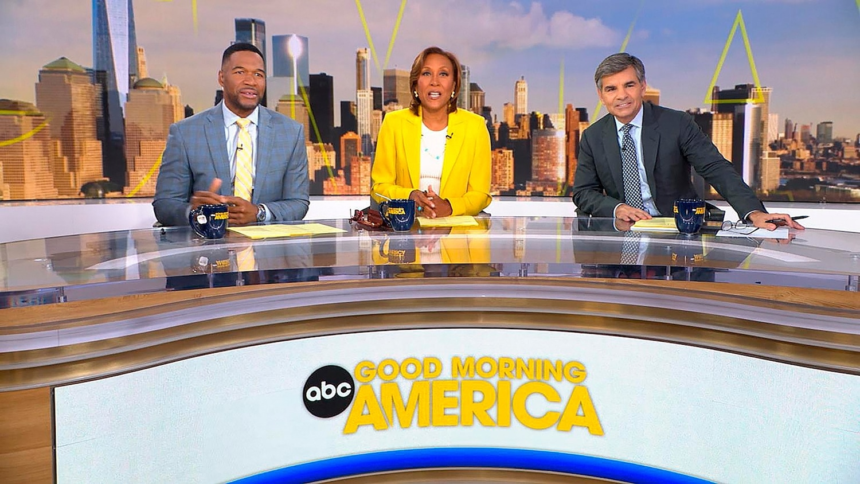
Good Morning America: Inside the Influence of America’s Most Watched Morning Show
A Morning Institution That Shapes the News Cycle
For decades, Good Morning America (GMA) has occupied a unique position in the media ecosystem—part news broadcast, part cultural platform, and part live conversation with millions of viewers starting their day.
- A Morning Institution That Shapes the News Cycle
- From Morning Headlines to Cultural Conversation
- The Taylor Frankie Paul Interview: A Case Study in Modern Media Exposure
- Media, Timing, and Reputation Management
- The Emotional Dimension of Live Television
- The Expanding Role of Morning Shows in the Digital Era
- Entertainment, Accountability, and Public Narrative
- What This Means for the Future of Morning Television
- Conclusion: A Platform Beyond Headlines
Airing on American Broadcasting Company (ABC), the program has evolved from a traditional morning news format into a hybrid platform where breaking news, celebrity interviews, human-interest stories, and cultural debates intersect in real time.
Recent developments surrounding reality TV personality Taylor Frankie Paul underscore how the show continues to serve as a primary stage for public figures navigating controversy, visibility, and personal narrative.
From Morning Headlines to Cultural Conversation
Since its debut in 1975, Good Morning America has operated on a dual mandate: deliver credible journalism while maintaining broad appeal. Unlike traditional news broadcasts that prioritize hard reporting, GMA integrates entertainment, lifestyle, and personality-driven segments—creating a format that reflects how audiences now consume information.

This hybrid structure allows the show to:
-
Break major news stories
-
Host exclusive interviews
-
Frame public discourse around trending topics
-
Provide emotional and human context to complex issues
Its reach extends beyond television. Segments routinely circulate across digital platforms, amplifying their impact far beyond the initial broadcast.



The Taylor Frankie Paul Interview: A Case Study in Modern Media Exposure
A recent interview with Taylor Frankie Paul illustrates GMA’s role as both a news outlet and a narrative platform.
Paul, who is set to headline The Bachelorette, appeared on the program amid reports of an ongoing domestic violence investigation involving her ex-boyfriend Dakota Mortensen.
During the segment, she addressed the situation directly:
“it’s been a heavy time to see the headlines”
The timing is significant. The interview aired just days before the premiere of her season, demonstrating how GMA often becomes a strategic space where public figures attempt to regain control of their narrative during critical career moments.



Paul emphasized her approach to handling the situation:
“I’m a person that will always speak my truth … that’s what I’m known for”
At the same time, she acknowledged restraint:
“when the time is right, I will be, but right now, just trying to be in the present moment and focus on this”
This balancing act—between transparency and caution—is increasingly common in media appearances tied to active investigations.
Media, Timing, and Reputation Management
The interview highlights a broader pattern: timing is central to media strategy.
Paul’s appearance came:
-
Just before the March 22 premiere of The Bachelorette
-
Amid confirmed reports of an open “domestic assault investigation”
-
During heightened public scrutiny and online discourse
Authorities confirmed that “allegations have been made in both directions,” while maintaining standard protocol not to disclose details about active investigations.
Simultaneously, production on The Secret Lives of Mormon Wives—another show associated with Paul—was reportedly paused, reflecting how off-screen developments can directly affect entertainment production pipelines.
This convergence of legal uncertainty, media exposure, and commercial timing is precisely where GMA operates most effectively: at the intersection of news, entertainment, and public perception.
The Emotional Dimension of Live Television
One of GMA’s defining strengths is its ability to humanize stories that might otherwise be reduced to headlines.
Paul described the situation as:
“stressful”
and emphasized her focus on family, particularly her children. She also reflected on the psychological toll of public scrutiny:
“When your life is broadcast out there in these headlines, it’s like the end of the world. That’s what it feels like.”
This framing shifts the narrative from purely factual reporting to emotional storytelling—an approach that resonates strongly with audiences but also raises questions about the boundaries between journalism and personal branding.
The Expanding Role of Morning Shows in the Digital Era
The relevance of Good Morning America today is tied to its adaptability. In an era defined by fragmented media consumption, GMA remains influential because it:
-
Bridges traditional broadcast and digital virality
-
Serves as a launchpad for trending conversations
-
Provides controlled environments for high-stakes interviews
-
Integrates entertainment and journalism into a unified format
Interviews like Paul’s do not exist in isolation. Clips are redistributed across social media, headlines are amplified by online outlets, and public reaction unfolds in real time—extending the lifecycle of a single segment.
Entertainment, Accountability, and Public Narrative
The intersection of entertainment and accountability is increasingly visible on platforms like GMA.
Paul’s situation involves:
-
An ongoing investigation
-
Public scrutiny tied to her role on reality television
-
A commercial event (the premiere of The Bachelorette)
Yet, the show does not function as a legal forum. Instead, it provides a space where individuals can articulate their perspective while official processes unfold elsewhere.
This raises a broader question: to what extent should media platforms shape public understanding of unresolved cases?
GMA’s approach—allowing personal testimony while acknowledging investigative uncertainty—reflects the evolving norms of modern broadcast journalism.
What This Means for the Future of Morning Television
The continued relevance of Good Morning America suggests that morning television is not declining—it is transforming.
Key trends likely to define its future include:
-
Increased integration with streaming and social media ecosystems
-
Greater emphasis on personality-driven storytelling
-
More real-time engagement with breaking news and cultural moments
-
Expanded role as a platform for reputation management
As audiences demand both immediacy and relatability, programs like GMA are positioned to remain central to how stories are introduced, framed, and debated.
Conclusion: A Platform Beyond Headlines
Good Morning America is no longer just a morning show—it is a media nexus where journalism, entertainment, and public identity intersect.
The Taylor Frankie Paul interview demonstrates how the program operates in high-stakes moments, offering visibility, context, and narrative control during periods of uncertainty.
In doing so, GMA continues to define how modern audiences engage with stories—not just as observers, but as participants in an ongoing cultural conversation.