




C-SPAN and the Classroom That Reached a Nation
How a Student Documentary Became Part of America’s 250th Reflection
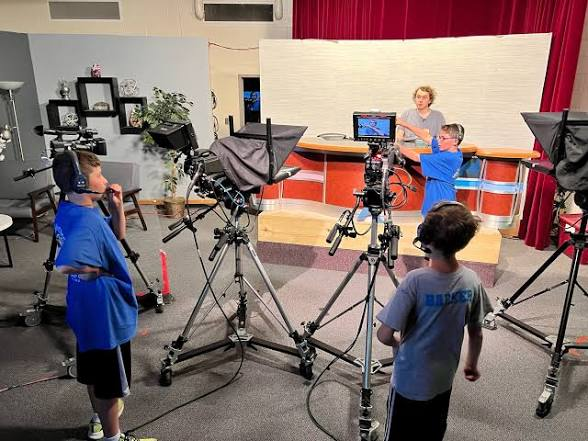
In a Montgomery classroom, what began as a routine school assignment evolved into something far more consequential. A 10th grader’s research notes, editing timeline, and narrative choices crossed the boundary between education and national recognition—earning a place in one of the most visible civic learning platforms in the United States.
- From Assignment to National Recognition
- The StudentCam Model: Turning Civics Into Practice
- A Competition of National Scale
- What Organizers See in Student Work
- Bridging the Gap Between Ideals and Reality
- Institutional Support and Public Service Model
- The Broader Implication: A Distributed Civic Archive
- Looking Ahead to America’s 250th Anniversary
- Conclusion: When a Classroom Becomes a National Stage
At the center of this moment is C-SPAN, a commercial-free public service network funded by America’s cable, satellite, and streaming television companies. Known for its unfiltered coverage of government proceedings, C-SPAN has increasingly positioned itself as a facilitator of civic education—particularly through its nationwide StudentCam documentary competition.
In 2026, that effort produced a standout story: a student film from Montgomery, Alabama, that turned a classroom exercise into a national conversation about equality, justice, and the meaning of America’s founding ideals.
From Assignment to National Recognition
The student at the heart of this recognition is Carson French, a 10th grader at Booker T. Washington Magnet High School. His documentary, titled “When Equality Ends at the Prison Gates,” earned an honorable mention in C-SPAN’s 2026 StudentCam competition, along with a $250 prize.

The award itself is modest. The significance lies elsewhere.
French’s work became part of a national civic exercise tied to the upcoming 250th anniversary of the United States—a milestone prompting reflection on the enduring relevance of the Declaration of Independence. By connecting a contemporary issue to foundational principles, his documentary positioned a local perspective within a broader national dialogue.



This is precisely the kind of outcome the competition is designed to produce: a shift from passive learning to active interpretation.
The StudentCam Model: Turning Civics Into Practice
At its core, the StudentCam competition is not simply about filmmaking. It is structured as a project-based learning framework that integrates research, analysis, and storytelling.
Participants are asked to engage with a central question:
How does the Declaration of Independence remain relevant today?
Students can approach this in two ways:


-
Examine the document’s influence on a key moment in America’s 250-year history
-
Explore how its values apply to contemporary issues affecting their communities
This structure transforms abstract civic concepts into practical inquiry. Students must:
-
Gather and evaluate evidence
-
Develop a clear argument or perspective
-
Translate complex ideas into visual narratives
The result is a process that mirrors real-world analytical work—where interpretation, perspective, and communication are as critical as factual accuracy.
In this context, French’s documentary becomes more than a project. It is a case study in how students can interrogate national ideals through lived realities.
A Competition of National Scale
The 2026 StudentCam competition underscores its reach through sheer participation:
-
More than 1,800 documentary submissions
-
Nearly 4,000 students involved
-
Representation from 38 states and Washington, D.C.
These numbers reflect more than participation—they indicate a coordinated national effort to embed civic engagement within education.
Each submission represents a localized interpretation of a shared prompt. Students across diverse regions examined the same foundational text but arrived at different conclusions based on their environments, concerns, and perspectives.
For French, the outcome is a tangible milestone. For the broader field, the scale suggests something more systemic: a distributed classroom extending across the country, unified by a common intellectual challenge.
What Organizers See in Student Work
C-SPAN leadership has been explicit about the broader purpose of these documentaries.
Craig McAndrew, Director of Education Relations at C-SPAN, framed the significance of the 2026 competition in direct connection to the nation’s anniversary:
“As we recognize America’s 250th anniversary, this year’s StudentCam participants masterfully documented important political as well as societal issues and key moments from our nation’s history through compelling videos that highlight the values and enduring legacy of the Declaration of Independence,” McAndrew said. “Each of their prize-winning videos is sure to spark meaningful reflections among viewers across the country and inspire future generations of filmmakers. On behalf of everyone at C-SPAN, congratulations to the exceptionally gifted young people who triumphed in the 22nd annual competition!”
The statement positions these student projects as more than academic outputs. They are described as tools for public reflection—content designed to circulate beyond classrooms and engage wider audiences in dialogue.
Bridging the Gap Between Ideals and Reality
One of the central challenges in civic education is making foundational documents feel relevant. The language of the Declaration of Independence is often studied as historical text rather than living principle.
StudentCam addresses this gap by requiring students to test those ideals against contemporary issues.
French’s documentary, “When Equality Ends at the Prison Gates,” exemplifies this approach. It takes a foundational concept—equality—and examines where it may falter in practice. In doing so, it reframes a national value as a question rather than an assumption.
This method has two key effects:
-
It encourages critical engagement rather than passive acceptance
-
It situates civic learning within real-world contexts
The result is a more dynamic understanding of citizenship—one that acknowledges both aspiration and contradiction.
Institutional Support and Public Service Model
C-SPAN’s role in facilitating this work is tied to its broader identity. As a commercial-free public service network, it operates outside traditional advertising-driven media structures.
This model allows it to invest in initiatives like StudentCam, which prioritize educational impact over commercial return.
In practical terms, this support includes:
-
Nationwide competition infrastructure
-
Prize funding, including French’s $250 award
-
Visibility for student-produced content
The competition functions as a structured intervention in civic education—one that combines media production with public discourse.
The Broader Implication: A Distributed Civic Archive
Beyond individual recognition, the 2026 competition contributes to a growing archive of student interpretations of American ideals.
Each documentary becomes part of a collective effort to answer a recurring question:
What do foundational principles mean in practice?
The geographic spread—38 states and Washington, D.C.—ensures that these interpretations reflect diverse experiences. Together, they form a layered narrative of how young people understand their role in the nation’s ongoing story.
French’s contribution, emerging from a single classroom in Montgomery, now exists within this broader archive.
Looking Ahead to America’s 250th Anniversary
As the United States approaches its 250th birthday, initiatives like StudentCam are likely to take on greater significance.
They provide a mechanism for:
-
Engaging younger generations in national reflection
-
Encouraging critical examination of historical ideals
-
Expanding civic discourse beyond traditional institutions
The question posed by French’s documentary—implicit in its title—remains open-ended. It is not resolved by the competition or the award.
Instead, it is passed on to viewers.
Conclusion: When a Classroom Becomes a National Stage
The recognition of Carson French illustrates how educational frameworks can intersect with national conversations. A single project, grounded in research and storytelling, moved from a classroom environment into a countrywide platform.
C-SPAN’s StudentCam competition serves as the conduit for that transition—transforming student work into public reflection.
In doing so, it reframes the purpose of civic education. It is no longer limited to understanding what the Declaration of Independence says. It extends to questioning how, where, and whether its principles are realized.
As America’s 250th anniversary approaches, that shift—from memorization to interpretation—may prove to be one of the most consequential developments in how the nation understands itself.