





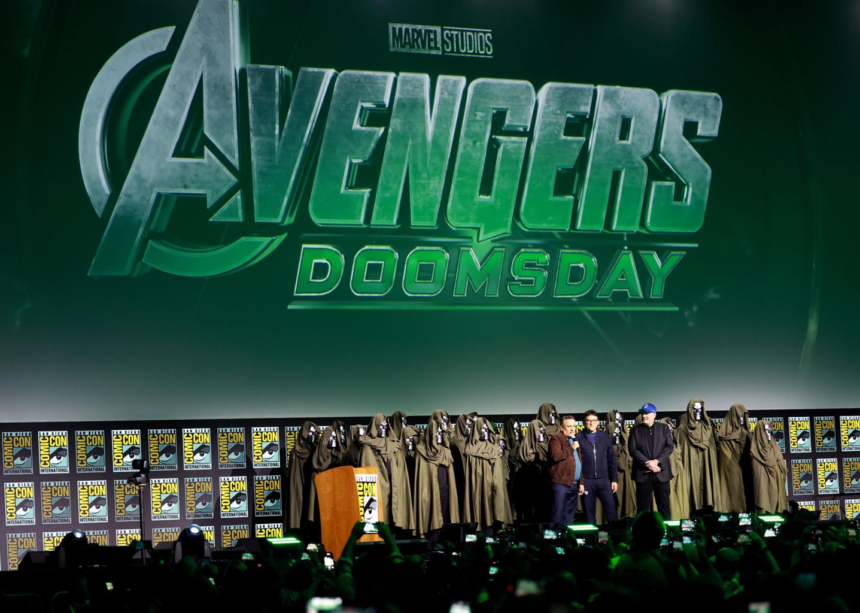
Avengers: Doomsday — A High-Stakes Collision Course With “Dune: Part Three”
The Battle for December 18, 2026
The upcoming release of Avengers: Doomsday is no longer just another entry in Marvel’s expansive cinematic universe—it has become the center of a high-stakes industry clash. Scheduled to hit theaters globally on December 18, 2026, the film now finds itself in direct competition with Dune: Part Three, Denis Villeneuve’s anticipated trilogy finale.
- The Battle for December 18, 2026
- From “Barbenheimer” to “Dunesday”: A Strategy Under Scrutiny
- A Clash of Similar Worlds
- The Marvel Context: A Franchise at a Crossroads
- The “Dune Effect”: A Trailer That Changed the Narrative
- Industry Risks: Audience Fatigue and Box Office Cannibalization
- What Happens Next?
- Conclusion: A Defining Moment for Blockbuster Strategy
What initially appeared to be a bold scheduling move has evolved into a contentious debate across the film industry. The pairing, dubbed “Dunesday,” was once framed as a potential cultural event—a repeat of the 2023 “Barbenheimer” phenomenon. However, shifting audience sentiment suggests a more complex—and riskier—scenario.
From “Barbenheimer” to “Dunesday”: A Strategy Under Scrutiny
The concept behind releasing two major films on the same day is not unprecedented. In 2023, Barbie and Oppenheimer created a unique cinematic event by offering stark contrast—one a vibrant comedy, the other a somber historical drama. The tonal divergence encouraged audiences to watch both films, turning competition into mutual amplification.
“Dunesday” attempts to replicate that success. The term itself emerged when Robert Downey Jr. introduced the idea during a public appearance, noting:

“We both have films opening on December 18, and we decided to coin it… We’re thinking Dunesday.”
Initially, enthusiasm followed. Both Downey Jr. and Timothée Chalamet embraced the concept, suggesting a shared cultural moment.
However, the comparison to “Barbenheimer” reveals a critical flaw: lack of contrast.


A Clash of Similar Worlds
Unlike Barbie and Oppenheimer, Avengers: Doomsday and Dune: Part Three occupy overlapping territory—both are large-scale science-fiction epics with serialized narratives and established fanbases.
-
Dune: Part Three continues the story of Paul Atreides, now set 17 years after the events of Part Two, exploring the consequences of a Fremen-led holy war.
-
Avengers: Doomsday represents a pivotal chapter in Marvel’s ongoing Multiverse Saga, leading into Avengers: Secret Wars and a planned franchise reset.
This similarity creates a fundamental issue: audience cannibalization.
Rather than complementing each other, the films compete for the same demographic—fans of high-concept, effects-driven storytelling. Without tonal diversity, the double-bill risks overwhelming viewers rather than attracting them.
The Marvel Context: A Franchise at a Crossroads
The stakes for Marvel Studios extend beyond a single release window.



Following the success of the Infinity Saga (2008–2019), the current Multiverse Saga (2021–present) has faced increasing criticism. Audiences have expressed fatigue with:
-
Complex, interconnected storylines requiring prior knowledge
-
Inconsistent critical reception
-
A perceived decline in narrative cohesion
In response, Marvel has taken calculated steps to stabilize its flagship brand:
-
Rehiring Joe Russo and Anthony Russo, the directors behind previous Avengers successes
-
Bringing back legacy actors, including Robert Downey Jr. and Chris Evans
These moves have been interpreted in two ways:
-
A strategic return to proven creative leadership
-
Or a nostalgia-driven attempt to recapture past success
Either way, Avengers: Doomsday carries significant weight as a bridge to the franchise’s future reset.
The “Dune Effect”: A Trailer That Changed the Narrative
The release of the Dune: Part Three trailer has altered the competitive landscape.
Early reactions highlight:
-
Strong cinematography and visual scale
-
A darker, more mature narrative tone
-
High anticipation for performances by Zendaya and Robert Pattinson as the villain Scytale
The trailer’s reception has triggered widespread concern among audiences and analysts alike. Many now believe that Avengers: Doomsday risks being overshadowed, with calls for Marvel to reconsider its release strategy.
This shift is particularly notable because, prior to the trailer, Marvel’s project was widely assumed to have the advantage due to brand recognition and lack of competing visuals.
Industry Risks: Audience Fatigue and Box Office Cannibalization
Releasing two major franchise films simultaneously introduces measurable risks:
1. Audience Fatigue
Both films are long-form, narrative-heavy productions. Without a lighter alternative, viewers may opt for only one experience rather than both.
2. Screen Allocation Pressure
Theaters must divide screens between two high-demand titles, potentially limiting revenue for both studios.
3. Fragmented Cultural Impact
Instead of dominating the conversation, each film may dilute the other’s visibility.
Analysts have pointed out that, unlike “Barbenheimer,” there is no “palette cleanser” effect—no tonal reset between viewings.
What Happens Next?
As of now, both Avengers: Doomsday and Dune: Part Three remain scheduled for December 18, 2026. However, the situation remains fluid.
Possible outcomes include:
-
Date Adjustment: One studio may shift release timing to avoid direct competition
-
Dual Event Success: “Dunesday” could still evolve into a high-grossing cultural event
-
Split Performance: Both films perform well but below maximum potential due to shared audiences
The decision will likely hinge on strategic forecasting, early ticket demand, and continued audience sentiment.
Conclusion: A Defining Moment for Blockbuster Strategy
Avengers: Doomsday is positioned at a critical juncture—not only for Marvel Studios but for the broader film industry. Its release strategy, now entangled with Dune: Part Three, represents a test case for whether the “shared release” model can succeed without tonal contrast.
The outcome will influence future scheduling decisions, franchise planning, and the economics of blockbuster filmmaking.
For now, “Dunesday” remains both an opportunity and a risk—one that could redefine how studios approach the increasingly crowded global release calendar.