





Plopsaland’s Next Chapter: How a Family Theme Park Is Expanding Into a Full Resort Experience
A Season Opening That Signals More Than Celebration
As the gates of Plopsaland De Panne reopened on March 21, 2026, the occasion carried more weight than a typical seasonal launch. What unfolded was not merely the start of a new theme park calendar—it was a carefully orchestrated statement about the future of family entertainment in Europe.
Marking the extended celebration of its 25th anniversary, Plopsaland has positioned itself at a pivotal moment: balancing nostalgia with innovation, and transforming from a beloved children’s destination into a multi-dimensional resort experience.
The presence of celebrities, families, and industry figures underscored this shift. The message was clear—Plopsaland is no longer “just for the little ones,” but a layered destination catering to multiple generations.
Celebrity Presence Reflects a Broader Appeal
The opening weekend drew a wide range of public figures, many attending with their families. Their reactions offered a revealing snapshot of the park’s evolving identity.
Herman Brusselmans, visiting for the first time, captured a sentiment that resonates with many adult visitors:
“If I didn’t have a child, I would never come here. But for the happiness of that little one, I do everything. That smile on his face is worth its weight in gold.”
Similarly, Peter Van de Veire highlighted the emotional pull of the park:

“Besides the rides, he also really loves the atmosphere in the park, just like dad. I feel like a little kid again here.”
These perspectives illustrate a key dynamic: Plopsaland’s value proposition increasingly lies in shared experiences—where adults rediscover childhood while children encounter immersive storytelling.
Other attendees, including Toby Alderweireld, emphasized the rarity of uninterrupted family time:
“When I was still playing football, weekends like this were almost impossible, so I really cherish these moments.”
The consistent theme across attendees is not just entertainment—but emotional engagement, family bonding, and memory-making.
The Evolution of the Park Experience
At the center of this year’s launch is a structural shift in how Plopsaland delivers its daily experience.


From Farewell Moments to Full-Scale Spectacle
Traditionally, the park concluded each day with a character farewell moment. In 2026, this has been replaced by the “Grand Finale Show,” a 25-minute production designed as a theatrical closing experience.
Featuring dancers, visual effects, and appearances from Studio 100 characters, the show transforms the end of the day into a curated highlight rather than a routine exit.
This shift reflects a broader industry trend: theme parks are increasingly structured like narrative journeys, with defined emotional arcs from entry to exit.
Expanding Attractions for All Age Groups
The introduction of Rijschool Suikerbuik, located in the Big & Betsy zone, reinforces the park’s commitment to younger visitors while modernizing its attraction portfolio. Replacing the former Verkeerspark, it aligns with a cohesive farm-themed environment.
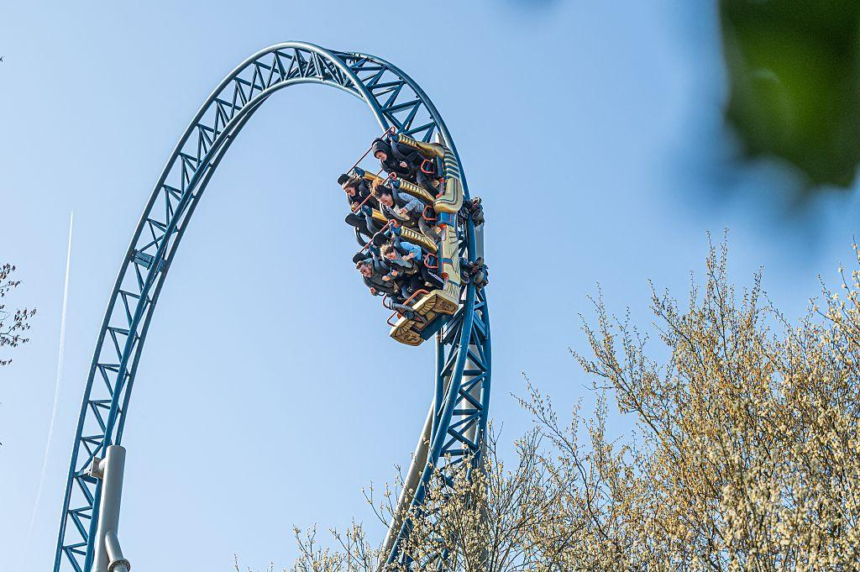
At the same time, high-adrenaline experiences remain central. The internationally recognized “The Ride to Happiness by Tomorrowland”—ranked among the top five steel coasters globally—ensures that older visitors and thrill-seekers remain engaged.
The result is a deliberately balanced ecosystem: low-intensity attractions for children, high-intensity rides for adults, and shared experiences in between.
Beyond the Park: Building a Destination Resort
Perhaps the most significant development lies outside the rides themselves.
Hospitality as a Core Strategy
The Plopsaland Theater Hotel has become a key asset in extending visitor stays. Guests such as Astrid Coppens praised its themed suites:
“We have never stayed here before, but I have a feeling we are going to sleep wonderfully. The Plopsaland Theater Hotel really is beautiful.”
Themed accommodations—such as the Samson and K3 suites—transform overnight stays into part of the narrative experience, rather than a logistical necessity.
New Additions Expanding the Experience
Several upcoming developments signal a shift toward a full resort model:
- Plopsaland Beach (launching during the Easter holidays): A beachfront extension in De Panne offering parasols and loungers, designed to integrate leisure with the theme park visit.
- Piratengrill (opening in July): A themed family restaurant expanding culinary offerings.
- Plopsaland Plaza (expected by 2027): A major expansion positioned as the “beating heart” of the resort.
The centerpiece of this expansion is the “Vliegende Cinema,” a European-first attraction where visitors float in a moving gondola inside a massive dome, experiencing a virtual flight across Europe alongside Maya the Bee.
This development represents a clear pivot toward immersive, technology-driven attractions—blending storytelling, simulation, and spectacle.
Studio 100’s Strategic Influence
Behind Plopsaland’s evolution lies the broader vision of Studio 100, led by figures such as Hans Bourlon and Plopsa CEO Carl Lenaerts.
Their strategy mirrors that of global entertainment giants: leverage recognizable intellectual property (characters like Bumba, Kabouter Plop, and Maya the Bee) while continuously reinvesting in infrastructure and innovation.
The result is a scalable model—one that can attract both local families and international tourists.
Cultural and Business Implications
Plopsaland’s trajectory reflects broader shifts in the leisure industry:
1. Experience Over Attraction
Visitors are no longer satisfied with rides alone. They expect cohesive, immersive environments that extend from entry to accommodation.
2. Multi-Generational Targeting
The park’s success increasingly depends on appealing to both children and adults simultaneously—through nostalgia, thrill rides, and shared storytelling.
3. Hybrid Leisure Models
By combining theme park, hotel, beach, and dining experiences, Plopsaland is positioning itself closer to a resort ecosystem than a standalone attraction.
4. Emotional Branding
The strongest testimonials from visitors are not about rides—but about family moments, childhood memories, and emotional connections.
Looking Ahead: The Next Phase of Growth
With Plopsaland Plaza and the Vliegende Cinema on the horizon, the park is entering what could be the most ambitious phase in its history.
The scale of planned investment suggests a long-term strategy: to become a leading European destination for family entertainment, competing not just on attractions but on total experience.
At the same time, the park continues to anchor itself in its core identity—rooted in Studio 100 characters and accessible family storytelling.
Conclusion
Plopsaland’s 2026 season opening is less about celebration and more about transition. The extended anniversary serves as a bridge between its past—defined by childhood nostalgia—and its future as a fully integrated resort destination.
By combining entertainment, hospitality, and immersive design, the park is redefining what a regional theme park can become.
The core proposition remains unchanged: delivering joy. But the scale, sophistication, and ambition behind that promise have clearly evolved.