





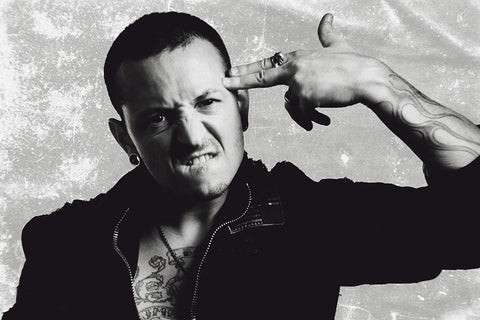
Chester Bennington at 50: A Legacy That Refuses to Fade
A Voice That Still Echoes in 2026
March 20, 2026, marks what would have been the 50th birthday of Chester Bennington—a milestone that has reignited global emotion, reflection, and renewed appreciation for one of the most defining voices in modern rock.
- A Voice That Still Echoes in 2026
- From Xero to Linkin Park: The Formation of a Generation’s Voice
- “I’m Dancing With My Demons”: The Weight Behind the Lyrics
- July 2017: A Loss That Changed the Industry
- 2026: A Community Reignited
- Linkin Park’s New Chapter: Continuity Without Replacement
- The Duality of Legacy: Nostalgia Meets Renewal
- Cultural Impact: More Than Music
- The Enduring Question: Why Does His Voice Still Matter?
- Conclusion: A Legacy That Lives in Motion
Nearly a decade after his death in 2017, the impact of Bennington’s artistry is not only intact but actively evolving. Across social media platforms, fans are revisiting performances, sharing memories, and amplifying his message. At the same time, Linkin Park continues forward with a new era, balancing tribute and transformation.
The convergence of remembrance and reinvention defines this moment. It is not simply nostalgia—it is a cultural reawakening.
From Xero to Linkin Park: The Formation of a Generation’s Voice
Bennington’s journey into global stardom began in 1999 when he joined the band Xero, which would soon become Linkin Park. That decision proved pivotal—not just for the band, but for the trajectory of early 2000s rock music.
Their debut album, Hybrid Theory (2000), reshaped the nu-metal landscape. Tracks like “Papercut”, Bennington’s personal favorite, and “In the End” introduced a sonic blend of vulnerability and aggression that resonated with millions.
Over time, the band released seven albums with Bennington, including Meteora and One More Light, each expanding their sound while maintaining emotional authenticity.

His voice became synonymous with catharsis—equal parts melody and raw intensity.
“I’m Dancing With My Demons”: The Weight Behind the Lyrics
Bennington’s artistry was inseparable from his personal struggles. Themes of depression, anxiety, trauma, and inner conflict were not abstract concepts in his music—they were lived experiences.
In early 2017, as Linkin Park prepared to release One More Light, he delivered a line that would later take on haunting significance:
“I’m dancing with my demons.”
His lyrics often walked a fine line between pain and resilience. Reflecting on the album’s title track, he stated:



“Ein Song wie dieser kann sehr schmerzhaft sein, aber auch schöne Erinnerungen wecken, die man an bestimmte Personen hat, die nicht mehr da sind… Es ist wichtig, zu trauern; es ist wichtig, diesen Schmerz zuzulassen.”
These words now serve as both artistic insight and emotional testament. His openness helped normalize conversations around mental health, particularly among younger audiences navigating similar struggles.
July 2017: A Loss That Changed the Industry
In July 2017, Bennington died by suicide at the age of 41. The loss reverberated far beyond the music industry.
Questions emerged immediately: Had the warning signs been missed? Could more have been done? The timing—coming shortly after the death of close friend Chris Cornell—deepened the tragedy.
Fans revisited his final performances, including the last concert in Birmingham, where songs like “Papercut” and “Bleed It Out” closed the night. In retrospect, these moments carry added emotional weight.
His passing marked a turning point in how the music industry—and society more broadly—addresses mental health.
2026: A Community Reignited
Chester’s 50th Birthday as a Cultural Flashpoint
The symbolic power of March 20, 2026, has triggered a global wave of remembrance. Social media platforms are flooded with tributes under hashtags like #ChesterBennington50, while fan-created videos and archival clips continue to trend.
But this moment is not confined to digital spaces.
“Rock for Chester’s Wall”: Memory Turned Into Action
On March 21, 2026, fans gather in Hagen for the benefit concert “Rock for Chester’s Wall.” The initiative supports the restoration of a memorial in Essen’s Kaiser Wilhelm Park.
This effort represents a shift from passive remembrance to active preservation. It transforms grief into collective responsibility—ensuring that Bennington’s legacy remains physically and culturally present.
Linkin Park’s New Chapter: Continuity Without Replacement
Since 2024, Linkin Park has entered a new phase with Emily Armstrong as lead vocalist. The transition has sparked debate within the fan community: Can anyone truly follow Bennington?
The band’s 2026 From Zero To World Tour suggests a nuanced answer.
Rather than replacing him, the group has chosen to reinterpret its identity—retaining core elements while evolving its sound. Performances across Germany, including Munich, Hamburg, Rock am Ring, and Rock im Park, demonstrate that the band remains a live force.
Notably, certain songs such as “Good Goodbye” are omitted due to their emotional weight, underscoring the band’s commitment to honoring Bennington’s legacy rather than diluting it.
The Duality of Legacy: Nostalgia Meets Renewal
What distinguishes this moment is the collision of past and future.
Fans are simultaneously revisiting early 2000s classics and engaging with new material. Old footage of performances blends seamlessly with tour announcements, creating a layered narrative:
-
Past: The defining voice of a generation
-
Present: A global community in reflection
-
Future: A band evolving without abandoning its roots
This duality explains the intensity of current fan reactions—where grief, gratitude, and anticipation coexist.
Cultural Impact: More Than Music
Bennington’s influence extends beyond chart success or album sales.
Emotional Accessibility in Mainstream Music
He helped legitimize emotional vulnerability within a genre often associated with aggression.
Mental Health Awareness
His openness contributed to broader discussions about depression and suicide, particularly among younger audiences.
Live Performance as Catharsis
Concerts were not merely entertainment—they were communal emotional experiences. As one account described, Linkin Park performances often felt “heilsam” (healing).
The Enduring Question: Why Does His Voice Still Matter?
The continued relevance of Chester Bennington lies in authenticity.
He did not perform pain—he articulated it. That distinction remains critical in an era where audiences increasingly value sincerity over spectacle.
Even as Linkin Park evolves, his presence remains embedded in the band’s identity. Every performance, every lyric revisited, reinforces that connection.
Conclusion: A Legacy That Lives in Motion
Chester Bennington’s 50th birthday is not simply a retrospective milestone. It is a reminder that legacy is not static—it evolves through those who carry it forward.
From benefit concerts in Hagen to packed arenas across Germany, from viral social media tributes to ongoing debates about the band’s future, his influence continues to shape both music and culture.
The question is no longer whether his legacy endures. It is how it continues to transform.
For fans, the answer is clear:
Through memory, through music, and through moments that bring people together—he remains present.