

The Drama Behind “The Drama”: How Zendaya Turned Wedding Rumors Into a Cultural Moment
When Celebrity Rumors Become Global Headlines
In an era where speculation travels faster than verification, even the most private celebrities can find themselves at the center of viral narratives. That dynamic was on full display this week, as Zendaya stepped into the spotlight not just as an actress promoting her upcoming film The Drama, but as the focal point of a rapidly escalating rumor cycle involving her personal life.
- When Celebrity Rumors Become Global Headlines
- The Spark: A Stylist’s Claim and a Ring That Raised Questions
- The AI Factor: When Fake Images Feel Real
- Zendaya’s Response: Humor as Strategy
- The Role of “The Drama” in the Narrative
- A Relationship Under the Microscope
- Cultural Implications: Fame, Fiction, and the Collapse of Boundaries
- What Comes Next?
- Conclusion: A Modern Case Study in Celebrity Narrative Control
The speculation was simple on the surface: had Zendaya secretly married Tom Holland? But beneath that question lay a more complex story—one that reveals how modern celebrity culture, artificial intelligence, and entertainment marketing now intersect in unpredictable ways.
The Spark: A Stylist’s Claim and a Ring That Raised Questions
The chain reaction began earlier this month when Zendaya’s longtime stylist, Law Roach, suggested during the 2026 Actor Awards on March 1 that the actress had already tied the knot with Holland. His remark—delivered casually—quickly took on a life of its own.
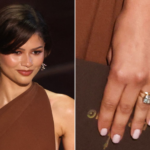
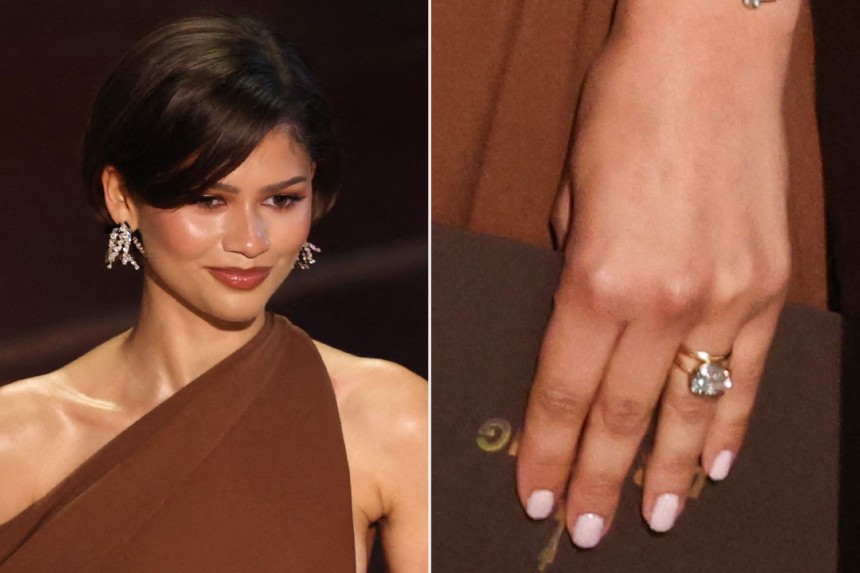
At the same time, visual cues added fuel to the speculation. Zendaya appeared in public wearing what seemed to be a gold wedding band, including at the 2026 Academy Awards on March 15. For observers, this detail became a key piece of “evidence,” reinforcing the idea that something significant had happened behind closed doors.
The combination of insider commentary and symbolic imagery created the perfect environment for rumor escalation.
The AI Factor: When Fake Images Feel Real
If the initial claims sparked curiosity, artificial intelligence pushed the story into overdrive.

During her appearance on Jimmy Kimmel Live! on Monday, March 16, Zendaya acknowledged that AI-generated wedding photos of her and Holland had circulated widely online. According to her, “many people have been fooled by them,” including individuals in her own life.
“I was out and about in real life and people are like, ‘Oh my god, your wedding photos are really gorgeous.’ And I was like, ‘Babe they’re AI.’ They’re not real,” she explained.
The situation illustrates a growing challenge in digital culture: the erosion of visual trust. AI-generated imagery is no longer easily distinguishable from authentic photography, allowing fictional narratives to gain credibility with minimal friction.
In this case, the images didn’t just entertain—they convinced.
Zendaya’s Response: Humor as Strategy
Rather than issuing a formal denial or engaging in direct clarification, Zendaya opted for a more controlled and performative response.
When host Jimmy Kimmel noted that the internet had gone “berserk” with speculation, Zendaya replied with understated irony: “Really? I haven’t seen any of that!”
But her most notable move came when she introduced a video clip intended to “clear the confusion.” The footage appeared to depict a wedding scene—complete with Zendaya as the bride—but it was, in fact, from her upcoming film The Drama.
In a deliberately comedic twist, the clip featured Robert Pattinson as the groom, with Tom Holland’s face “crudely pasted” over his. The result blurred the line between fiction and reality even further.
When questioned about the authenticity of the footage, Zendaya leaned into the ambiguity: “No, that was real. I was there.”
The approach was calculated. Instead of shutting down the rumor cycle, she redirected it—turning speculation into engagement while maintaining control over the narrative.
The Role of “The Drama” in the Narrative
The timing of the rumors is not incidental. The Drama, which stars Zendaya alongside Robert Pattinson, is set for nationwide release on April 3. Its wedding-themed storyline mirrors the real-world speculation surrounding her relationship, creating a feedback loop between fiction and public perception.
By integrating a scene from the film into her response, Zendaya effectively used the rumor as a promotional device—without explicitly confirming or denying the claims.
This strategy aligns with a broader trend in entertainment marketing, where real-life narratives are leveraged to amplify interest in upcoming projects. In this case, the overlap between personal life rumors and on-screen storytelling has elevated both.
A Relationship Under the Microscope
Zendaya and Tom Holland have been together since 2017, following their collaboration in the Spider-Man franchise. Their engagement in late 2024 marked a rare public milestone in an otherwise private relationship.
Despite their global visibility, the pair have consistently avoided excessive public disclosure. That restraint, however, has only intensified public curiosity.
The current wave of speculation demonstrates how even limited information—such as a ring or an offhand comment—can be amplified into a full-scale narrative when filtered through social media and digital culture.
Cultural Implications: Fame, Fiction, and the Collapse of Boundaries
What makes this episode notable is not simply the rumor itself, but what it reveals about the current media environment.
Three key dynamics are at play:
-
The speed of amplification: A single comment can evolve into a global trend within hours.
-
The credibility of synthetic media: AI-generated content can now convincingly simulate reality.
-
The strategic use of ambiguity: Public figures can engage with rumors in ways that sustain interest without providing clarity.
Zendaya’s response sits at the intersection of these forces. By neither confirming nor fully denying the rumors, she maintains narrative flexibility—allowing the story to persist while redirecting attention toward her work.
What Comes Next?
As The Drama approaches its April 3 release, the conversation surrounding Zendaya’s personal life is unlikely to dissipate quickly. If anything, the interplay between rumor and promotion may continue to evolve.
Whether the marriage speculation proves true or remains unresolved is, in some ways, secondary. The more significant development is how effectively the narrative has been shaped—and reshaped—through a combination of media dynamics and strategic communication.
Conclusion: A Modern Case Study in Celebrity Narrative Control
The episode surrounding Zendaya, Tom Holland, and The Drama is more than a celebrity rumor. It is a case study in how stories are constructed, circulated, and repurposed in the digital age.
From AI-generated images to late-night television appearances, each element contributed to a layered narrative that blurred the line between reality and performance.
In addressing the rumors, Zendaya did not simply respond—she reframed the conversation. And in doing so, she demonstrated a level of narrative control that reflects a broader shift in how public figures navigate visibility in an increasingly complex media landscape.