






Sam Kieth: The Unconventional Visionary Who Redefined Comic Art
A Singular Voice Falls Silent
The comic book industry has lost one of its most distinctive and unconventional talents. Sam Kieth, the creator behind The Maxx and an early artistic force in The Sandman, passed away on March 15, 2026, at the age of 63 following complications related to Lewy body dementia.
- A Singular Voice Falls Silent
- From Michigan to the Comic Book Vanguard
- The Maxx: A Defining Work of the 1990s
- A Style That Refused Conformity
- Beyond One Iconic Creation
- Industry Reaction: A Legacy Acknowledged
- Personal Life and Final Years
- The Lasting Impact on Comics and Culture
- Conclusion: A Legacy That Defies Convention
His death, confirmed publicly days later, triggered an immediate wave of tributes across the comics community—artists, writers, and fans reflecting not just on his work, but on the unmistakable creative signature he brought to every page.
Comic artist Kelley Jones, a longtime friend, captured the personal and professional impact Kieth had:
“Sam Kieth, my old friend since 16 and comic art genius has passed away. He was instrumental in bringing me to DC and changing the course of my career. He also introduced me to my wife ( a cute little blond he described her as) and changed the course of my life
God rest his soul.”
The message underscored a recurring theme in the industry’s response: Kieth was not only influential as an artist, but transformative as a collaborator and mentor.
From Michigan to the Comic Book Vanguard
Born on January 11, 1963, in Grand Rapids, Michigan, Sam Kieth entered the comic book world at a time when superhero aesthetics followed relatively rigid conventions. He would go on to dismantle many of those expectations.
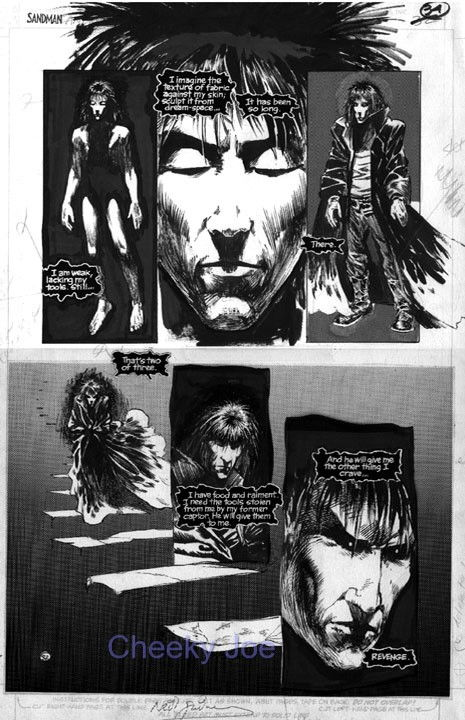
His early career included work on major Marvel titles such as The Hulk and Wolverine, where his visual experimentation began to attract attention. But it was his involvement in DC Comics’ The Sandman, alongside writer Neil Gaiman, that positioned him at the forefront of a shifting creative landscape.

In those formative issues, Kieth helped establish the series’ visual tone—moody, abstract, and psychologically layered—setting a precedent for what would become one of the most critically acclaimed comic series of its era.
The Maxx: A Defining Work of the 1990s
If The Sandman introduced Kieth to a wider audience, The Maxx cemented his legacy.
Launched in 1993 under Image Comics, The Maxx diverged sharply from mainstream superhero narratives. Rather than relying on traditional hero-villain dynamics, the series explored identity, trauma, and the blurred boundaries between reality and fantasy.
What Made The Maxx Different
- It blended superhero tropes with psychological horror and surreal fantasy
- It introduced nonlinear storytelling and dreamlike sequences
- It challenged visual norms with distorted anatomy and exaggerated forms
- It centered on deeply flawed, emotionally complex characters
The series ran for 35 issues and became one of the most memorable creator-driven comics of the decade. Its cultural reach extended further when it was adapted into an animated series for MTV’s Liquid Television, bringing Kieth’s unique vision to a global audience.



A Style That Refused Conformity
Kieth’s artistic identity was unmistakable. In an industry often driven by consistency and house styles, his work stood apart immediately.
His pages were characterized by:
- Exaggerated, almost elastic anatomy
- Chaotic yet controlled compositions
- Heavy emotional tone conveyed through visual distortion
- A fusion of realism and abstraction
Fans and fellow artists frequently noted that a single panel was enough to identify his hand. His approach rejected polish in favor of expression, prioritizing emotional resonance over technical symmetry.
This distinctiveness became a defining trait of his influence—many artists who followed cited his willingness to break rules as permission to develop their own unconventional styles.
Beyond One Iconic Creation
While The Maxx remains his most celebrated work, Kieth’s career extended across multiple major properties and original projects.
His portfolio includes:
- Contributions to The Sandman (DC Comics)
- Work on Wolverine and Marvel Comics Presents
- Titles such as Batman: Secrets and Batman/Lobo: Deadly Serious
- Original creations like Zero Girl
- Projects like Arkham Asylum: Madness and Lobo: Highway to Hell
This breadth demonstrated both versatility and consistency—regardless of the property, Kieth’s voice remained intact.
In 2013, his contributions were formally recognized with an Inkpot Award from Comic-Con International, an acknowledgment of his enduring impact on the medium.
Industry Reaction: A Legacy Acknowledged
News of Kieth’s passing circulated rapidly through comic circles, prompting a collective reflection on his influence.
Creators emphasized not just his originality, but the emotional impact of his work and presence.
One tribute summarized the sentiment succinctly:
“The Maxx was a revelation when I first read it. What a sad loss. What a great creator. I will miss your light in this world intensely.”
Another noted:
“A unique voice snuffed out too soon.”
These responses highlight a broader truth: Kieth’s work did not simply entertain—it reshaped how stories could be told visually in comics.
Personal Life and Final Years
Kieth is survived by his wife, Kathy Kieth, with whom he shared a marriage lasting 43 years.
His final years were marked by Lewy body dementia, a progressive neurological condition affecting cognitive function, reasoning, and independence. Despite this, his legacy remained firmly intact within the creative community that continued to celebrate his contributions.
The Lasting Impact on Comics and Culture
Sam Kieth’s significance lies not just in what he created, but in how he expanded the boundaries of the medium.
His broader influence includes:
- Encouraging creator-owned storytelling during the rise of Image Comics
- Demonstrating that comics could explore psychological and existential themes
- Inspiring a generation of artists to embrace stylistic individuality
- Bridging mainstream superhero comics with experimental narrative forms
In many ways, Kieth operated ahead of his time. The current era—where graphic novels frequently tackle complex emotional and philosophical subjects—owes part of its evolution to pioneers like him.
Conclusion: A Legacy That Defies Convention
Sam Kieth’s career cannot be reduced to a single title or achievement. He was an artist who consistently challenged expectations—of form, narrative, and visual identity.
His passing at 63 marks the end of a career that helped redefine what comic books could look like and what they could say. Yet his influence remains embedded in the medium, visible in every artist who chooses originality over convention.
The industry has lost a singular voice, but the language he helped shape continues to evolve.