




Spider-Man: Brand New Day — A New Era Begins for the MCU’s Web-Slinger
A Franchise Reinventing Itself in Real Time
Few cinematic properties generate global anticipation with the precision and scale of Marvel’s Spider-Man franchise. With Spider-Man: Brand New Day, the Marvel Cinematic Universe (MCU) appears to be entering a deliberate phase of reinvention—one that blends nostalgia, character evolution, and cross-franchise integration.
- A Franchise Reinventing Itself in Real Time
- A New Kind of Trailer Rollout: Global, Interactive, Continuous
- A Darker Tone and Visual Shift
- A “Rebirth” After Record-Breaking Success
- A Major Crossover Moment: The Punisher Enters the MCU Film Space
- Expanding the Ensemble: Familiar Faces and New Additions
- The Glasgow Production and Global Scope
- Narrative Direction: Between Isolation and Reinvention
- Cultural and Industry Impact
- What Comes Next
- Conclusion: A Strategic Reset with High Stakes
The film, set to release on July 31, 2026, is not simply another sequel. Early footage, teaser fragments, and official statements point toward a thematic reset—described within the first-look footage as a “rebirth.” That single word encapsulates both the narrative direction and the broader strategic positioning of the franchise.
A New Kind of Trailer Rollout: Global, Interactive, Continuous
Rather than relying on a conventional trailer launch, Sony and Marvel have adopted an experimental distribution model.
What the rollout achieves
This strategy transforms passive viewership into active participation, amplifying global engagement while sustaining attention across a full news cycle.
How it works
-
A 24-hour trailer release cycle unfolds across global time zones
-
Short clips are distributed via fan social media accounts worldwide
-
Viewers collectively assemble the full narrative through fragmented reveals
As Tom Holland explained:
“We have had so much love and support since day dot of making these movies, and without that incredible community, there would be no Spider-Man.”
He added:


“To show you our appreciation, we are doing something that has never been done before. Follow along as a brand new day starts across the world, and some of our greatest fans are going to help us release pieces of our new trailer.”
This approach reframes marketing as a participatory event, aligning with modern fan culture dynamics.
A Darker Tone and Visual Shift
Early footage indicates a notable stylistic departure. Compared to previous Spider-Man installments, Brand New Day adopts:
-
A gloomier visual palette
-
Slower, more deliberate cinematic pacing
-
A tone reminiscent of grounded, character-driven superhero narratives
The shift is reinforced by the change in creative leadership, with Destin Daniel Cretton directing instead of Jon Watts. Cretton, known for character-focused storytelling, has described the project as:
“the biggest, most rewarding film I’ve ever been a part of.”
A “Rebirth” After Record-Breaking Success
The film arrives in the shadow of Spider-Man: No Way Home, which grossed over $1.9 billion globally and redefined multiverse storytelling by bringing together multiple Spider-Man iterations.

Brand New Day moves in a different direction:
-
A reset of Peter Parker’s status quo
-
A new suit signaling transformation
-
A narrative focus on rebuilding identity after prior events
This marks Tom Holland’s fourth solo Spider-Man film and seventh MCU appearance, positioning him as one of the most established characters in the franchise.
A Major Crossover Moment: The Punisher Enters the MCU Film Space
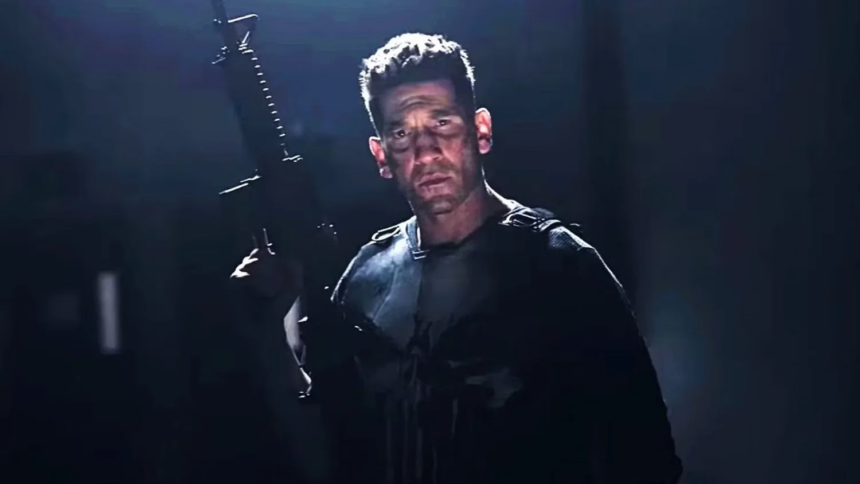
One of the most significant developments is the introduction of The Punisher, portrayed by Jon Bernthal.
Why this matters
-
The character has existed in MCU continuity through Netflix series for over a decade
-
However, this marks his first appearance in an MCU theatrical film
In one teaser sequence, Spider-Man is struck by a van—only to reveal that the driver is Frank Castle himself. The moment is both unexpected and symbolic: a collision between two radically different moral frameworks.
Strategic implications
-
Signals deeper integration of Marvel Netflix-era characters into core MCU films
-
Expands tonal range by introducing a more violent, morally complex figure
-
Suggests potential for unlikely alliances within future story arcs
Expanding the Ensemble: Familiar Faces and New Additions
The film’s cast reinforces its hybrid approach—balancing continuity with expansion:
-
Zendaya returns as MJ
-
Mark Ruffalo reprises Bruce Banner / Hulk
-
Sadie Sink joins in an undisclosed role
-
Liza Colón-Zayas also enters the cast
The inclusion of Banner suggests potential crossover with broader Avengers-level narratives, while new characters introduce fresh narrative vectors.
The Glasgow Production and Global Scope
Filming in Glasgow provided early confirmation of crossover elements, with set photos revealing Spider-Man and Punisher stunt doubles. The urban European backdrop also hints at a more internationally scaled story, diverging from the traditionally New York-centric focus.
Narrative Direction: Between Isolation and Reinvention
At its core, Brand New Day appears to explore a central tension:
-
Isolation — Peter Parker rebuilding his life after previous events
-
Interconnection — Increasing overlap with other MCU characters
The presence of The Punisher and Hulk suggests that Spider-Man’s story is no longer self-contained. Instead, it functions as a bridge between grounded street-level narratives and larger cosmic or Avengers-scale conflicts.
Cultural and Industry Impact
From an industry perspective, the film represents several broader trends:
1. Event-based marketing
The 24-hour trailer rollout reflects a shift toward continuous engagement models rather than single-release campaigns.
2. Franchise integration
The inclusion of legacy streaming characters signals a move toward fully unified narrative ecosystems.
3. Tone diversification
By blending lighter Spider-Man elements with darker characters like The Punisher, Marvel is expanding tonal flexibility within its brand.
What Comes Next
With the full trailer released on March 18, 2026, attention now shifts toward how these elements cohere into a single narrative.
Key questions remain:
-
How will Spider-Man and The Punisher coexist narratively?
-
What role will Hulk play in the storyline?
-
Does “rebirth” signal a long-term restructuring of Spider-Man’s place in the MCU?
Conclusion: A Strategic Reset with High Stakes
Spider-Man: Brand New Day is positioned as more than a continuation—it is a recalibration. By combining experimental marketing, tonal shifts, and major character crossovers, Marvel and Sony are attempting to redefine what a Spider-Man film can represent within the MCU.
The success of this approach will depend on execution. However, based on early signals, the film is not merely advancing the story—it is restructuring the framework in which that story exists.