



Sombr’s Dublin Moment: A Cultural Bridge Between Generations
A Night That Transcended a Concert
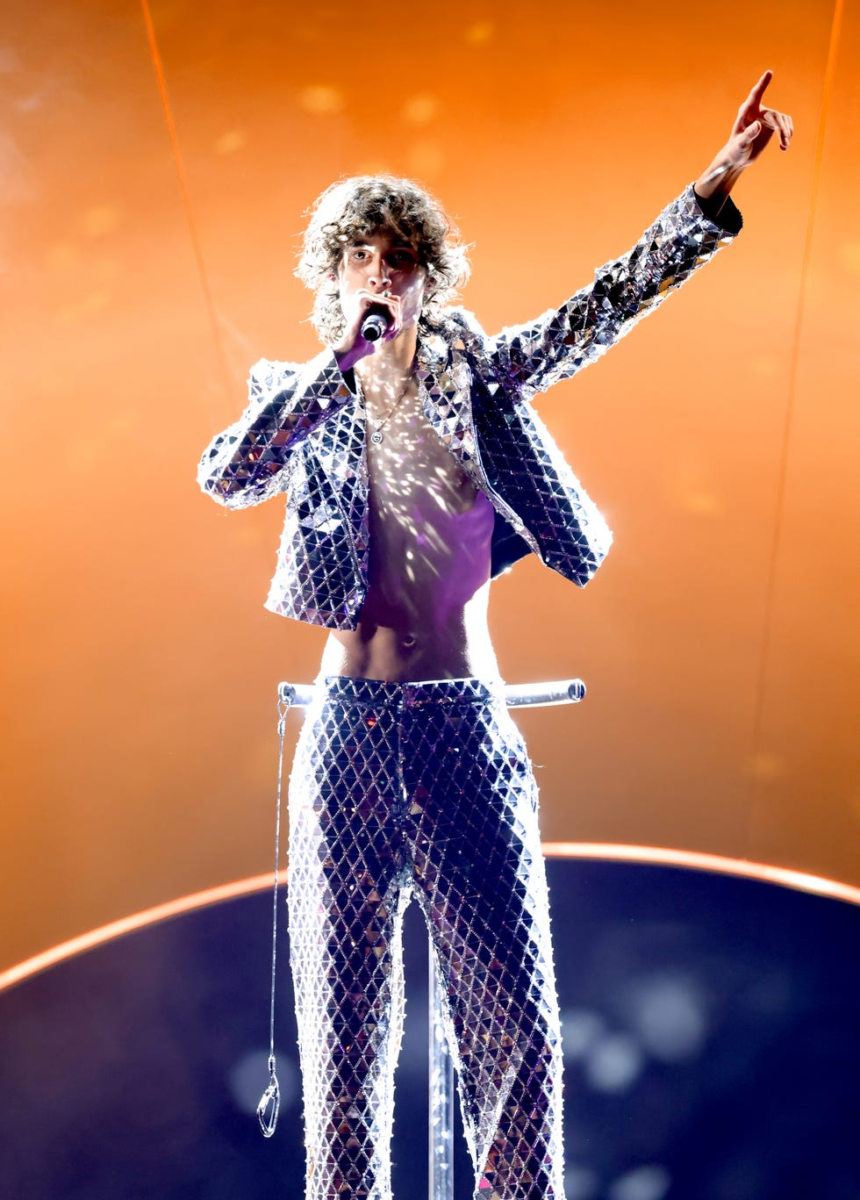
On March 16, 2026, inside Dublin’s 3Arena, a routine tour stop evolved into something more consequential—a live moment that blurred generational boundaries in modern pop music. Rising artist sombr delivered a performance that did not merely entertain but recontextualized musical legacy, as he invited Noel and Mike Hogan—founding members of The Cranberries—onto the stage.
- A Night That Transcended a Concert
- Revisiting “Linger”: Legacy Meets Reinvention
- The Cranberries’ Enduring Influence
- Audience Reaction: Cultural Ownership and Emotional Resonance
- Sombr’s Rapid Ascent and Calculated Risk-Taking
- A Performer Influenced by British Musical Heritage
- Beyond the Music: Cultural Participation
- What This Moment Signals for the Industry
- Conclusion: A Defining Live Statement
The result was a live rendition of “Linger,” the 1993 hit that once peaked at No. 8 on the Billboard Hot 100. What unfolded was not just a nostalgic callback, but a deliberate alignment between a contemporary pop voice and one of Ireland’s most enduring musical identities.
Revisiting “Linger”: Legacy Meets Reinvention
The performance itself was structured with notable restraint. Dressed in a bright green blouse with ruffled cuffs—visually aligned with the St. Patrick’s Eve setting—sombr approached the track with a subdued vocal delivery, emphasizing its emotional cadence rather than reinterpreting its structure.
As Noel Hogan played the track’s signature guitar progression, sombr delivered the song’s defining lines:
“You know I’m such a fool for you / You got me wrapped around your finger / Do you have to let it linger?”
The arrangement maintained fidelity to the original while subtly reframing it through a modern vocal tone. This balance—between preservation and reinterpretation—is often difficult to execute in live settings, yet here it functioned as a bridge rather than a contrast.

The Cranberries’ Enduring Influence
To understand the significance of the collaboration, it is necessary to revisit The Cranberries’ trajectory. Formed in Limerick in 1989, the band established a global presence through a distinctive blend of alternative rock and lyrical vulnerability.
Their career arc included:
-
A hiatus in 2003
-
A reunion in 2009
-
The release of their sixth studio album, Roses, in 2012
However, the band’s story was permanently altered in January 2018 following the death of lead singer Dolores O’Riordan at age 46. Her passing led to the group’s official disbandment later that year.
In this context, the appearance of Noel and Mike Hogan on stage is not merely symbolic—it represents a rare continuation of a legacy that had largely concluded.


Audience Reaction: Cultural Ownership and Emotional Resonance
The audience response in Dublin suggests that the performance resonated beyond its musical execution. Fan reactions described the moment as “probably the best thing I have ever experienced,” with another remarking that sombr had effectively “earned his Irish passport.”
These reactions indicate a form of cultural validation. For an international artist to perform a defining Irish song alongside its original architects—on Irish soil, during a culturally significant weekend—carries implications beyond performance metrics.
It signals acceptance.
Sombr’s Rapid Ascent and Calculated Risk-Taking
At just 20 years old, sombr (born Shane Michael Boose) is navigating a phase of accelerated visibility. His recent chart performance reinforces this trajectory: “Back to Friends” reached No. 1 on Billboard’s Pop Airplay chart earlier this year.
However, his rise has not been without calculated disruption.
During the 2026 BRIT Awards, sombr’s performance of “Undressed” was interrupted when a man rushed the stage and pushed him off his platform. The incident initially appeared chaotic, but was later confirmed by a representative as a staged element of the show.
The sequence continued seamlessly, transitioning into “Back to Friends” after the reveal of his full band.
This approach—blending unpredictability with controlled execution—suggests a strategic understanding of spectacle within modern music performance.
A Performer Influenced by British Musical Heritage
Sombr’s affinity for UK and Irish music is not incidental. In recent interviews, he cited artists such as The Beatles, The Rolling Stones, David Bowie, and Elton John as foundational influences. He also referenced Manchester’s legacy acts, including The Stone Roses, The Verve, and Oasis.
He stated:
“I just love it here… In my opinion, I love America, but I think acts from the UK just beat them, in terms of iconic acts.”
This perspective contextualizes his Dublin performance not as a one-off tribute, but as part of a broader artistic alignment with British and Irish musical traditions.
Beyond the Music: Cultural Participation
The Dublin show also incorporated lighter cultural engagement. Sombr and his band attempted the “split the G” challenge—a well-known Irish pub tradition involving a precise first sip of Guinness.
While sombr himself did not succeed, some band members completed the challenge, adding an informal layer to the performance. These moments, though peripheral, contribute to audience relatability and reinforce cultural immersion.
What This Moment Signals for the Industry
The collaboration between sombr and The Cranberries’ founding members illustrates several broader industry dynamics:
-
Intergenerational collaboration is becoming a strategic tool for both legacy preservation and audience expansion
-
Live performance as narrative is increasingly central, with artists designing moments that extend beyond music into cultural storytelling
-
Authenticity through context—performing “Linger” in Dublin, with its original creators, elevated the performance’s credibility
This is not merely about honoring the past. It is about integrating it into a current artistic identity in a way that feels intentional rather than derivative.
Conclusion: A Defining Live Statement
Sombr’s Dublin performance represents more than a successful concert highlight. It is a case study in how emerging artists can engage with musical history without being overshadowed by it.
By inviting Noel and Mike Hogan onto the stage, he did not attempt to replace a legacy—but to stand alongside it, even if briefly.
In doing so, he positioned himself not just as a chart-topping artist, but as a participant in a larger musical continuum—one that values memory, place, and shared cultural ownership.