






Ronaldinho at 46: The Enduring Power of Football’s Greatest Artist
A Birthday That Resonates Across Generations
On March 21, the football world paused—once again—not for a match, but for a memory. The occasion was the 46th birthday of Ronaldinho, a player whose influence extends far beyond trophies, statistics, or club loyalties.
- A Birthday That Resonates Across Generations
- The Clubs That Still Claim Him
- The National Hero: A World Cup Legacy
- The Rare Club of Football Immortality
- Joga Bonito: Redefining the Game
- The Night the Bernabéu Stood Still
- A Career of Early Completion—and Lasting Impact
- More Than Football: A Cultural Symbol
- The Influence That Endures
- Conclusion: The Magician’s Legacy
Few figures in modern sport command universal admiration across continents, eras, and rivalries. Yet Ronaldinho remains one of those rare exceptions. As tributes poured in from former clubs, leagues, and teammates, the tone was consistent: reverence not just for a footballer, but for a phenomenon.
At Paris Saint-Germain, where he first captivated European audiences, the message was concise but telling:
“A magician’s birthday.”
The Clubs That Still Claim Him
Ronaldinho’s career spanned continents and cultures, but what stands out is the enduring emotional connection each of his clubs still maintains with him.
At PSG (2001–2003), he delivered 77 matches, 25 goals, and 19 assists—numbers that only hint at the spectacle he introduced to French football. For many supporters, he was the prelude to the club’s modern global identity.
His transformation into a global icon came at FC Barcelona (2003–2008), where his influence was both statistical and cultural:

- 207 matches
- 94 goals
- 70 assists
During this period, La Liga itself paid tribute, describing him as “The endless smile.”
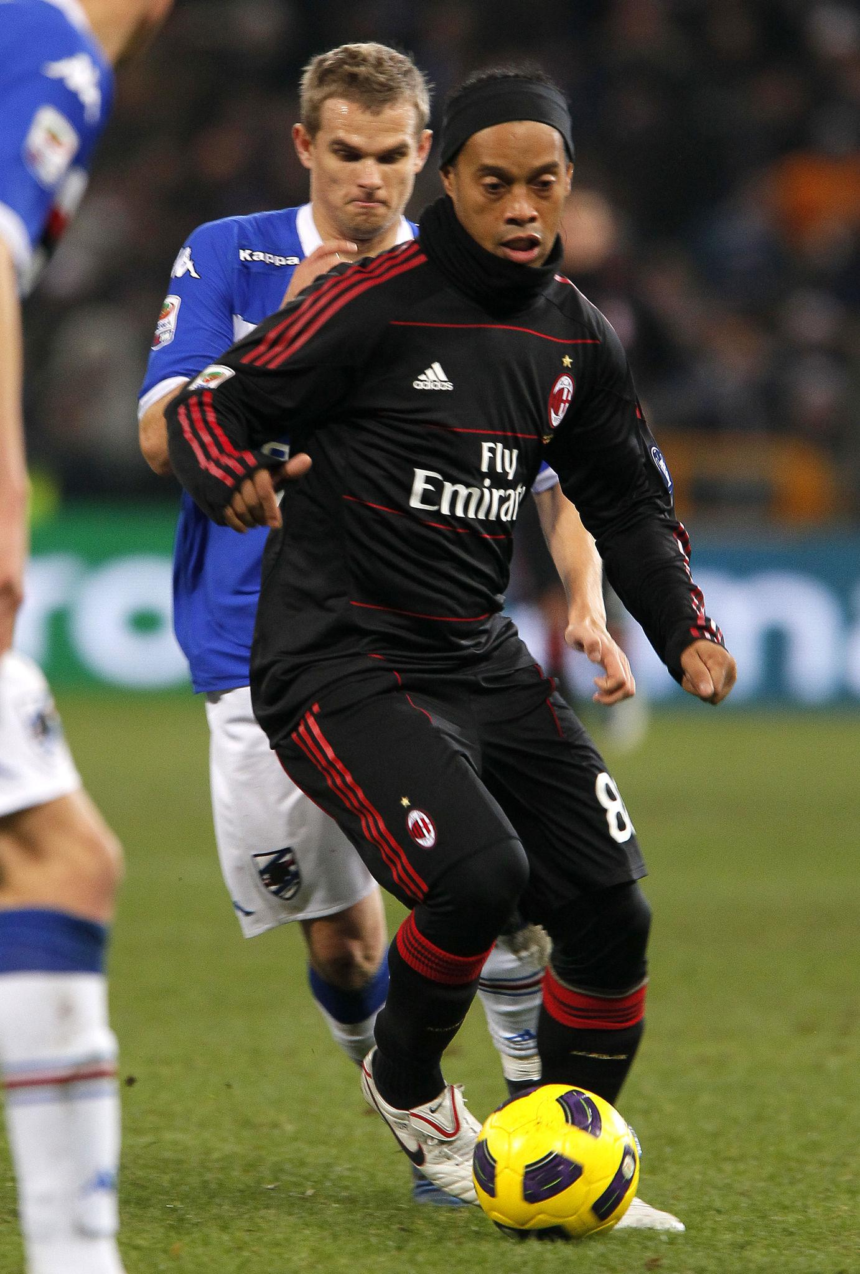
From Spain, his journey continued to AC Milan (2008–2011), where he added another layer to his legacy. The Italian club described him as a player “that all Rossoneri could watch on repeat”—a reflection of his aesthetic value as much as his effectiveness.
Back in Brazil, his time at Atlético Mineiro (2012–2014) reinforced his status as a national icon. Their tribute captured the emotional bond succinctly:
“You will always be one of us.”
The National Hero: A World Cup Legacy
For the Brazilian national team, Ronaldinho’s legacy is inseparable from one defining moment: the 2002 FIFA World Cup.



Brazil national football team paid tribute with a statement that encapsulates his global impact:
“Today is the day of one of the greatest players in history. Football took on a whole new look when he stepped onto the pitch, and the whole world stopped to watch him.”
That tournament, where Brazil lifted the trophy, cemented Ronaldinho’s place among the sport’s elite. But his international achievements did not stop there—he also secured the Copa América (1999), adding depth to an already formidable résumé.
The Rare Club of Football Immortality
Ronaldinho belongs to an exclusive category in football history—players who have won:
- The FIFA World Cup
- The UEFA Champions League
- The Ballon d’Or
His Ballon d’Or victory in 2005 confirmed what fans already knew: he was not just entertaining—he was the best.
The Ballon d’Or’s official tribute described him as:
“More than a player, a vibration.”
That phrasing is precise. Ronaldinho was not merely effective; he altered the emotional and visual experience of football itself.
Joga Bonito: Redefining the Game
To understand Ronaldinho, statistics are insufficient. His essence lies in a philosophy: Joga Bonito—the “Beautiful Game.”
On the pitch, he merged:
- Improvisation with precision
- Creativity with control
- Joy with competitiveness
His technical repertoire—elasticos, no-look passes, backheels—was executed with an ease that blurred the line between play and performance. As he once stated:
“What was difficult for you was easy for me.”
He played with an audacity that often prioritized expression over efficiency—yet paradoxically, he still dominated.
The Night the Bernabéu Stood Still
One moment encapsulates his universal appeal: a performance at the Santiago Bernabéu against Real Madrid while playing for Barcelona.
After a series of extraordinary actions, even the home crowd rose to applaud him—a rare standing ovation in one of football’s most hostile rival environments.
That moment was not about rivalry. It was about recognition.
A Career of Early Completion—and Lasting Impact
By the age of 26, Ronaldinho had already achieved what many players spend entire careers chasing:
- World Cup winner (2002)
- Ballon d’Or winner (2005)
- Champions League winner (2006)
It created the perception that he had, in many ways, “finished the game” early.
Yet he continued to add to his legacy, notably winning the Copa Libertadores in 2013 at the age of 33—a rare achievement that completed his global trophy set.
More Than Football: A Cultural Symbol
Ronaldinho’s impact extends beyond sport. He represents:
- The fusion of artistry and athleticism
- The global appeal of Brazilian football culture
- The idea that joy can coexist with elite performance
His ever-present smile became symbolic—a visual shorthand for a philosophy of play rooted in freedom and creativity.
Even today, younger generations—many of whom never saw him play live—engage with his legacy through clips, tributes, and cultural references. Players arrive at stadiums wearing retro shirts bearing his name, reaffirming his continued relevance.
The Influence That Endures
Ronaldinho’s career challenges conventional narratives of greatness. He was not defined by longevity at the top, but by intensity of impact.
He demonstrated that:
- Football can be both effective and beautiful
- Individual brilliance can elevate collective experience
- Entertainment is not secondary to success—it can be integral to it
As football continues to evolve toward data-driven optimization and tactical rigidity, Ronaldinho’s legacy serves as a counterpoint—a reminder of what the game can be at its most expressive.
Conclusion: The Magician’s Legacy
At 46, Ronaldinho remains a reference point—not just for what he achieved, but for how he achieved it.
He was, and remains, a player who made people feel something. Stadiums did not just watch him—they reacted to him.
In an era increasingly defined by efficiency, Ronaldinho’s career stands as a lasting argument for creativity, spontaneity, and joy.
The tributes on his birthday were not merely nostalgic. They were acknowledgments of a truth that continues to resonate:
Football, at its best, is not just a competition.
It is an experience—and Ronaldinho perfected it.