






Rocky in Project Hail Mary: The Unlikely Star Redefining Sci-Fi Cinema
Introduction: When an Alien Outshines a Leading Man
When Project Hail Mary arrived in theaters on March 20, 2026, much of the anticipation centered on Ryan Gosling and the adaptation of Andy Weir’s bestselling novel. Instead, audiences walked away talking about someone—or rather, something—else entirely: Rocky, a spider-like alien with a voice resembling whale song and a personality that feels startlingly human.
- Introduction: When an Alien Outshines a Leading Man
- A Different Kind of Co-Star
- Building Rocky: Engineering Emotion Without a Face
- Voice Without Language: The Science of Connection
- Improvisation and Chemistry: A 40-Minute Experiment
- Why Practical Puppetry Worked
- Cultural Impact: Audiences Embrace the Unconventional
- Industry Implications: A Quiet Return to Craft
- Conclusion: The Alien Who Changed the Conversation
At the center of this phenomenon is James Ortiz, a Broadway veteran whose work has quietly reshaped expectations for what modern cinematic characters can be. In a film dominated by space exploration and existential stakes, Rocky emerges not as a visual effect, but as an emotional anchor—and arguably the film’s true breakout star.
A Different Kind of Co-Star
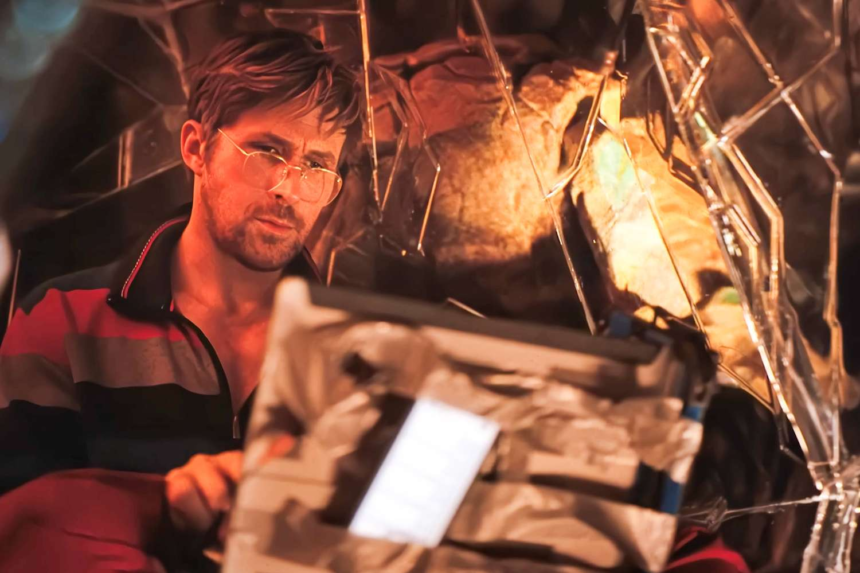
Directed by Phil Lord and Christopher Miller, Project Hail Mary follows Ryland Grace, a scientist tasked with solving a cosmic crisis threatening Earth. Midway through his mission near Tau Ceti, Grace encounters Rocky—an alien engineer on a parallel quest to save his own species.
What distinguishes this relationship is not just the narrative, but how it was brought to life. Rather than relying exclusively on CGI, the filmmakers committed to a hybrid approach anchored in practical puppetry. Ortiz was physically present for nearly the entire six-month shoot in London, ensuring that Gosling never had to act opposite a placeholder or green screen.
“Actor to actor, I didn’t want Ryan to ever feel like he was alone in this. It would be too hard. He shouldn’t have to make character decisions for a strange, faceless creature.”
— James Ortiz, Puppeteer and Voice of Rocky

This philosophy fundamentally shaped the film’s emotional authenticity. Rocky wasn’t added later—he was there, in real time, influencing every interaction.
Building Rocky: Engineering Emotion Without a Face
Designing Rocky posed a unique creative challenge. The alien has no recognizable facial features, relying instead on movement, posture, and sound to convey emotion. Creature designer Neal Scanlan, known for his work with Jim Henson’s Creature Shop and the Star Wars universe, collaborated closely with Ortiz from early pre-production.
Scanlan framed the task in iconic terms:
“You’re Frank Oz, and I’m making Yoda for you.”



The comparison to Frank Oz—who famously brought Yoda to life—set the tone for what followed: months of iterative design, testing, and refinement to ensure Rocky could move with both technical precision and emotional nuance.
Multi-Layered Performance Design
Rocky was not a single puppet but a system of performance tools:
- Primary Puppet: Featured animatronic fingers capable of grasping and interacting with objects.
- Bunraku Variant (“Bun-Rocky”): Inspired by 17th-century Japanese puppetry for dynamic sequences.
- CGI Integration: Used by Framestore for complex motion like rolling or sprinting.
Despite these layers, Ortiz remained the constant—voicing and guiding every iteration, including digital versions. The seamless integration between practical and digital techniques ensured audiences never questioned the illusion.
Voice Without Language: The Science of Connection
Rocky does not speak English. His species communicates through echolocation—closer to whale song than human speech. Within the story, Grace develops a translation system, but the voice audiences hear is still shaped by Ortiz’s creative decisions.
“Rocky’s voice comes out of a series of computers duct-taped together… it should have a little Mr. Moviefone and a little Siri, only not as clean.”
This deliberate imperfection proved critical. Rather than a polished, artificial voice, Rocky sounds functional—almost improvised—which reinforces his alien nature while maintaining relatability.
Notably, the filmmakers chose not to replace Ortiz with a celebrity voice actor in post-production. That decision removed a layer of distraction often associated with recognizable voices, allowing audiences to fully accept Rocky as a character rather than a performance.
Improvisation and Chemistry: A 40-Minute Experiment
One of the film’s most distinctive production choices was the reliance on improvisation. Ortiz and Gosling frequently extended scenes beyond scripted boundaries, sometimes running 40-minute takes.
These sessions allowed both performers to explore Rocky’s personality organically. Ortiz described Rocky as:
- “Super intelligent” with a mind like a computer
- Yet emotionally akin to “an anxious, 14-year-old boy”
This duality—intellectual brilliance paired with emotional vulnerability—became central to Rocky’s appeal. It also explains why audiences formed such strong attachments to a character without a face.
Why Practical Puppetry Worked
Hollywood has increasingly leaned toward fully digital characters, often voiced by high-profile actors. Project Hail Mary takes the opposite approach, and the results are telling.
Key Advantages Observed
- Authentic Interaction
Gosling had a tangible scene partner, improving timing and emotional response. - Performance Continuity
Ortiz controlled both physical movement and voice, ensuring consistency. - Creative Ownership
Ortiz was treated as a co-creator, not a technician. Directors regularly consulted him on character decisions.
“What I loved about the process was at no point did Phil or Chris treat me like a technician… I got to think about how Rocky would feel.”
The outcome is a character that feels authored, not assembled.
Cultural Impact: Audiences Embrace the Unconventional
Early audience reactions suggest Rocky has transcended typical sci-fi character boundaries. Social media discussions highlight an unusual phenomenon: viewers reporting strong emotional responses—even tears—for a character with no human features.
This reaction underscores a broader shift in audience expectations. Emotional authenticity now outweighs visual perfection. Rocky’s success suggests that viewers are more willing to connect with unconventional designs when performance depth is prioritized.
The film also includes a meta-commentary on celebrity voice casting. In one moment, Grace tests a voice modeled after Meryl Streep before ultimately settling on a more functional tone—mirroring the film’s real-world casting decision.
Industry Implications: A Quiet Return to Craft
Rocky’s success is not just a character win—it signals a potential recalibration in filmmaking priorities.
Emerging Trends
- Hybrid Production Models
Combining practical effects with CGI rather than replacing them. - Performance-Driven Effects
Elevating puppeteers and physical performers to central creative roles. - Reduced Celebrity Dependency
Allowing characters to stand independently of star recognition.
The influence of legacy techniques from figures like Jim Henson and Frank Oz is evident, but Project Hail Mary demonstrates that these methods remain viable—and perhaps necessary—in contemporary cinema.
Conclusion: The Alien Who Changed the Conversation
Rocky’s rise as the breakout star of Project Hail Mary is more than a novelty. It reflects a deeper shift in how stories are told and how characters are brought to life.
Through the work of James Ortiz, the film proves that emotional resonance does not require photorealism or star power. Instead, it emerges from a synthesis of craft, collaboration, and creative risk.
In an industry often defined by scale and spectacle, Rocky stands as a reminder: sometimes the most compelling performance comes from the least expected place—a puppet, guided by a human hand, speaking in the language of something entirely alien, yet unmistakably real.