






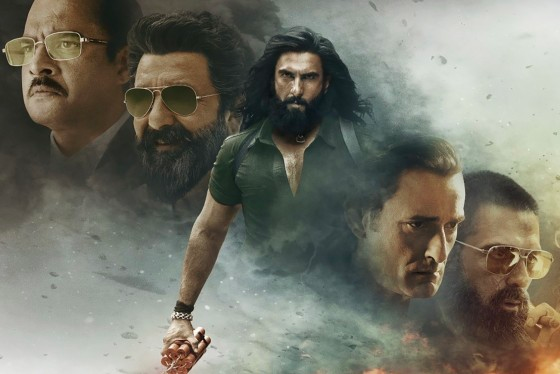
From Tragedy to Transformation: The Story of Jaskirat Singh Rangi in Dhurandhar: The Revenge
A Character Study of Pain, Power, and Redemption
In modern Indian cinema, spectacle often dominates storytelling. Explosions, espionage, and high-stakes patriotism typically drive box office success. Yet Dhurandhar: The Revenge, released on March 19, 2026, disrupts that formula by placing emotional depth at its center. At the heart of this shift lies one character: Jaskirat Singh Rangi.
- A Character Study of Pain, Power, and Redemption
- The Origins: A Soldier’s Son with a Clear Future
- The Breaking Point: When Justice Fails
- From Prisoner to Asset: The RAW Intervention
- Reinvention: Becoming Hamza Ali Mazari
- Reframing the Franchise: Emotional Context in Action Cinema
- Box Office Impact: When Emotion Drives Scale
- Beyond Action: A Study of Trauma and Purpose
- Conclusion: Why Jaskirat Singh Rangi Matters
Portrayed by Ranveer Singh in a demanding dual role, Jaskirat is not merely a fictional figure within a spy narrative. He represents a layered exploration of trauma, justice, and transformation—one that has resonated deeply with audiences and critics alike, propelling the film to unprecedented commercial success.
The Origins: A Soldier’s Son with a Clear Future
Jaskirat Singh Rangi’s story begins in 2002 in Pathankot, rooted in stability and discipline. At just 21 years old, he is a military trainee with a promising future. Coming from a lineage of Army officers, his identity is shaped by duty, honor, and national service.
His father, a decorated soldier, embodies the ideals Jaskirat aspires to. The early chapters of the film establish a peaceful domestic life—one that feels grounded and secure. This foundation is essential, as it sharply contrasts with the devastation that follows.
The Breaking Point: When Justice Fails
The narrative pivots abruptly into tragedy. Jaskirat’s father is murdered. His sister is gang-raped by 12 men and killed. Another sister is abducted. The perpetrators, shielded by their connection to an MLA’s powerful family, evade justice entirely.
The judicial system—expected to uphold fairness—collapses in his moment of greatest need.

This failure is not incidental; it is the defining catalyst of Jaskirat’s transformation. The film positions this breakdown as a systemic betrayal, forcing a young man raised on ideals of justice to confront their absence.
In response, Jaskirat takes violent revenge. The consequences are immediate and irreversible: he is sentenced to death.
From Prisoner to Asset: The RAW Intervention
At this point, the narrative introduces a critical shift. R. Madhavan, playing Ajay Sanyal, identifies Jaskirat as a unique candidate for covert operations.
The recruitment is unconventional. During a prison transfer, Jaskirat is abducted under the guise of a staged “police failure.” This operation ensures his mother receives monthly compensation, adding an unexpected ethical dimension to the intelligence apparatus.



Ajay Sanyal presents a proposition: redemption through service.
Initially, Jaskirat refuses. His country, after all, failed him when he needed it most. But persuasion reframes the narrative—not as blind patriotism, but as an opportunity to reclaim purpose.
He accepts.
Reinvention: Becoming Hamza Ali Mazari
Jaskirat undergoes rigorous training and emerges with a new identity: Hamza Ali Mazari, meaning “Babbar Sher” (the fierce tiger).
This transformation is not cosmetic; it is psychological and symbolic. The man who once sought justice through rage becomes an instrument of national security. His military heritage explains his combat efficiency, while his trauma shapes his emotional restraint.
The film carefully aligns these elements:
- Army lineage → Tactical discipline and combat mastery
- Family loss → Emotional vulnerability beneath a hardened exterior
- Death sentence → Fearlessness in high-risk missions
- Redemption arc → Motivation rooted in meaning rather than ideology
This layered construction redefines Hamza from a conventional spy into a deeply conflicted individual.
Reframing the Franchise: Emotional Context in Action Cinema
Director Aditya Dhar uses Jaskirat’s backstory to recontextualize the entire Dhurandhar narrative. In the original installment, Hamza appeared as an almost emotionless operative—a precision instrument of violence.
The Revenge reveals the human beneath the machine.
Critics have highlighted how this shift transforms audience engagement. Viewers no longer root for Hamza solely because of national allegiance; they invest in his survival because they understand his personal cost.
Sara Arjun’s portrayal of Yalina, his wife, reinforces this dimension. Through her, the film demonstrates that even a man shaped by violence retains the capacity for connection and love.
As noted in a film analysis:
“Jaskirat’s story adds significant depth to the character of Hamza. His human side becomes far more convincing, as Dhurandhar: The Revenge may centre around Hamza’s rise and revenge, but it also delves into the emotions he shares with his wife Yalina.”
Box Office Impact: When Emotion Drives Scale
The commercial performance of Dhurandhar: The Revenge reflects the effectiveness of this narrative approach.
- Opening Day Collection: ₹102.55 crore
- Global Revenue (3 Days): ₹500 crore+
- Release Date: March 19, 2026
These figures place the film among the fastest-growing box office successes in Indian cinema, surpassing benchmarks set by major productions such as War, Dunki, and Baahubali 2.
Industry responses have been equally strong. S. S. Rajamouli described Ranveer Singh’s performance as a “masterclass in acting,” while filmmakers like Ram Gopal Varma referred to the film as a “reset button” for the industry.
Ranveer Singh’s reported ₹50 crore fee underscores the scale of his contribution—one that critics already rank among his most transformative performances.
Beyond Action: A Study of Trauma and Purpose
At its core, Jaskirat Singh Rangi’s arc is not about espionage. It is about the consequences of systemic failure and the search for meaning in its aftermath.
The character embodies a difficult question:
What happens when a system designed to protect instead abandons?
The answer, as the film suggests, is complex. Jaskirat becomes both a product of injustice and a tool of national defense. His evolution blurs the line between victim and weapon, raising ethical and emotional considerations that extend beyond the screen.
Conclusion: Why Jaskirat Singh Rangi Matters
Jaskirat Singh Rangi is not a conventional cinematic hero. His journey—from military trainee to death-row convict to covert operative—captures a spectrum of human experience rarely explored within mainstream action films.
Dhurandhar: The Revenge succeeds not only because of its scale, but because it understands a fundamental principle:
audiences connect more deeply with motivations than with missions.
By grounding its spectacle in personal tragedy and redemption, the film elevates its narrative from entertainment to reflection.
Jaskirat’s story lingers because it is unresolved. It does not offer a simple triumph. Instead, it presents transformation as both necessary and costly—a duality that defines the character and, ultimately, the film itself.