





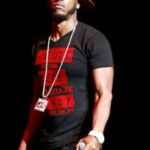

Mystikal: Fame, Fall, and the Weight of Consequence
A Career That Once Defined Southern Hip-Hop
For decades, the name Mystikal carried a distinctive energy in hip-hop—raw, aggressive, and unmistakably Southern. Born Michael Lawrence Tyler, the Louisiana rapper rose to prominence during a pivotal era when Southern rap was asserting itself on the global stage.
By the late 1990s and early 2000s, Mystikal had become one of the genre’s most recognizable voices. His 2000 hit Shake Ya Ass was not just a commercial success—it became a cultural moment. The track crossed into mainstream entertainment, even appearing in the film About a Boy, helping cement his crossover appeal.
His album success reinforced that trajectory. A project debuting at the top of the Billboard 200 signaled that Mystikal was no longer just a regional star—he was a national force. Grammy nominations followed, and his voice became synonymous with an era of high-energy Southern hip-hop.
Yet, behind the commercial achievements, a different narrative was unfolding—one marked by legal troubles that would repeatedly interrupt and ultimately reshape his legacy.
The 2026 Guilty Plea: A Defining Moment
In March 2026, Mystikal entered a guilty plea that has become one of the most consequential developments of his life and career.
The 55-year-old rapper pleaded guilty to third-degree rape in connection with a case stemming from his 2022 arrest. The plea was entered in a state courthouse outside Baton Rouge, Louisiana. As a result, he now faces up to 20 years in prison, with sentencing scheduled for June following a presentence investigation.



This plea represents a critical legal pivot. Originally, Tyler faced significantly more severe charges, including:
-
First-degree rape
-
Simple robbery
-
Domestic abuse battery
-
False imprisonment
He had initially pleaded not guilty to these charges. However, the eventual plea agreement reduced the severity of the case, avoiding the possibility of mandatory life imprisonment if convicted on the original counts.
What the Case Alleged
The case centered on allegations from a victim who told investigators that:
-
She was raped, beaten, and choked
-
Her phone and car keys were taken to prevent her from leaving
-
She was forced to send money via Cash App
Law enforcement accounts from 2022 described visible injuries and a distressed victim who identified Tyler as the suspect. He was subsequently arrested at his Prairieville home and held without bond.

The guilty plea effectively closes the trial phase that was initially scheduled for March 30, shifting the focus toward sentencing and long-term consequences.
A Pattern of Legal Troubles
While the 2026 plea is significant, it does not exist in isolation. Mystikal’s legal history has been a recurring factor in his public life.
2004 Conviction
In 2004, Tyler was convicted of sexual assault and extortion involving his hairstylist. The outcome:
-
Six-year prison sentence
-
Mandatory registration as a sex offender
This conviction marked the first major disruption to his career, halting his momentum at a time when he was still commercially viable.
2012 and 2017 Cases
-
2012: Served three months in jail for a misdemeanor domestic abuse charge
-
2017: Faced rape and kidnapping charges, though the case was ultimately dropped
These incidents contributed to a pattern that has shaped public perception, raising persistent concerns about behavior, accountability, and rehabilitation.
The Cultural Impact: Separating Art from the Artist
Mystikal’s story sits at the intersection of two competing realities: artistic influence and personal controversy.
Influence on Hip-Hop
From a purely musical standpoint, Mystikal helped define a sound:
-
High-intensity delivery
-
Distinct vocal cadence
-
Integration of Southern bounce and mainstream rap
His work contributed to the broader acceptance of Southern hip-hop during a period when coastal dominance—East and West—was still the norm.
Artists from subsequent generations have cited similar stylistic approaches, suggesting that his influence extends beyond his own discography.
Public Perception Shift
However, repeated legal issues have fundamentally altered how audiences engage with his legacy.
The central question has become less about his music and more about accountability. In contemporary cultural discourse—particularly in the post-#MeToo era—such cases carry heightened scrutiny. Public tolerance for separating artistic output from personal conduct has narrowed considerably.
As a result, Mystikal’s name is now as closely associated with controversy as it is with musical achievement.
Industry Silence and Structural Implications
One notable aspect of the current situation is the relative silence from the music industry.
Unlike previous decades, where legal troubles could be absorbed or overlooked, today’s entertainment ecosystem operates under stricter reputational constraints. Labels, collaborators, and platforms are more cautious about association, particularly in cases involving serious allegations.
This reflects broader structural changes:
-
Increased accountability expectations
-
Rapid public reaction cycles via social media
-
Greater emphasis on ethical alignment in branding
Mystikal’s case illustrates how these dynamics can reshape not just individual careers but also industry responses.
What Happens Next: Sentencing and Legacy
With the guilty plea entered, attention now shifts to sentencing.
A presentence investigation has been ordered, a process designed to provide the court with a comprehensive profile of the defendant before determining punishment. This includes:
-
Criminal history
-
Personal background
-
Impact statements
The sentencing hearing, tentatively scheduled for June, will determine the length and conditions of Tyler’s imprisonment.
Long-Term Outlook
Regardless of the sentence, the broader implications are already clear:
-
His career, effectively stalled for years, faces further uncertainty
-
Opportunities for mainstream re-entry are limited
-
His legacy will likely remain contested
In practical terms, the 2026 plea may serve as the final defining chapter of his public narrative.
Conclusion: A Career Defined by Duality
Mystikal’s story is not easily categorized. It is neither a simple rise-and-fall narrative nor a purely cautionary tale. Instead, it reflects a complex interplay between talent, opportunity, personal conduct, and accountability.
At his peak, he was a defining voice in hip-hop—commercially successful, culturally influential, and stylistically unique. Yet, repeated legal issues have overshadowed those achievements, reshaping how his work is remembered and discussed.
The 2026 guilty plea does not just mark a legal conclusion; it reinforces a broader reality: in modern cultural ecosystems, legacy is no longer determined solely by artistic output. It is equally shaped by personal actions—and the consequences that follow.