






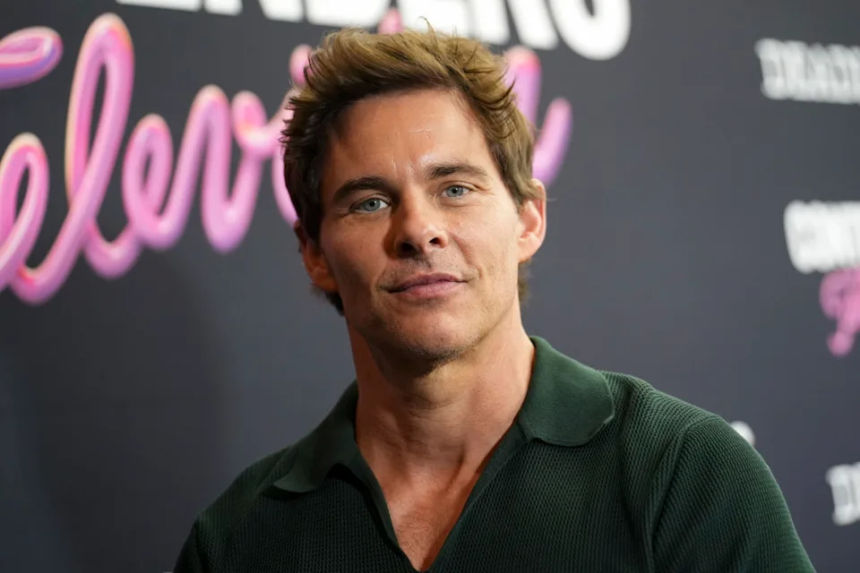
James Marsden and the Art of Playing Along: Inside Hollywood’s Most Unpredictable Comedy Experiment
A Career Reframed by Risk
For much of his career, James Marsden built a reputation as a versatile, dependable leading man — equally at ease in romantic comedies, superhero franchises, and musical dramas. But in recent years, his role in Jury Duty has reframed his public image in a way few actors manage: by turning himself into both subject and satire.
- A Career Reframed by Risk
- The Original Gamble: When Fiction Met Reality
- Marsden’s Unique Role: Actor, Disruptor, Variable
- Reinventing the Format: “Company Retreat”
- A Hybrid Genre That Shouldn’t Work — But Does
- Cultural Implications: Entertainment in the Age of Authenticity
- The Risk of Repetition — and the Future of the Format
- Conclusion: A Career Pivot with Broader Implications
What began as an unconventional experiment in 2023 has evolved into one of the most structurally daring projects in modern television. With the release of Jury Duty Presents: Company Retreat on Prime Video, the concept has expanded — and Marsden’s role in that evolution remains central, even as the format shifts.
This is not simply another acting credit. It is a case study in how performance, reality, and deception intersect in contemporary entertainment.
The Original Gamble: When Fiction Met Reality
The foundation of Jury Duty rests on a deceptively simple premise: place one unsuspecting individual inside a fully fabricated reality populated entirely by actors.
In the first season, that individual was Ronald Gladden, a solar panel contractor who believed he was participating in a documentary about jury service. What he did not know was that every juror, lawyer, and courtroom figure around him was part of a carefully orchestrated performance.
Among them was Marsden — not as a fictional character, but as an exaggerated version of himself.
This creative decision proved critical. By inserting a recognizable public figure into the fabricated environment, the show blurred boundaries further. Marsden’s self-parody — a “peacocking version” of his celebrity persona — added an additional layer of unpredictability, forcing both the actors and the unsuspecting participant to constantly recalibrate.
The stakes were unusually high. As executive producer Nicholas Hatton explained:
“The very scary, high-stakes element of making the show is that it can break at any time.”
In practical terms, that meant the illusion could collapse if the central participant detected the deception. Every performance had to remain credible, flexible, and responsive in real time.
Marsden’s Unique Role: Actor, Disruptor, Variable
Marsden’s contribution to Jury Duty was not simply comedic. It was structural.


By playing himself — but not quite truthfully — he introduced a destabilizing element into the narrative. His presence raised questions for the participant: Why is a celebrity here? Why is he behaving this way? Is this normal?
This ambiguity became a narrative engine.
Unlike traditional scripted roles, Marsden had to operate within constraints that most actors never encounter:
- He could not break character under any circumstances
- He had to improvise constantly based on unpredictable reactions
- He had to maintain internal consistency within an intentionally inconsistent reality
The result was a hybrid performance — part acting, part live adaptation — that sits somewhere between improv theatre and psychological experiment.
Reinventing the Format: “Company Retreat”
After the success of the first season, the concept faced a fundamental challenge: repetition risk.
Could the same premise work again?
The answer, according to the creative team, required escalation. The second installment, Jury Duty Presents: Company Retreat, shifts the setting from a courtroom to a corporate environment. This time, the unsuspecting participant is Anthony Norman, who believes he is working within a legitimate small business.
The mechanics remain similar — a single real participant surrounded by actors — but the environment introduces new variables:
- Workplace dynamics instead of legal proceedings
- Extended social interaction in a retreat setting
- Greater flexibility for narrative improvisation
Actors were even instructed to limit off-camera familiarity to preserve authenticity. In one instance, LaNisa Renee Frederick reportedly refused to learn a co-star’s name to reduce the risk of breaking the illusion.
This level of operational discipline reflects how fragile the format remains.
A Hybrid Genre That Shouldn’t Work — But Does
At a structural level, Jury Duty resists classification. It is simultaneously:
- Scripted comedy
- Improv performance
- Mockumentary
- Reality television
Each component carries its own conventions, yet the show operates by deliberately destabilizing them.
The key innovation lies in asymmetry:
everyone knows it’s fiction — except one person.
That asymmetry creates tension, humor, and ethical complexity. It also explains the polarized audience response. Some viewers celebrate the ingenuity and charm of the format, while others question its reliance on deception.
Cultural Implications: Entertainment in the Age of Authenticity
The success of Jury Duty arrives at a moment when audiences increasingly value authenticity — yet remain drawn to constructed narratives.
This paradox is central to the show’s appeal.
By placing a genuine human reaction at the center of an artificial environment, the series creates something rare: unscripted emotional truth within a scripted framework.
Marsden’s role amplifies this dynamic. As a recognizable figure behaving unpredictably, he becomes both a participant in the illusion and a signal that something is “off.” His presence forces viewers — and the central subject — to question what is real.
This aligns with broader trends in entertainment:
- Blending reality and fiction
- Breaking the fourth wall
- Using celebrity as both narrative device and critique
The Risk of Repetition — and the Future of the Format
The central challenge facing Jury Duty moving forward is sustainability.
The original premise relied heavily on novelty. Once audiences understand the mechanism, maintaining surprise becomes more difficult. The second installment attempts to address this by expanding the scope and complexity of the environment.
However, the core risk remains:
- If participants become suspicious, the illusion collapses
- If audiences anticipate the structure, the tension diminishes
To remain viable, future iterations will likely need to:
- Increase environmental complexity
- Introduce new narrative variables
- Potentially integrate multiple unaware participants
Marsden’s continued involvement — whether on-screen or as a conceptual anchor — will remain significant. His ability to navigate the boundary between sincerity and satire is a rare asset in a format built on instability.
Conclusion: A Career Pivot with Broader Implications
For James Marsden, Jury Duty represents more than a successful television project. It marks a strategic pivot toward risk-driven, concept-first storytelling.
By embracing a role that required him to relinquish traditional control — to react rather than dictate — he positioned himself at the center of one of the most innovative formats in recent television.
At the same time, the series itself raises broader questions about where entertainment is heading. As audiences continue to seek authenticity within constructed narratives, formats like Jury Duty may become more common — though few will achieve the same balance of precision and unpredictability.
In that sense, Marsden’s performance is not just memorable. It is instructive.