






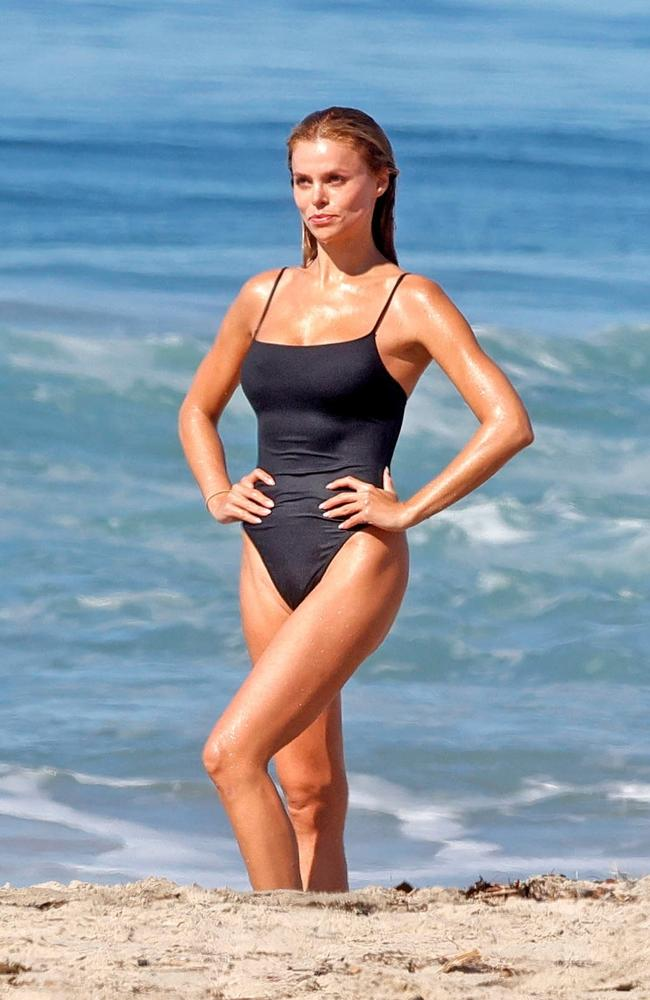
Brooks Nader and the New Era of Influencer Casting in Baywatch
A Cultural Shift in Casting: From Supermodels to Multi-Platform Personalities
The upcoming reboot of Baywatch is not simply revisiting a nostalgic television franchise—it is actively redefining how modern entertainment intersects with influencer culture, digital branding, and cross-industry talent. At the center of this shift is Brooks Nader, whose casting signals a broader transformation in how Hollywood approaches visibility, audience engagement, and star power.
- A Cultural Shift in Casting: From Supermodels to Multi-Platform Personalities
- The Baywatch Reboot: A Strategic Reinvention
- Brooks Nader: From Runway to Screen
- The Influencer Economy Meets Television Production
- Livvy Dunne’s Viral Training Moment: A Case Study in Engagement
- Rewriting the Legacy of Baywatch
- Broader Implications for Entertainment and Culture
- What Comes Next for Brooks Nader?
- Conclusion: A Strategic Casting Choice in a Changing Industry
Nader’s involvement in Baywatch 2.0: The Influencer Edition reflects a deliberate pivot toward personalities who command attention not only on screen but across social media ecosystems. Her inclusion alongside athletes, influencers, and actors underscores a casting philosophy rooted in reach, relatability, and real-time audience connection.
The Baywatch Reboot: A Strategic Reinvention
The reboot introduces a hybrid format—part scripted drama, part influencer-driven spectacle—bringing together a diverse cast that blends traditional acting credentials with digital-era prominence.
Among those joining the series are:
-
Olivia Dunne, cast as Grace, a “highly enthusiastic junior lifeguard”
-
Stephen Amell, leading as Cody Madison
-
David Hasselhoff’s legacy carried forward through returning characters
-
Shay Mitchell, Jessica Belkin, Hassie Harrison, and Thaddeus LaGrone
Within this ensemble, Brooks Nader occupies a unique position: she is not transitioning from athletics or traditional acting, but from the high-fashion modeling world—specifically the influential platform of the Sports Illustrated Swimsuit Issue.
Brooks Nader: From Runway to Screen
Nader’s rise has been shaped by her visibility in fashion and media. As a prominent Sports Illustrated Swimsuit model, she built a reputation anchored in visual storytelling, brand partnerships, and global audience recognition.



Her transition into Baywatch is therefore less a departure and more an extension of her established public identity—one already closely aligned with beach culture, athletic aesthetics, and aspirational lifestyle imagery.
What distinguishes Nader in this context is her ability to translate static modeling presence into dynamic screen performance. While her exact role in the series has not been detailed in the provided information, her inclusion signals confidence from producers in her capacity to adapt to narrative-driven content.
The Influencer Economy Meets Television Production
The reboot’s subtitle—The Influencer Edition—is not incidental. It reflects a calculated response to evolving viewer behavior, where audiences increasingly engage with personalities across platforms rather than through a single medium.
In this environment, casting decisions are no longer based solely on acting credentials. Instead, they incorporate metrics such as:



-
Social media reach and engagement rates
-
Brand alignment and commercial appeal
-
Cross-platform storytelling potential
Brooks Nader embodies this model effectively. Her established audience base provides built-in visibility for the series, reducing traditional marketing barriers and enhancing organic promotion through personal channels.
Livvy Dunne’s Viral Training Moment: A Case Study in Engagement
The promotional momentum for the reboot is already evident through cast activity. On March 17, 2026, Olivia Dunne shared images from her lifeguard training, captioned:
“all smiles during lifeguard training [Baywatch]”
The post quickly circulated online, illustrating how influencer-driven casting generates immediate buzz without reliance on conventional advertising campaigns.
While this moment centers on Dunne, it also benefits the entire cast—including Brooks Nader—by amplifying collective visibility. Each cast member’s digital presence contributes to a network effect, expanding the show’s reach across multiple audience segments.
Rewriting the Legacy of Baywatch
The original Baywatch, led by figures like David Hasselhoff, defined an era of television characterized by traditional celebrity structures. The reboot, however, operates within a fundamentally different media landscape.
Key differences include:
| Original Baywatch | Baywatch 2.0 |
|---|---|
| Network-driven fame | Platform-driven influence |
| Actor-centric casting | Hybrid influencer casting |
| Linear audience engagement | Continuous digital interaction |
Brooks Nader’s presence highlights this transition. She represents a new category of performer—one whose value extends beyond episodic appearances into ongoing audience relationships.
Broader Implications for Entertainment and Culture
The casting strategy behind Baywatch 2.0 reflects several wider industry trends:
1. Convergence of Fashion, Sports, and Entertainment
Nader’s background in modeling aligns with the show’s aesthetic, while athletes like Livvy Dunne introduce sports credibility. This convergence broadens the show’s appeal across demographics.
2. Redefinition of “Star Power”
Influence is increasingly measured by engagement rather than traditional accolades. Nader’s digital footprint becomes as significant as her on-screen performance.
3. Accelerated Talent Pipelines
The move from modeling or athletics into acting is becoming more streamlined, with fewer barriers between industries.
What Comes Next for Brooks Nader?
While the immediate focus remains on Baywatch 2.0, Nader’s involvement suggests a broader trajectory into entertainment. If successful, the series could position her for:
-
Expanded acting roles
-
Brand-driven content collaborations
-
Increased influence in lifestyle and media sectors
Her transition will likely be closely monitored as a test case for similar cross-industry moves.
Conclusion: A Strategic Casting Choice in a Changing Industry
Brooks Nader’s role in the Baywatch reboot is not merely a casting decision—it is a reflection of how entertainment is evolving. As boundaries between industries dissolve and digital influence reshapes audience engagement, figures like Nader become central to the next phase of television production.
The success of Baywatch 2.0: The Influencer Edition will depend not only on storytelling but on how effectively it leverages the combined reach of its cast. In that equation, Brooks Nader is positioned as both a performer and a strategic asset.