






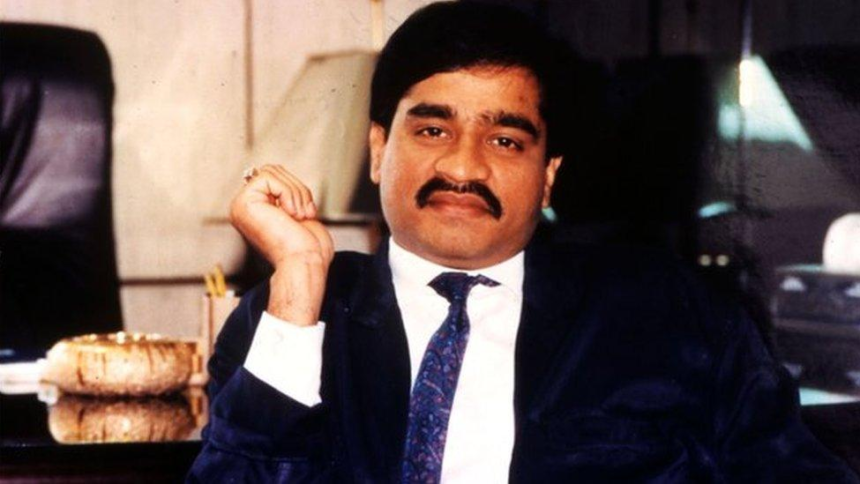
Dawood Ibrahim: From Underworld Kingpin to Cinematic Shadow
How a Fugitive Crime Figure Continues to Shape Storytelling, Politics, and Public Imagination
Few names in modern criminal history carry the same weight and notoriety as Dawood Ibrahim. Decades after rising to prominence as the alleged mastermind behind global criminal networks and the 1993 Mumbai serial bombings, his influence persists—not only in security discourse but increasingly in popular culture.
- How a Fugitive Crime Figure Continues to Shape Storytelling, Politics, and Public Imagination
- The Real Figure Behind the Fiction
- Reinventing the Underworld: “Bade Sahab” on Screen
- A Performance Built on Transformation
- The Secrecy Behind the Role
- Box Office Impact and Cultural Reach
- Art, Ethics, and the Challenge of Representation
- Why Dawood Ibrahim Still Resonates
- The Future of Crime Narratives in Cinema
- Conclusion
The latest example of this cultural resurgence is his portrayal in Dhurandhar: The Revenge, where actor Danish Iqbal embodies a fictionalized version of the fugitive under the alias “Bade Sahab.” The film’s commercial success and the intensity of the performance have reignited conversations about Ibrahim’s enduring legacy—both real and symbolic.
This article examines how Dawood Ibrahim’s story has evolved from underworld reality into cinematic narrative, and what that transition reveals about society’s relationship with crime, power, and myth.
The Real Figure Behind the Fiction
Dawood Ibrahim remains one of the most infamous figures associated with organized crime in South Asia. Widely described as a terror-linked fugitive, he is believed to have orchestrated extensive criminal enterprises spanning smuggling, extortion, and transnational networks.
His alleged role in the 1993 Mumbai serial bombings cemented his global notoriety, placing him at the center of international security concerns. Over time, Ibrahim’s identity has shifted from a tangible crime figure into a near-mythical presence—an elusive “shadow operator” said to influence events from afar.
This transformation—from a physical figure to an abstract symbol of hidden power—has made him particularly compelling for filmmakers and storytellers.

Reinventing the Underworld: “Bade Sahab” on Screen
In Dhurandhar: The Revenge, Ibrahim is not portrayed directly but reimagined as “Bade Sahab,” a mysterious underworld supremo manipulating events behind the scenes. The character exerts influence over institutions and individuals alike, including intelligence agencies and law enforcement figures.
Director Aditya Dhar deliberately crafted this portrayal with an emphasis on psychological depth rather than surface-level villainy. By doing so, the film avoids caricature and instead presents a complex figure whose power lies in perception, strategy, and fear.
The narrative unfolds alongside the journey of Ranveer Singh’s character, Hamza Ali Mazari (also known as Jaskirat Singh Rangi), who seeks to dismantle terror networks while navigating the murky intersection of espionage and identity.
A Performance Built on Transformation
At the center of this portrayal is Danish Iqbal’s physically and psychologically demanding performance. The actor underwent 8 to 10 hours of prosthetic makeup daily to depict an aging, frail, and illness-stricken version of the character.



What this process achieves is a stark visual contrast: a physically weakened man who nonetheless commands immense power. The transformation reinforces a key narrative idea—the most dangerous figures are not always the most visible or physically imposing.
Iqbal described the process candidly:
“On the first day, I thought it would be done in two or three hours, no big deal. But it took me five hours to complete it. And eventually, it took 8-9 hours. Sometimes 10 hours.”
The actor also immersed himself in psychological preparation, observing hospital patients and elderly individuals to accurately capture the character’s fragility and underlying menace.
Perhaps most striking is his approach to the role’s moral ambiguity:
“I have to accept his truth to play him well, and I think people liked that. He believes in whatever he’s doing, and that’s what makes him more threatening. Main abhineta hoon neta nahi (I’m an actor, not a politician).”
The Secrecy Behind the Role
One of the film’s most intriguing production details was the secrecy surrounding the character’s identity. Iqbal revealed that although he knew he was portraying Dawood Ibrahim, he did not initially realize that Ibrahim was the elusive “Bade Sahab” referenced throughout the film.
This deliberate concealment by the director heightened both the actor’s performance and audience anticipation. Speculation among viewers had ranged widely, with some expecting major stars to play the role.
Instead, the decision to cast a relatively lesser-known actor proved effective. It eliminated preconceived associations, allowing the character itself—rather than celebrity identity—to dominate the screen.
Box Office Impact and Cultural Reach
The commercial success of Dhurandhar: The Revenge underscores the continued public fascination with narratives rooted in real-world crime and geopolitics.
- ₹145 crore domestically on opening day
- ₹240 crore worldwide on opening day
- The first installment previously achieved ₹1,300 crore globally
These figures indicate not only strong audience engagement but also the viability of complex, politically charged storytelling in mainstream cinema.
The film’s success also reflects a broader trend: audiences are increasingly drawn to stories that blend factual history with fictional interpretation, particularly when they explore themes of power, secrecy, and moral ambiguity.
Art, Ethics, and the Challenge of Representation
Portraying a figure like Dawood Ibrahim inevitably raises ethical questions. How should filmmakers balance historical accuracy with creative freedom? Where is the line between representation and glorification?
Iqbal addressed this tension directly by emphasizing an actor’s responsibility to portray—not judge—the character. This approach aligns with a growing trend in cinema toward nuanced depictions of controversial figures.
Rather than presenting Ibrahim as a one-dimensional villain, the film explores the psychology of influence and belief. This shift reflects a broader cultural movement toward understanding the mechanisms of power rather than simply condemning its outcomes.
Why Dawood Ibrahim Still Resonates
The persistence of Dawood Ibrahim in public discourse can be attributed to several factors:
- Symbol of hidden power: His alleged ability to operate from the shadows makes him a compelling narrative figure
- Intersection of crime and geopolitics: His story is tied to broader regional tensions and security issues
- Cultural myth-making: Over time, facts and speculation have merged, creating a larger-than-life persona
In cinema, these elements translate into a character archetype that is both familiar and adaptable—the unseen orchestrator whose presence shapes events without direct visibility.
The Future of Crime Narratives in Cinema
The success of “Bade Sahab” suggests that audiences are increasingly receptive to layered portrayals of real-world figures. Future productions may continue this trend, focusing less on spectacle and more on psychological realism.
For actors like Danish Iqbal, this shift opens opportunities for complex roles that prioritize depth over glamour. For filmmakers, it offers a framework to explore sensitive topics without oversimplification.
More broadly, it signals a maturation in storytelling—one that acknowledges the complexity of history while engaging audiences through compelling narrative structures.
Conclusion
Dawood Ibrahim’s journey from underworld figure to cinematic subject illustrates how real-world narratives evolve over time. What began as a story of crime and controversy has become a lens through which filmmakers examine power, morality, and perception.
In Dhurandhar: The Revenge, this transformation is particularly evident. The character of “Bade Sahab” does not merely replicate history; it interprets it, reshaping a notorious figure into a symbol of enduring influence.
The result is a narrative that extends beyond entertainment—one that invites audiences to consider how stories are constructed, and why certain figures continue to captivate long after their actions have faded into history.