






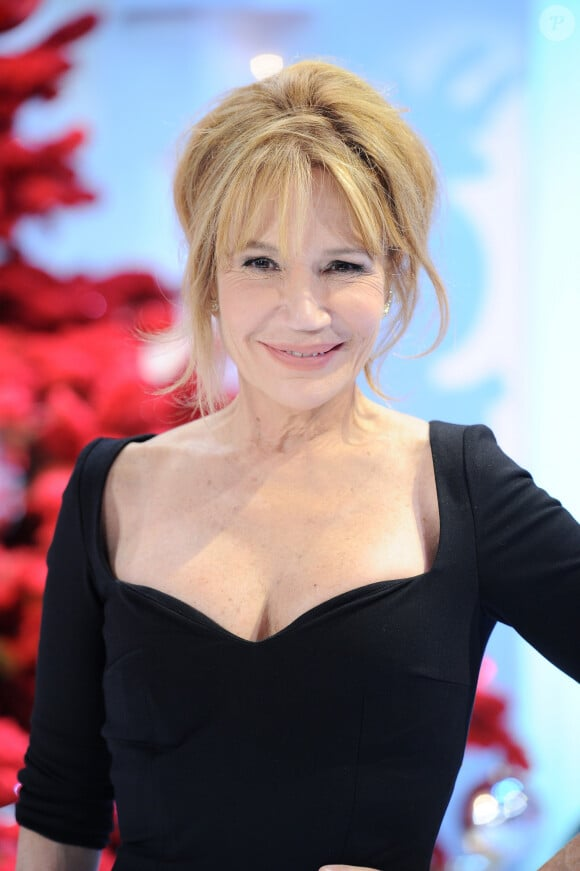
Clémentine Célarié: A Life in Art, Resilience, and Creative Legacy
A Return to the Spotlight with a Personal Touch
On March 22, 2026, French audiences watching Vivement Dimanche on France 3 witnessed more than just another celebrity appearance. When Clémentine Célarié stepped onto the iconic red sofa hosted by Michel Drucker, she brought with her not only decades of artistic experience but also a deeply personal dimension—her son, Gustave Reichert.
- A Return to the Spotlight with a Personal Touch
- A Career Built on Versatility and Recognition
- Family as a Creative Ecosystem
- Health, Resilience, and Public Narrative
- The Cultural Significance of “Vivement Dimanche”
- Audience Metrics and Media Context
- A Continuing Legacy in Motion
- Conclusion: Art Beyond the Individual
The moment encapsulated a defining aspect of Célarié’s life and career: the seamless blending of professional artistry with intimate, familial creativity. As her son performed a guitar piece live on set, the appearance became a quiet but powerful statement about legacy, continuity, and artistic inheritance.
A Career Built on Versatility and Recognition
Clémentine Célarié is widely recognized by French audiences for her extensive work across both cinema and television. Her roles in productions such as Les Bleus, premiers pas dans la police and Lebowitz contre Lebowitz have cemented her status as a versatile performer capable of navigating drama, comedy, and character-driven narratives with equal authority.
Unlike many actors confined to a single medium, Célarié has maintained a sustained presence across multiple formats—film, television, and theatre—allowing her to remain relevant across generations of viewers. Her continued visibility, including appearances on major television programs like Vivement Dimanche, reflects both her enduring appeal and her adaptability in a changing entertainment landscape.
Her participation in the March 2026 broadcast was also linked to her stage work, particularly her involvement in the play Potiche, reinforcing her continued engagement with live performance.
Family as a Creative Ecosystem
The appearance alongside Gustave Reichert offered a rare public glimpse into the artistic environment that surrounds Célarié’s personal life. Far from being a solitary creative figure, she exists within what can be described as a multi-disciplinary artistic family.

She is the mother of three sons:
- Abraham Diallo, born from her relationship in the 1980s with bassist Henri Diallo
- Gustave Reichert, a musician who performed on Vivement Dimanche
- Balthazar Reichert, an artist focused on painting and scenography
In a February interview, she described this creative dynamic in clear terms:
“Abraham il fait du hip-hop, il fait partie d’une troupe de danse, il fait de la production lui-même. Il fait de la musique, c’est magnifique (…) Mon deuxième, il fait de la musique, du jazz. Et le jazz aujourd’hui, ça marche, sauf que c’est difficile d’en vivre. Mon troisième est peintre, il fait de la scénographie.”
This statement reveals not only the breadth of artistic expression within her family but also a grounded awareness of the realities facing creative professionals, particularly in niche fields such as jazz.
Health, Resilience, and Public Narrative
Célarié’s presence on television also carries added weight due to her personal health history. Having previously faced colon cancer, her continued activity in the public eye reflects a narrative of resilience that resonates beyond entertainment.


While the broadcast itself focused on performance and discussion, her story contributes to a broader cultural discourse around illness, recovery, and visibility. Public figures who continue to engage with audiences after serious health challenges often become implicit symbols of endurance, shaping public perception around such experiences.
The Cultural Significance of “Vivement Dimanche”
The setting of her appearance is itself noteworthy. Vivement Dimanche, a long-running program that has been on air since 1998, remains a staple of French television culture. Hosted by Michel Drucker—who has built a reputation for conversational, personality-driven interviews—the show continues to attract established figures from across entertainment, literature, and public life.
The March 22 episode also featured figures such as:
- Catherine Ceylac, known for Thé ou café
- Fatou Diome
- Ana Carla Maza
- Nathalie Garçon
This multidisciplinary lineup underscores the program’s role as a cultural crossroads, where different forms of artistic expression intersect.
Audience Metrics and Media Context
From a broadcast perspective, Vivement Dimanche continues to operate within a competitive television environment. The program recorded:
- 699,000 viewers (6.9% audience share) for its first segment on March 15, 2026
- 598,000 viewers (6.7% audience share) for the second segment
These figures indicate stable but modest performance, highlighting the ongoing challenge for traditional television formats in retaining audiences amid evolving viewing habits.
Within this context, appearances by recognizable figures such as Clémentine Célarié serve both editorial and strategic purposes—reinforcing audience engagement while maintaining the program’s cultural relevance.
A Continuing Legacy in Motion
Clémentine Célarié’s recent appearance does not signal a retrospective moment but rather an ongoing trajectory. Her continued involvement in theatre, television, and public discourse suggests a career that remains active rather than archival.
At the same time, the visibility of her children—particularly in artistic contexts—points to a transition from individual recognition to collective legacy. This shift reflects a broader pattern among established cultural figures, where influence extends beyond personal achievements into generational continuity.
Conclusion: Art Beyond the Individual
Clémentine Célarié’s story, as illustrated in her March 2026 television appearance, is not confined to her résumé. It is shaped equally by her resilience, her family’s creative pursuits, and her sustained engagement with audiences.
Her presence on Vivement Dimanche functioned as both a professional showcase and a personal statement—demonstrating that artistic identity, at its most enduring, is rarely isolated. Instead, it evolves through relationships, experiences, and the passing of creative energy from one generation to the next.