





Cade Cunningham Injury: A Defining Moment in a Breakout Season
What His Absence Means for the Pistons, MVP Race, and NBA Playoffs
A Sudden Setback at the Peak of Dominance
At a time when the Detroit Pistons were asserting themselves as the dominant force in the Eastern Conference, their franchise cornerstone, Cade Cunningham, suffered an unexpected and potentially disruptive setback.
The 24-year-old All-Star guard has been diagnosed with a collapsed lung (left lung pneumothorax), an injury that will sideline him for at least two weeks and likely longer. The diagnosis follows an in-game collision during a matchup against the Washington Wizards—an incident that initially appeared minor but has since escalated into a critical concern for Detroit’s postseason ambitions.
This development arrives at a pivotal moment in both Cunningham’s career and the Pistons’ resurgence, raising immediate questions about timing, durability, and long-term implications.
How the Injury Happened
The sequence that led to Cunningham’s injury reflects the intensity and physical commitment that defines his playing style.

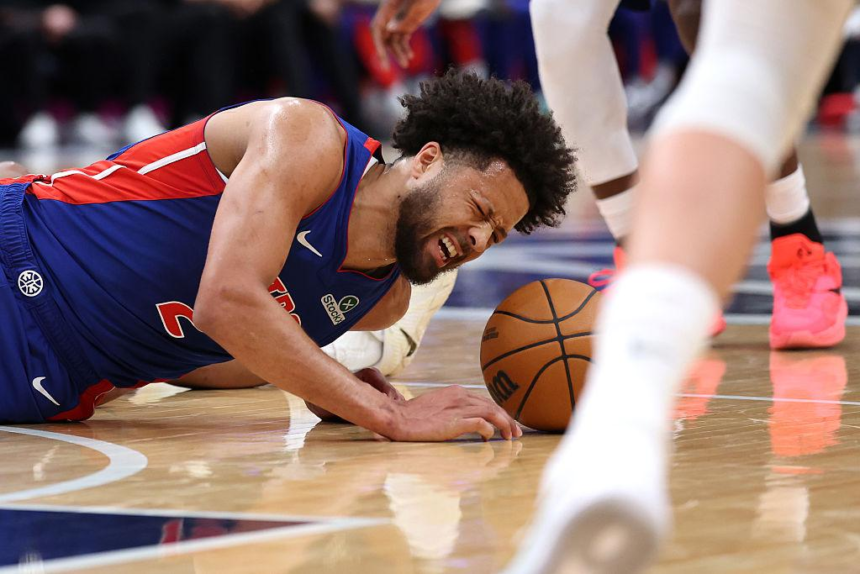
During the first quarter of Tuesday’s game against Washington, Cunningham dived for a loose ball and collided with Wizards guard Tre Johnson. Though he remained briefly on the court, he appeared visibly uncomfortable before exiting just over a minute later. Initially diagnosed with back spasms, further evaluation revealed the more serious underlying issue—a mild lung collapse.
Medical sources have indicated that the condition is not considered severe, offering cautious optimism. However, the recovery timeline remains uncertain, with the team confirming a reevaluation after two weeks.
The Numbers Behind an MVP-Caliber Season
Before the injury, Cunningham was not just leading the Pistons—he was redefining their identity.
-
24.5 points per game
-
9.9 assists per game (second-highest in the NBA)
-
61 games played
These figures position him firmly in the NBA MVP conversation, a remarkable achievement considering Detroit’s recent history near the bottom of the standings.
Even more significant is the team context:
-
Pistons record: 49–19
-
Eastern Conference rank: 1st
-
Lead over Boston Celtics: 3.5 games
Detroit is on pace for its best season in nearly two decades, and Cunningham has been the central architect of that transformation.
The Hidden Risk: Awards Eligibility
Beyond team performance, Cunningham’s injury introduces a technical but consequential issue—awards eligibility.
Under NBA rules, players must appear in at least 65 games to qualify for major honors such as:
-
MVP
-
All-NBA teams
-
Defensive Player of the Year
With Cunningham currently at 61 games played, even a short absence could leave him below the threshold. This creates a scenario where one of the league’s most impactful players might be excluded from formal recognition, despite a season that clearly meets elite standards.
Detroit’s Position: Strong, but Suddenly Fragile
On paper, the Pistons remain in a commanding position. Their 49–19 record gives them a buffer at the top of the East, and the playoff schedule provides a window for Cunningham’s return.
-
Regular season ends: Less than four weeks away
-
Playoffs begin: April 18
There is optimism that Cunningham could return in time for the postseason, but that optimism is tempered by uncertainty. Lung injuries, even mild ones, require careful management, and any setback could extend his absence into the playoffs.
Without Cunningham, Detroit faces several immediate challenges:
-
Loss of primary playmaker and offensive initiator
-
Reduced scoring efficiency
-
Increased pressure on secondary contributors
The team’s ability to maintain its lead in the standings will depend on how effectively it redistributes responsibilities during his absence.
The Broader NBA Context
Cunningham’s injury does not exist in isolation. It reflects a wider pattern across the league, where key stars are managing injuries at a critical stage of the season.
At the same time:
-
Giannis Antetokounmpo is dealing with a knee injury amid internal discussions about shutting him down
-
Playoff positioning across both conferences remains volatile
In this environment, health—not just performance—may ultimately determine championship outcomes.
Cunningham’s situation reinforces a central reality of modern NBA competition: availability is often as valuable as ability.
What Happens Next?
The immediate next step is a two-week reevaluation, which will provide clarity on:
-
Lung recovery progress
-
Conditioning status
-
Potential return timeline
If recovery proceeds as expected, Cunningham could rejoin the Pistons just ahead of the playoffs. If complications arise, Detroit may need to navigate the postseason without its primary star—a scenario that would significantly alter the competitive landscape in the East.
Conclusion: A Season Hanging in the Balance
Cade Cunningham’s injury arrives at a moment when everything seemed aligned—individual excellence, team success, and rising expectations.
Now, the narrative shifts.
What was shaping up to be a defining MVP campaign and a historic season for Detroit has become a test of resilience—both for the player and the organization. The coming weeks will determine whether this is a temporary interruption or a turning point with lasting consequences.
For the Pistons, the equation is clear: maintain momentum, manage risk, and hope their leader returns in time to finish what he started.
