





Bettina Köster: The Voice That Defined Berlin’s Avant-Garde Era
A Cultural Icon Falls Silent
The death of Bettina Köster at the age of 66 marks the end of a distinctive chapter in European music history. The influential musician and artist passed away in Italy, with confirmation coming from close friends who spoke to Rolling Stone. No cause of death has been disclosed.
- A Cultural Icon Falls Silent
- Origins: From Mania D to Malaria!
- “Kaltes klares Wasser” and Global Influence
- Berlin’s Avant-Garde: Context and Impact
- Beyond Music: Film, Writing, and Transatlantic Work
- Identity, Representation, and Cultural Significance
- A Lasting Legacy in Sound and Culture
- Conclusion: The End of an Era, The Persistence of Influence
Köster was not merely a performer; she was a defining presence in the West Berlin underground scene of the late 1970s and early 1980s, a period marked by artistic rebellion, experimentation, and cultural transformation. Her work continues to resonate across music, film, and identity politics, positioning her as a figure whose influence extended well beyond sound.
Origins: From Mania D to Malaria!
Köster first gained recognition with the experimental band Mania D, a project that laid the groundwork for what would become one of Germany’s most iconic avant-garde acts.
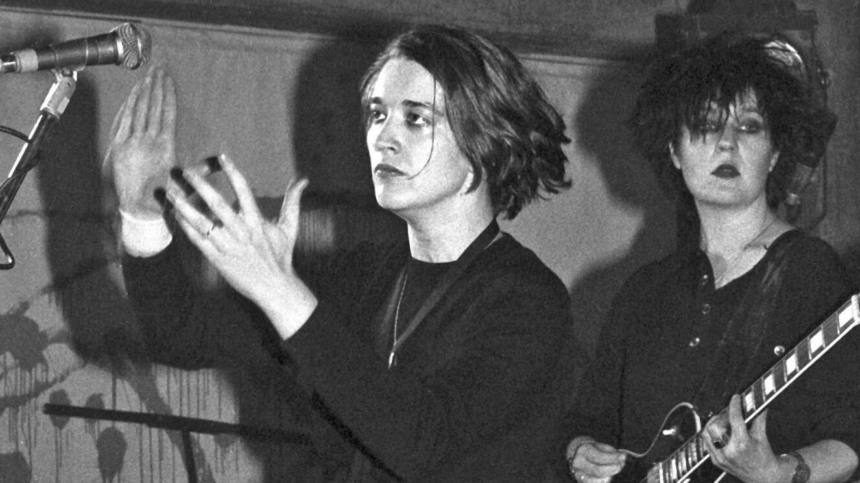
In 1981, she co-founded Malaria! alongside Gudrun Gut, forming an all-female group that challenged both musical conventions and gender norms within the industry.
As the band’s lead singer and principal lyricist, Köster helped craft a sound that fused:
-
Minimalist rhythms
-
Electronic experimentation
-
Stark, atmospheric textures
Their music was both austere and hypnotic, reflecting the divided city of Berlin itself—raw, tense, and creatively charged.



“Kaltes klares Wasser” and Global Influence
Among Malaria!’s most enduring works is the track Kaltes klares Wasser (“Cold Clear Water”), a composition that achieved international recognition and became emblematic of the post-punk and new wave movement.
The song’s stark sonic architecture, combined with Köster’s signature delivery—often described as spoken-word-like, detached, and haunting—set it apart from conventional vocal styles of the time.
During the 1980s, Malaria! toured alongside major acts such as:
-
New Order
-
The Birthday Party
-
Nina Hagen
-
John Cale
-
Siouxsie and the Banshees
These collaborations and shared stages cemented Köster’s role in shaping an international avant-garde network, linking Berlin’s underground with broader global movements.



Berlin’s Avant-Garde: Context and Impact
Köster’s rise cannot be separated from the cultural environment of Cold War-era West Berlin, a city that functioned as a magnet for artists, outsiders, and experimental thinkers.
Within this ecosystem:
-
Music blurred into performance art
-
Gender norms were actively challenged
-
DIY culture thrived in opposition to mainstream industry structures
Köster became a central figure in this avant-garde matrix, contributing not just musically but ideologically. Her work embodied resistance—against commercial conformity, against rigid identity categories, and against artistic limitation.
Beyond Music: Film, Writing, and Transatlantic Work
Following the eventual dissolution of Malaria!, Köster did not retreat from creative life. Instead, she expanded her practice into new disciplines.
She later relocated to New York, where she built a second career as:
-
A screenwriter
-
A film composer
This transition demonstrated a consistent through-line in her work: a commitment to narrative, atmosphere, and emotional minimalism, regardless of medium.
Her multidisciplinary approach reflected a broader trend among avant-garde artists of her generation—moving fluidly between art forms while maintaining a coherent aesthetic identity.
Identity, Representation, and Cultural Significance
Köster’s influence extended beyond art into questions of identity and representation.
-
She identified as non-binary, long before such identities entered mainstream discourse
-
She became an early icon within the queer movement
-
She also played a role in the women’s movement, particularly through her work in an all-female band during a male-dominated era
In this sense, Köster’s legacy operates on multiple levels:
-
Musical innovation – redefining vocal style and sonic minimalism
-
Cultural resistance – challenging gender and industry norms
-
Identity visibility – contributing to early queer representation
Her presence offered a template for artists seeking to exist outside conventional categories.
A Lasting Legacy in Sound and Culture
Even decades after their formation, Malaria!’s music continues to be rediscovered by new audiences. Tracks like “Kaltes klares Wasser” remain staples in discussions of post-punk history, while Köster’s vocal style is frequently cited as a precursor to later experimental and electronic artists.
Her work has endured because it resists easy classification. It is:
-
Neither purely musical nor purely conceptual
-
Neither mainstream nor entirely underground
-
Neither bound by time nor fully detached from its historical moment
That ambiguity is precisely what gives it longevity.
Conclusion: The End of an Era, The Persistence of Influence
The passing of Bettina Köster signals more than the loss of a musician. It marks the departure of a cultural architect—someone who helped define an era when Berlin stood at the forefront of artistic experimentation.
Her voice, characterized by restraint and intensity, reshaped expectations of what a frontwoman could be. Her identity challenged social norms long before such conversations became widespread. And her work continues to echo across music, film, and contemporary culture.
In the landscape of post-punk and avant-garde art, Bettina Köster remains not just a participant—but a reference point.