






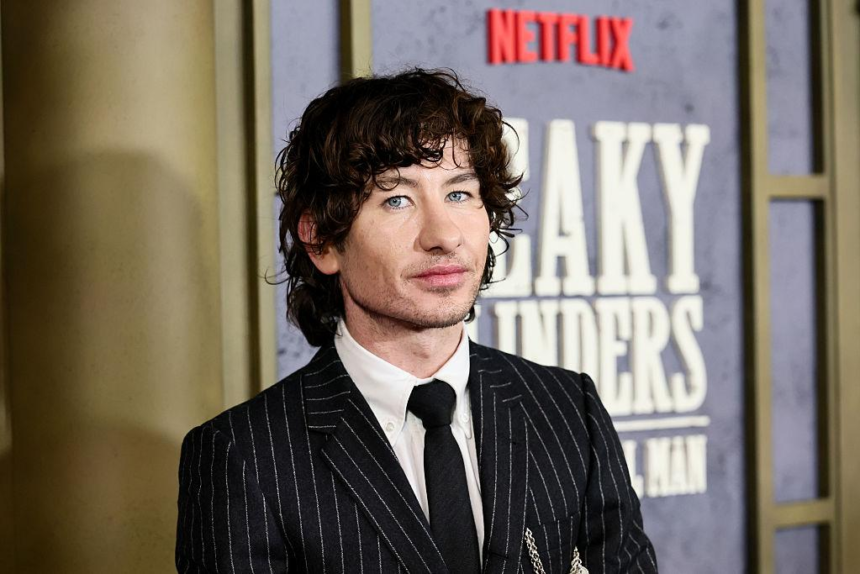
Barry Keoghan and the Cost of Visibility: A Cultural Impact Analysis
Introduction: When Fame Turns Inward
For Barry Keoghan, the spotlight has always been a double-edged instrument—amplifying both acclaim and scrutiny. But in 2026, the actor’s candid reflections have shifted the conversation beyond celebrity gossip into something more consequential: the psychological cost of online abuse in the digital era.
- Introduction: When Fame Turns Inward
- The Escalation of Online Abuse
- When Criticism Crosses Into Identity
- Career Momentum Meets Personal Strain
- The Personal Dimension: Fatherhood and Legacy
- A Dual Reality: Support and Hostility
- Contextualizing the Issue: A Broader Cultural Pattern
- The Influence of Personal Narratives
- Future Outlook: Navigating Visibility in the Digital Age
- Conclusion: A Case Study in Modern Fame
In a revealing interview on SiriusXM’s “The Morning Mash Up”, the Saltburn and Peaky Blinders: The Immortal Man star described how persistent criticism of his appearance has reshaped not just his public presence, but his private life and creative identity.
His words were unambiguous: “There’s a lot of hate online… It’s becoming a problem.”
The Escalation of Online Abuse
Keoghan’s experience reflects a broader structural issue within modern digital culture—where visibility invites commentary, and commentary often escalates into hostility.
“There’s a lot of abuse of how I look,” he explained. “It’s kind of past the point of — you know, everyone goes through that… but it’s made me shy away. It’s made me really go inside myself, not want to attend places, not want to go outside.”
This is not an isolated moment of frustration. The actor outlined a pattern:


- Withdrawal from social events
- Reduced public appearances
- Emotional retreat into private spaces
Even after stepping back from social media, the psychological pull remains. “I’m still a curious human being… you want to see how it was received,” he said, acknowledging a cycle many public figures—and increasingly, ordinary users—experience.
The outcome, in his words, is consistent: “It’s not nice.”
When Criticism Crosses Into Identity
The turning point in Keoghan’s account is not the existence of criticism, but its depth and persistence. What begins as commentary evolves into identity-level pressure.
“I don’t have to hide away ’cause I am hiding away… I actually don’t go to places because of these things.”



This distinction is critical. It suggests that online discourse is no longer confined to digital environments—it is shaping real-world behavior. For Keoghan, that includes avoiding public spaces altogether.
At a professional level, the implications are even more serious.
“When that starts leaking into your art, it becomes a problem, because then you don’t want to even be on screen anymore.”
This is a direct articulation of creative inhibition driven by external perception—a phenomenon increasingly discussed in media psychology and performance studies.
Career Momentum Meets Personal Strain
The timing of these revelations is notable. Keoghan’s career trajectory remains strong:
- A prominent role in Peaky Blinders: The Immortal Man
- An upcoming portrayal of Ringo Starr in a biopic directed by Sam Mendes
These are high-profile, career-defining opportunities. Yet they exist alongside a growing reluctance to engage with the very exposure that sustains such roles.
This tension—between professional ascent and personal withdrawal—highlights a paradox of modern fame: success increases visibility, but visibility intensifies vulnerability.
The Personal Dimension: Fatherhood and Legacy
Beyond career considerations, Keoghan’s concerns extend into his role as a father.
“It is disappointing for the fans, but it’s also disappointing that my little boy has to read all of this stuff when he gets older.”
His son, Brando, becomes a focal point in understanding the long-term implications of online discourse. The issue is no longer limited to immediate emotional impact; it evolves into a question of legacy and digital permanence.
In an environment where online content is archived indefinitely, public figures are not just managing present narratives—they are anticipating future interpretation by their own families.
A Dual Reality: Support and Hostility
Despite the intensity of the criticism, Keoghan is careful to acknowledge a counterbalance: a supportive fan base.
“I’ve been blessed that I have an incredible fanbase and people are so lovely out there… That is the good side of it.”
This duality is essential. The same platforms that facilitate abuse also enable connection, admiration, and meaningful engagement.
Live interactions—such as Q&As—offer a stark contrast to anonymous commentary. They humanize both the performer and the audience, reducing the distance that often fuels hostility online.
Contextualizing the Issue: A Broader Cultural Pattern
Keoghan’s experience aligns with a wider pattern across the entertainment industry. Public figures—from actors to musicians—have increasingly spoken about body shaming and appearance-based criticism.
The underlying dynamics include:
- Algorithm-driven amplification of negative content
- Anonymity enabling harsher language
- Unrealistic visual standards shaped by edited imagery
These factors contribute to a digital environment where scrutiny is constant and often disproportionate.
What distinguishes Keoghan’s case is the clarity with which he connects this environment to behavioral change—specifically, withdrawal from both public life and creative expression.
The Influence of Personal Narratives
Keoghan’s recent personal history also intersects with the current narrative. Following his split from Sabrina Carpenter in December 2024, public attention intensified.
Their relationship, which began in late 2023, had largely remained private, though it entered the public sphere through collaborative moments such as her “Please Please Please” music video.
While the separation itself was described as a mutual decision—“They are both young and career-focused”—the aftermath illustrates how personal developments can amplify public scrutiny.
In such contexts, online commentary often extends beyond professional critique into personal territory.
Future Outlook: Navigating Visibility in the Digital Age
Keoghan’s situation raises broader questions about sustainability in modern celebrity culture:
- Can public figures maintain visibility without exposure to harmful commentary?
- Will industry structures evolve to provide better psychological support?
- How will audiences adapt to increasing awareness of the impact of online behavior?
His approach—stepping back from social media while maintaining selective engagement—may represent a transitional model rather than a permanent solution.
Logging off, as he suggests, “might not fix everything, but sometimes it’s the only way to cope.”
Conclusion: A Case Study in Modern Fame
Barry Keoghan’s reflections are not merely personal disclosures; they function as a case study in the evolving relationship between celebrity, audience, and digital platforms.
His experience illustrates a critical shift:
- From external criticism to internalized impact
- From online interaction to real-world withdrawal
- From public performance to private hesitation
At a moment when his career continues to expand, his voice introduces a necessary counterpoint—highlighting the psychological costs embedded within contemporary visibility.
The broader implication is clear: as digital culture continues to shape public life, the boundaries between visibility, identity, and well-being are becoming increasingly fragile.