


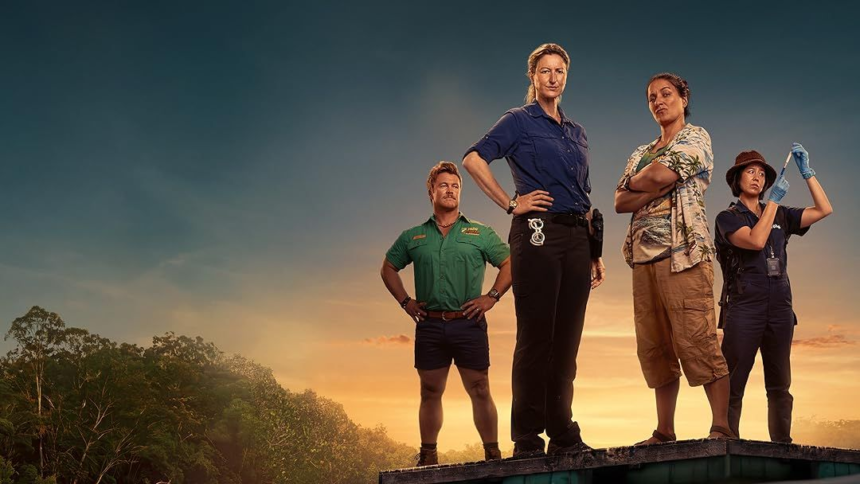
Deadloch Season 2: A Crime-Comedy That Refuses to Play by the Rules
A Return That Raises the Stakes
When Deadloch first premiered in 2023, it established itself as an unlikely standout—an Australian crime-comedy that blended murder mystery with biting satire and unapologetically local humor. Created by Kate McCartney and Kate McLennan, the series quickly earned critical acclaim for its distinctive voice and sharp writing.
- A Return That Raises the Stakes
- From Tasmania to the Top End: A Strategic Shift in Setting
- A Dual Investigation Structure That Adds Complexity
- Conflict Beyond the Crime: Institutional and Social Friction
- The Core Dynamic: A Study in Contrast
- Expanding the Ensemble Without Dilution
- Comedy as Structure, Not Decoration
- A Deeply Australian Identity
- Industry Context: Why Deadloch Matters
- Looking Ahead: Sustainability and Evolution
- Conclusion: A Rare Balance of Precision and Chaos
Season 2, released on Prime Video on March 20, builds on that foundation with notable confidence. Directed by Beck Cole and Gracie Otto, the new chapter does not attempt to reinvent the show’s formula. Instead, it expands its scope—geographically, narratively, and tonally—while preserving the elements that made it successful.
The result is a continuation that feels both familiar and deliberately elevated.
From Tasmania to the Top End: A Strategic Shift in Setting
The first season centered on the fictional town of Deadloch in Lutruwita (Tasmania), where detectives Dulcie Collins (Kate Box) and Eddie Redcliffe (Madeleine Sami) unraveled a complex murder case.

Season 2 relocates the narrative to Australia’s Northern Territory, specifically Garramilla (Darwin) and the remote town of Barra Creek. This shift is more than cosmetic—it fundamentally alters the dynamics of the story.
Barra Creek introduces a harsher, more unpredictable environment:



-
Crocodile-infested waters
-
A tourism economy built around wildlife
-
Isolated communities with tightly held secrets
The central mystery begins with a striking discovery: a dead crocodile found with a human body part in its mouth. This immediately expands the narrative beyond a conventional murder case, raising questions about missing backpackers and potential links to past violence described as having “got Wolf Creeked.”
Simultaneously, Eddie’s personal storyline deepens as she investigates the unresolved death of her former partner, Bushy—an emotional thread that anchors the season’s broader chaos.
A Dual Investigation Structure That Adds Complexity
Season 2 operates on overlapping investigative threads:
-
The Barra Creek Crocodile Case
-
A grotesque discovery triggers a multi-layered mystery
-
Local businesses and tourism operators become suspects
-
-
Bushy’s Death
-
A personal investigation for Eddie
-
Introduces emotional stakes and unresolved trauma
-
This dual structure allows the series to balance procedural storytelling with character-driven drama, a technique often attempted in crime television but rarely executed with consistent tonal control.



Conflict Beyond the Crime: Institutional and Social Friction
The detectives face more than just a mystery. The investigation is complicated by systemic and social obstacles:
-
Limited resources in a remote location
-
Rival detectives running questionable parallel investigations
-
A powerful local family, the Darrells, led by Amber Darrell (Nikki Britton)
-
Commercial tensions between competing crocodile tour operators
Additionally, Luke Hemsworth appears as Jason Wade, a self-promoting wildlife presenter whose exaggerated persona satirizes celebrity conservation culture. His character introduces both comedic disruption and narrative misdirection.
These layers create a setting where authority is fragmented and truth is difficult to isolate.
The Core Dynamic: A Study in Contrast
At the center of Deadloch remains the relationship between Dulcie Collins and Eddie Redcliffe.
Season 2 reverses their established dynamic:
-
Dulcie becomes the outsider, struggling with the heat, unfamiliar culture, and overt sexism
-
Eddie returns to her hometown, confronting past relationships and personal history
This inversion is structurally significant. It prevents stagnation and allows both characters to evolve while maintaining their established chemistry.
Kate Box’s restrained, methodical performance continues to contrast effectively with Madeleine Sami’s abrasive, impulsive energy. The tension between control and chaos drives much of the show’s humor and emotional resonance.
Expanding the Ensemble Without Dilution
The second season introduces several new characters while retaining key figures from the original cast:
-
Leo Lee (Jean Tong): A disengaged local journalist who becomes unexpectedly valuable
-
Miki Evans (Shari Sebbens): A pragmatic ranger navigating environmental and social pressures
-
Abby Matsuda (Nina Oyama): Returning as part of the forensics team
Supporting roles, including local bar owners and law enforcement figures, contribute to a densely populated narrative ecosystem without overwhelming the central plot.
The casting strategy emphasizes balance—each character serves a functional role in either advancing the mystery or reinforcing the show’s comedic tone.
Comedy as Structure, Not Decoration
One of Deadloch’s defining characteristics is its use of humor not as relief, but as a structural element.
The dialogue is deliberately abrasive, often relying on:
-
Profanity-driven punchlines
-
Cultural references specific to Australia
-
Character-based humor rooted in personality clashes
Lines such as Eddie’s “he’s not my boss and neither are you so stiff clitties” exemplify the show’s refusal to sanitize its voice.
Importantly, this approach does not undermine the seriousness of the crimes. Instead, it reframes them, allowing the series to critique genre conventions while still functioning within them.
A Deeply Australian Identity
Season 2 reinforces Deadloch’s cultural specificity:
-
References to local music like Black Lace’s “Agadoo”
-
Distinctively Australian slang and humor
-
Place names and environmental details unique to the region
Visually, the series benefits from cinematography by Rob Marsh, Katie Milwright, and Simon Ozlins, capturing the stark beauty of Larrakia country. The production design, particularly the Barra Creek Tavern, adds authenticity and texture.
Rather than diluting its identity for international audiences, the show leans into its specificity—an approach that enhances its originality.
Industry Context: Why Deadloch Matters
Within the broader television landscape, Deadloch occupies a rare position:
-
A crime series that resists procedural rigidity
-
A comedy that maintains narrative stakes
-
A regional production with global appeal
Its success reflects a growing demand for content that blends genres without compromising tone or cultural identity.
The involvement of established creators like McCartney and McLennan, alongside emerging and established Australian talent, positions the series as a key example of contemporary Australian television’s international viability.
Looking Ahead: Sustainability and Evolution
Season 2 demonstrates that Deadloch is not a one-season anomaly. However, its future depends on maintaining:
-
Narrative innovation
-
Character development
-
Balance between comedy and crime
There are indications that the show could continue expanding geographically or thematically, but doing so without diluting its core identity will be critical.
Conclusion: A Rare Balance of Precision and Chaos
Deadloch Season 2 confirms the series as one of the most distinctive entries in modern television. It successfully integrates:
-
Complex, layered storytelling
-
Strong character dynamics
-
A uniquely irreverent comedic voice
By shifting its setting, deepening its character arcs, and refining its narrative structure, the show avoids the common pitfalls of second seasons.
Its achievement lies not in reinventing the crime-comedy genre, but in demonstrating how flexible—and how sharp—it can be when executed with clarity and confidence.