






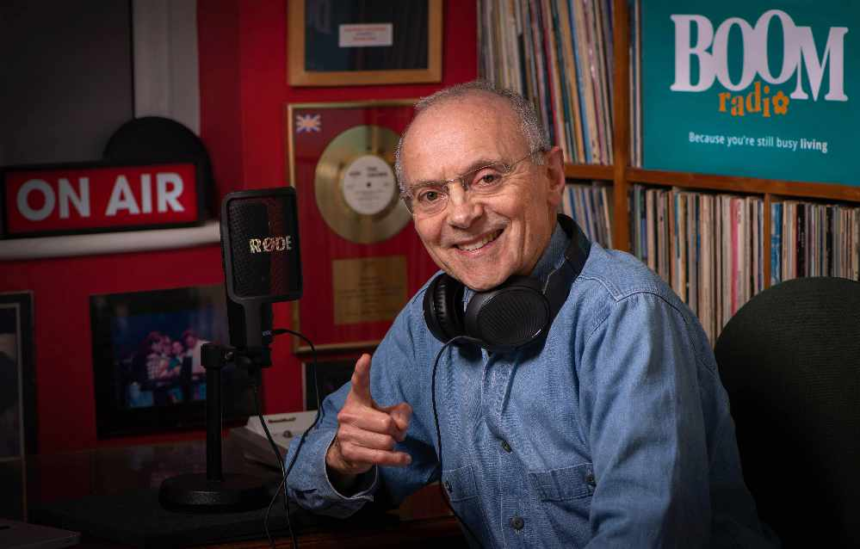
Broadcaster Dave Jamieson Dies at 76: A Life Behind the Microphone
The passing of veteran broadcaster Dave Jamieson at the age of 76 marks the end of a career that quietly shaped decades of British radio. From hospital studios to national airwaves, Jamieson’s journey reflects the evolution of radio itself—local, personal, and deeply rooted in community.
He died in Spain, where he had been living for several years, leaving behind a legacy defined not by celebrity, but by consistency, craft, and connection.
A Career That Began with Passion, Not Prestige
Jamieson’s entry into broadcasting was not through conventional industry pathways, but through hospital radio as a teenager—a starting point that has historically served as a training ground for many UK broadcasters.
From these early experiences, he moved into the formative era of BBC local radio, joining its first station in Leicester. This placed him at the heart of a significant shift in British media, when localized broadcasting began to complement national programming.
His early roles also included appearances on BBC Radio 1 Club and work with BBC Scotland, giving him exposure to both youth-oriented and regional audiences.
Building Commercial Radio from the Ground Up
While Jamieson’s BBC work established his voice, it was his role in commercial radio expansion that defined much of his career.

He was not simply a presenter—he was part of the foundational teams that built stations from scratch. His contributions included:
-
Helping launch Radio Clyde in Glasgow
-
Supporting the development of Mercia Sound in Coventry
-
Working at BRMB in Birmingham
-
Joining Viking Radio in Hull from its first day
At Viking Radio, he presented a program titled Noticeboard, a format rooted in community information—again reinforcing his consistent alignment with listener-focused broadcasting.
Later roles at Radio Tees and Heart demonstrated his adaptability as the industry evolved through consolidation and branding changes.
A Voice Beyond Radio
Jamieson’s work extended beyond traditional radio formats. In the 1970s, he served as an out-of-vision announcer on ATV, later moving to Central Television.



His voice became familiar to audiences nationwide through daytime school programming, an often-overlooked segment of broadcasting that played a key role in educational media at the time.
This aspect of his career highlights a broader truth: Jamieson’s voice was present in everyday life, even when his face was not.
A Late-Career Revival with Boom Radio
In 2021, Jamieson became part of the launch team for Boom Radio, a station designed to serve an older demographic underserved by mainstream outlets.
Initially hosting Saturday breakfast, he later transitioned to Sunday mornings, broadcasting remotely from Spain. His continued presence on air into his mid-70s underscores both his dedication and the enduring demand for experienced voices in radio.
Boom Radio’s tribute captures the sentiment within the industry:
“We are so sad to share the news that our Sunday early presenter Dave Jamieson died in Spain this week.
Dave was part of the launch of Boom Radio in 2021, agreeing without hesitation to join his old friends Les Ross, Graham Torrington, Andy Marriott, Ron Coles, Quentin Howard and Phil Riley to play his part in our plans.
With his love and knowledge of music and his enthusiasm and commitment to Boom, he’s been a valued member of the team from afar for five years on the Saturday breakfast show initially, before moving to Sundays. He will be much missed.”
The statement reflects not only professional respect but personal connection—Jamieson worked alongside long-standing colleagues who helped shape commercial radio’s golden era.
The Significance of His Career in Context
Jamieson’s career offers a lens into several key developments in broadcasting:
1. The Rise of Local Radio
His early work coincided with the expansion of BBC local stations, which redefined how communities engaged with media.
2. Commercial Radio Growth
His involvement in launching multiple stations highlights the rapid growth of independent radio across the UK during the late 20th century.
3. Longevity in Broadcasting
Remaining active on air into his 70s, Jamieson represents a generation of broadcasters whose careers span analogue to digital transitions.
4. Personality-Driven Programming
Even as formats changed, his style remained rooted in authenticity—prioritizing music knowledge and audience connection over theatrics.
A Legacy Defined by Consistency and Craft
Unlike high-profile media figures, Dave Jamieson’s legacy is not built on headlines but on decades of reliable broadcasting. His work touched multiple generations, from schoolchildren hearing educational programming to weekend listeners tuning in from across the UK.
He belonged to a class of broadcasters who viewed radio not as a platform for personal branding, but as a public service—informative, entertaining, and accessible.
Conclusion: The Quiet Impact of a Radio Lifelong
Dave Jamieson’s passing closes a chapter in British broadcasting history that is increasingly rare—one defined by longevity, adaptability, and understated professionalism.
His career illustrates how radio has evolved while retaining its core function: connecting people through voice. In an era of rapid media transformation, figures like Jamieson serve as a reminder of the enduring value of experience and authenticity.
He may not have sought the spotlight, but his voice remained a constant presence—steady, familiar, and trusted.