




Stéphane Tapie and the Television Incident That Shocked France
A narrative reconstruction of a moment that blurred the line between entertainment and confrontation
A Routine Broadcast That Took an Unexpected Turn
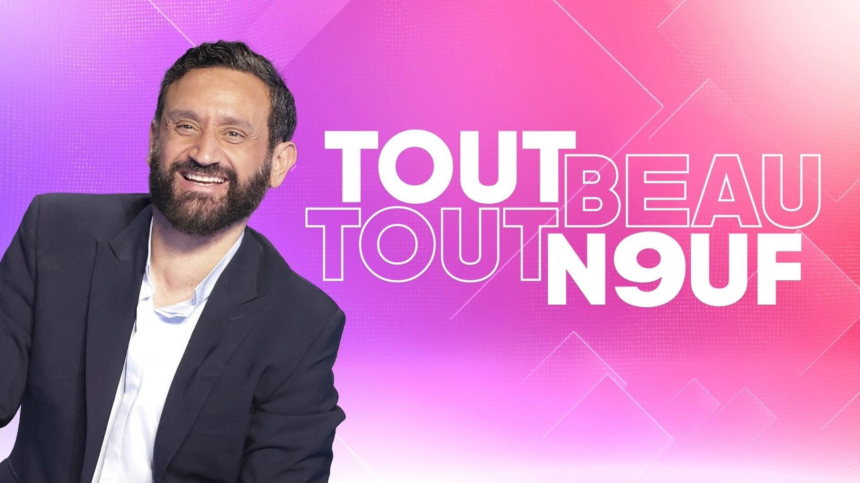
On what should have been a standard recording of a television talk show, the atmosphere inside the studio of Tout beau tout n9uf shifted abruptly from light entertainment to a scene described by witnesses as “total horror.” At the center of this incident was Stéphane Tapie, a media personality known as the son of the late businessman and public figure Bernard Tapie, whose actions during a commercial break have now placed him under intense public scrutiny.
- A Routine Broadcast That Took an Unexpected Turn
- The Build-Up: A Longstanding Dispute Resurfaces
- The Incident: Violence Behind the Cameras
- Medical Response and Legal Implications
- A Broader Question: Boundaries in Entertainment Culture
- Public Reaction and Industry Impact
- What Comes Next
- Conclusion: A Defining Moment for Stéphane Tapie
The episode, broadcast on the W9 channel and hosted by Cyril Hanouna, had followed a familiar format—lively exchanges, personal anecdotes, and moments of tension typical of talk television. However, behind the scenes, an escalation between panelists led to a physical altercation that has since dominated headlines and sparked debate about conduct in televised media environments.
The Build-Up: A Longstanding Dispute Resurfaces
The confrontation did not emerge in isolation. According to accounts provided by individuals close to the situation, tensions between Stéphane Tapie and fellow commentator Fabien Lecœuvre had been simmering for some time. The friction was reportedly linked to a broader disagreement involving Claude François Junior, a close associate of Lecœuvre.
The trigger came during a segment in which host Cyril Hanouna asked panelists a seemingly innocuous question: who among their colleagues they would not choose to go on holiday with. Lecœuvre responded candidly—“Stéphane Tapie”—a remark rooted in their pre-existing conflict.
What might have remained a sharp but contained exchange quickly escalated. Witnesses describe visible irritation from Tapie, including gestures and verbal hostility, culminating in a chilling remark directed at the host: “When do I get the right to punch him?”
The Incident: Violence Behind the Cameras
The most serious developments occurred during the commercial break that followed. Away from the live broadcast but still in the presence of studio staff and audience members, Stéphane Tapie approached Lecœuvre.

According to testimony, “Stéphane Tapie approached Fabien Lecœuvre while he was talking to other people and punched him in the temple.” The impact was severe. Lecœuvre reportedly fell to the ground, striking his head and losing consciousness for several seconds.
The reaction in the studio was immediate and visceral. “We thought he was dead,” one witness stated, capturing the shock that rippled through the audience and crew. Security personnel intervened quickly, restraining Tapie and removing him from the set.
Despite the severity of the moment, the show resumed after the break as though nothing had occurred—an editorial decision that has since raised questions about transparency and responsibility in live television production.
Medical Response and Legal Implications
Although Lecœuvre managed to return briefly to the set, he was unable to continue his segment. His condition deteriorated sufficiently to require emergency medical attention. Firefighters were called and treated him backstage before transporting him for further care. He has remained hospitalized since the incident.



The legal dimension is already taking shape. Stéphane Loisy, Lecœuvre’s lawyer, has confirmed that a formal complaint is expected to be filed in the coming days. This step signals a shift from a workplace dispute to a matter potentially involving criminal liability.
Stéphane Tapie himself has acknowledged the act, stating: “Lecoeuvre continued to provoke me during the commercial break […] So I slapped him, it’s true. And if I had to do it again, I would do it again.” The statement, rather than mitigating the situation, has intensified scrutiny of both his actions and his judgment.
A Broader Question: Boundaries in Entertainment Culture
The incident extends beyond the individuals involved. It exposes a structural tension within contemporary television formats that rely heavily on confrontation, spontaneity, and personality-driven content.
Programs like Tout beau tout n9uf thrive on candid exchanges and emotional reactions. However, the escalation from verbal conflict to physical violence highlights the fragility of these formats when boundaries are not clearly enforced.
The decision to resume the broadcast “normally” after the incident further complicates the narrative. It suggests an institutional prioritization of continuity over immediate acknowledgment, raising concerns about how production teams manage crises in real time.
Public Reaction and Industry Impact
Public response has been swift and polarized. For some viewers, the incident underscores the risks inherent in unscripted television. For others, it reflects deeper issues related to professionalism and accountability within the entertainment industry.
There are also potential regulatory implications. Media oversight bodies may evaluate whether the circumstances warrant sanctions or new guidelines regarding on-set conduct, particularly in shows that encourage high-intensity interactions.
At a reputational level, the event affects not only the individuals involved but also the program and its host. Cyril Hanouna’s format, already known for controversy, may face renewed examination regarding editorial control and participant safety.
What Comes Next
Several developments are expected in the coming days and weeks:
- The filing of a legal complaint by Lecœuvre’s legal team
- Possible responses or disciplinary measures from the W9 channel
- Public statements or clarifications from the show’s production team
- Potential involvement of media regulators
Each of these steps will shape how the incident is ultimately interpreted—whether as an isolated outburst or as a symptom of broader systemic issues within televised entertainment.
Conclusion: A Defining Moment for Stéphane Tapie
For Stéphane Tapie, the incident marks a critical juncture. What began as a heated exchange has evolved into a national conversation about responsibility, conduct, and the limits of televised conflict.
The episode serves as a stark reminder that even in environments designed for spectacle, there are boundaries that, once crossed, carry consequences extending far beyond the studio.