





Susanna Reid Under the Spotlight: When Journalism Meets Public Sensitivity
A Defining Moment on Live Television
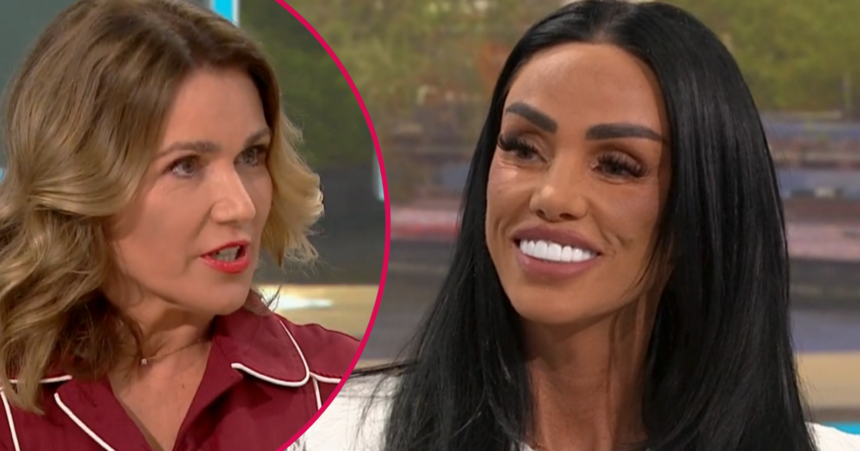
Few morning television moments capture public attention quite like a candid exchange that blurs the line between concern and controversy. On 16 March 2026, Susanna Reid—a veteran presenter on Good Morning Britain—found herself at the center of a national debate after questioning Katie Price about her visibly dramatic weight loss.
- A Defining Moment on Live Television
- The Exchange That Divided Viewers
- Public Reaction: Concern vs. Boundaries
- Susanna Reid’s Interviewing Style: Direct, Unfiltered, Strategic
- The Broader Context: Media, Health, and Public Figures
- Beyond the Headlines: What the Conversation Reveals
- What Comes Next for Live Television Journalism?
- Conclusion: A Moment That Reflects a Larger Shift
During the live broadcast, Reid addressed the issue directly, telling Price she appeared “very, very skinny.” The exchange, while brief, triggered a wider discussion about journalistic responsibility, public health concerns, and the boundaries of live television interviews.
The Exchange That Divided Viewers
The moment unfolded with notable directness. Price herself acknowledged the observation, stating:
“I look gaunt,” while confirming she had sought medical advice and was undergoing tests.
Reid continued with pointed but measured questions, reflecting what many viewers had already been discussing online—whether the weight loss was linked to medication or underlying health concerns. Price firmly denied speculation surrounding weight-loss drugs, clarifying that medical tests had ruled out such use.

She added that she was “lacking in iron” and undergoing further checks, while also noting she was experiencing premenopause. Despite the visible changes, Price reassured both Reid and the audience:
“I am healthy, so nobody worry about me.”
Public Reaction: Concern vs. Boundaries
The audience response was immediate and polarized.



On one side, critics argued that Reid’s line of questioning crossed a personal boundary. Social media reactions included comments suggesting it was inappropriate to publicly discuss a woman’s weight, framing the exchange as intrusive and unnecessary.
On the other side, a significant portion of viewers interpreted Reid’s approach differently. They viewed her comments as an expression of genuine concern—particularly given the visible physical changes and ongoing public speculation.
This division highlights a recurring tension in broadcast journalism:
When does asking difficult questions serve the public interest, and when does it become personal intrusion?
Susanna Reid’s Interviewing Style: Direct, Unfiltered, Strategic
Reid is no stranger to high-pressure interviews or difficult conversations. Over years of presenting live television, she has built a reputation for:
-
Direct questioning
-
Maintaining composure under scrutiny
-
Addressing topics others might avoid
Her approach in this instance aligns with that broader editorial style. Rather than sidestepping an issue already dominating public discourse, she chose to address it openly—arguably reflecting the role of a presenter as both interviewer and intermediary between public curiosity and personal narrative.
However, live television offers no margin for revision. Every question is immediate, and every response is amplified in real time.
The Broader Context: Media, Health, and Public Figures
The exchange also sits within a wider societal context. Public figures like Katie Price often exist under constant scrutiny, particularly regarding appearance and health. At the same time, discussions around body image, medical privacy, and mental well-being have become increasingly sensitive.
This creates a complex dynamic:
-
Audiences expect transparency from public figures
-
Media professionals must balance sensitivity with accountability
-
Individuals retain the right to personal boundaries, even in the public eye
Reid’s questioning effectively exposed this tension in a single, unscripted moment.
Beyond the Headlines: What the Conversation Reveals
The debate surrounding Susanna Reid is not solely about one interview. It reflects broader shifts in how media operates and how audiences interpret it.
Key takeaways include:
-
Changing audience expectations: Viewers are more vocal and divided than ever
-
Heightened sensitivity around personal topics: Health, weight, and mental well-being are no longer neutral discussion points
-
The evolving role of presenters: Journalists are increasingly expected to navigate both factual inquiry and emotional nuance
The incident demonstrates that even routine interviews can become flashpoints for cultural discussion.
What Comes Next for Live Television Journalism?
Looking ahead, moments like this are likely to shape editorial decisions in live broadcasting. Producers and presenters may face increasing pressure to:
-
Frame sensitive questions more carefully
-
Provide clearer context when addressing personal issues
-
Balance audience curiosity with ethical considerations
At the same time, avoiding such topics entirely risks accusations of superficial reporting. The challenge lies in maintaining credibility without compromising empathy.
Conclusion: A Moment That Reflects a Larger Shift
Susanna Reid’s questioning of Katie Price was not just a fleeting television moment—it became a case study in modern media dynamics.
It demonstrated how quickly a single exchange can evolve into a national conversation about ethics, sensitivity, and the responsibilities of journalism.
In an era where every word is scrutinized and amplified, the role of presenters like Reid continues to evolve. The expectation is no longer just to inform, but to navigate complex human realities in real time—under the watchful eye of a highly engaged audience.