






Sekiro Anime: A Bold Evolution From Game to Screen
From Shadows to Screens: Why Sekiro’s Anime Matters Now
The announcement of a “sekiro anime” adaptation marks a significant moment in the evolving relationship between video games and animation. Once considered difficult to translate due to their interactive nature, games like Sekiro: Shadows Die Twice are now being reimagined for a broader audience through cinematic storytelling.
- From Shadows to Screens: Why Sekiro’s Anime Matters Now
- The Origins: A Critically Acclaimed Foundation
- Inside “Sekiro: No Defeat”: A Hand-Drawn Vision
- Story Direction: Choosing a Path in a Multi-Ending World
- Translating Gameplay Into Narrative
- Music and Atmosphere: Rebuilding Emotion Through Sound
- Faithfulness vs. Innovation: Addressing Fan Concerns
- Visual Identity: Violence, Beauty, and Sengoku Japan
- Cast and Continuity: Returning Voices
- Release Timeline and Format
- Cultural and Industry Impact
- What Comes Next
- Conclusion: A High-Stakes Adaptation
With “Sekiro: No Defeat” officially unveiled alongside a new trailer ahead of SXSW 2026, the project has quickly become one of the most anticipated anime releases of the year. It is not just another adaptation—it represents a calculated attempt to preserve the soul of a demanding, player-driven experience while reshaping it into a structured narrative.
The Origins: A Critically Acclaimed Foundation
At the heart of the anime lies Sekiro: Shadows Die Twice, the 2019 action-adventure title developed by FromSoftware. Known for its punishing difficulty and intricate world-building, the game follows a lone shinobi, Wolf, navigating a fractured Japan during the Sengoku period.
The original story centers on loyalty, sacrifice, and survival, as Wolf embarks on a mission to rescue his kidnapped lord—the Divine Heir—while confronting both human enemies and supernatural threats.
This foundation is critical. Unlike many games that rely heavily on player choice, Sekiro offers a relatively focused narrative, making it a more viable candidate for adaptation—though not without challenges.
Inside “Sekiro: No Defeat”: A Hand-Drawn Vision
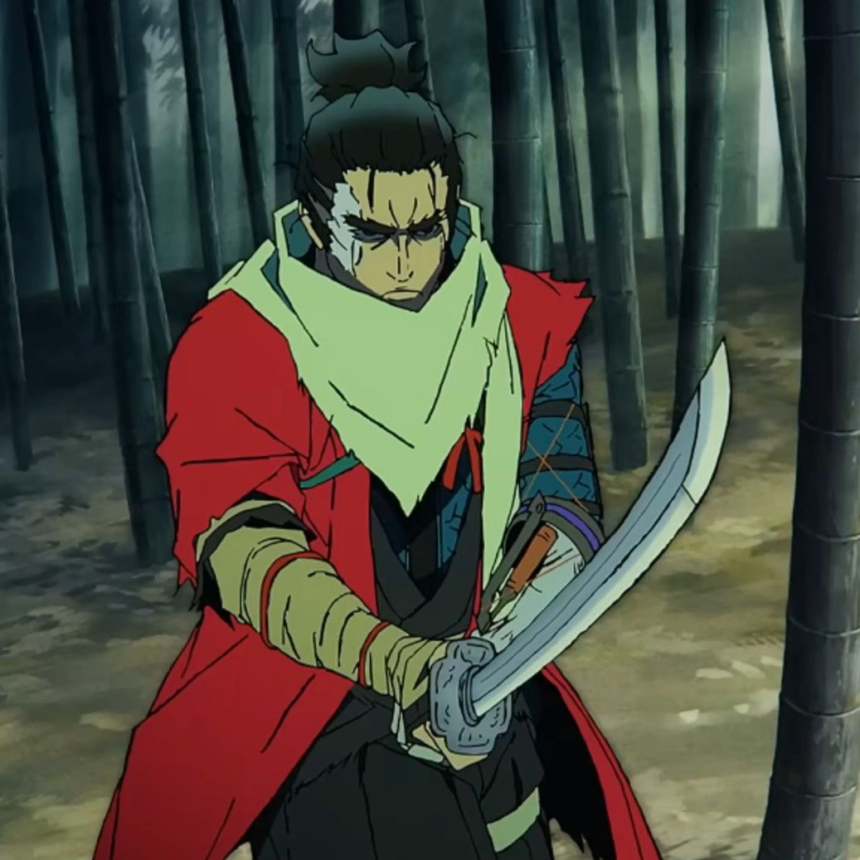
The anime adaptation, titled “Sekiro: No Defeat,” is being produced as a hand-drawn 2D animation, a deliberate artistic choice aimed at preserving the visual identity of the game.
Directed by Kenichi Kutsuna, the series is developed by Studio Qzil.la, with additional production support from Arch and Studio Betta. The emphasis on traditional animation techniques is not incidental—it reflects a broader commitment to authenticity.
Kutsuna explained the creative philosophy behind the project:
“By embracing the hand-drawn essence of 2D animation, we can achieve a transcendent beauty in action that goes beyond cool to something deeply poignant.”
This approach aligns closely with the original game’s aesthetic, where brutality and elegance coexist within a stylized depiction of feudal Japan.
Story Direction: Choosing a Path in a Multi-Ending World
One of the defining features of Sekiro is its branching narrative structure. Players can choose different paths, leading to multiple endings—some triumphant, others tragic.
Adapting this into a linear anime format required a decisive shift.
Kutsuna confirmed that the anime leans toward one of the game’s three major narrative branches, while still attempting to preserve the interpretive openness that fans associate with the original experience:
“One of the core pillars of the video game experience… is that it’s not a very kind game… and it also allows a lot of interpretation… we wanted it to be open to interpretation in a similar way.”
This balance—between fixed storytelling and interpretive depth—is central to the adaptation’s identity.
Translating Gameplay Into Narrative
Perhaps the most complex challenge facing the “sekiro anime” is translating a first-person, player-driven experience into a passive viewing format.
Kutsuna addressed this directly:
“With the game, of course, you’re playing in the character… POV… that wouldn’t really work for an anime, so we tried to adapt it as much as possible as an audio-visual type of medium.”
Instead of immersing the audience through control, the anime relies on visual storytelling, pacing, and emotional cues. This shift also elevates elements that are less prominent in gameplay—such as character relationships and internal conflict.
Music and Atmosphere: Rebuilding Emotion Through Sound
Another major transformation comes in the role of music.
Composer Shuta Hasunuma highlighted how scoring for an anime differs fundamentally from game composition:
“There’s a lot more nuance that can be expressed in a linear format… a lot of very intense moments, a lot of very private, more nuanced, dramatic moments.”
The anime aims to deepen emotional engagement by using music as a guiding force—something that is more controlled and deliberate than in the interactive game environment.
Additionally, the theatrical version features the theme song “Blu” by Ryuichi Sakamoto, reinforcing the project’s emphasis on emotional resonance.
Faithfulness vs. Innovation: Addressing Fan Concerns
Since its announcement at Gamescom, the adaptation has faced scrutiny from fans concerned about fidelity to the original game.
Kutsuna acknowledged these concerns openly:
“We understand that the potential audience… is going to put this under the microscope… I am nervous… but I think we’ve done everything we could… to maintain a level of quality that wouldn’t tarnish the FromSoftware and ‘Sekiro’ brand.”
Early reactions to the teaser included speculation about the use of AI in animation—a concern that has since been addressed and largely dismissed.
Importantly, the production has maintained close collaboration with FromSoftware, ensuring that key elements of the world, characters, and lore remain intact. According to Kutsuna:
“FromSoftware would check and approve everything and make sure it is in line with the world setting.”
This partnership represents a safeguard against the kind of misalignment that has plagued other game adaptations.
Visual Identity: Violence, Beauty, and Sengoku Japan
The newly released trailer emphasizes a defining characteristic of the anime: its uncompromising tone.
From intense sword fights to atmospheric landscapes, the adaptation does not shy away from the brutality that defines the source material. Iconic encounters—such as battles with The Owl, Genichiro Ashina, and the Corrupted Monk—are reimagined with cinematic intensity.
At the same time, the anime seeks to capture the duality of the Sengoku era, where violence exists alongside traditional Japanese beauty. This contrast is central to both the game and the adaptation.
Cast and Continuity: Returning Voices
The anime strengthens its connection to the original game by bringing back several voice actors, including:
-
Daisuke Namikawa as Wolf
-
Miyuki Sato as Kuro
-
Kenjiro Tsuda as Genichiro Ashina
Additional returning cast members include Jin Urayama, Shizuka Ito, Akimitsu Takase, Takaya Hashi, and Tetsuo Kanao.
This continuity is likely to resonate strongly with fans, reinforcing a sense of authenticity.
Release Timeline and Format
“Sekiro: No Defeat” is set to stream on Crunchyroll in 2026, with early footage already showcased at SXSW during an in-room-only screening.
In parallel, a theatrical anime version has also been announced, expanding the project beyond a single format and signaling strong confidence from its producers.
Cultural and Industry Impact
The “sekiro anime” arrives at a time when video game adaptations are undergoing a renaissance. With increasing investment and higher production standards, studios are recognizing the narrative potential of established game franchises.
This project is particularly notable because it marks the first time FromSoftware’s IP has been adapted into an on-screen medium. Its success—or failure—could influence future adaptations of similarly complex games.
Moreover, the anime’s themes—loneliness, loyalty, and the burden of duty—carry relevance beyond its historical setting, offering a narrative that connects with modern audiences.
What Comes Next
While anticipation remains high, the ultimate success of “Sekiro: No Defeat” will depend on its ability to satisfy two distinct audiences:
-
Fans of the original game seeking fidelity
-
New viewers encountering the story for the first time
Kutsuna remains cautiously optimistic:
“I believe this film will leave you with something meaningful after watching it.”
Conclusion: A High-Stakes Adaptation
The “sekiro anime” represents more than just a translation of a popular game—it is a test case for how interactive storytelling can evolve into a cinematic form without losing its essence.
By combining hand-drawn artistry, close collaboration with the original creators, and a carefully selected narrative path, “Sekiro: No Defeat” positions itself as one of the most ambitious anime adaptations in recent years.
Whether it meets expectations will become clear when it reaches audiences in 2026—but its intent is already evident: to honor a demanding legacy while redefining how such stories are told.