





Ready or Not 2: When Chaos Gets Bigger—but Not Always Better
A Franchise Returns With Higher Stakes and Louder Ambitions
Seven years after the original Ready or Not carved out a niche as a sharp, darkly comic horror, its sequel — Ready or Not 2: Here I Come — arrives with a noticeably different agenda. Where the first film thrived on contained tension and biting satire, the follow-up expands outward, embracing scale, mythology, and spectacle.
- A Franchise Returns With Higher Stakes and Louder Ambitions
- The Scene That Defined the Challenge
- Breaking Down Complexity: How the Directors Structured the Scene
- Why Reactions Matter More Than Dialogue
- The Editing Room: Where the Scene Was Rewritten
- From Contained Horror to Expansive Mythology
- A Shift in Tone: Horror, Action, or Something Else?
- Cultural Context: The “Eat-the-Rich” Narrative Evolves
- The Filmmaking Philosophy Behind the Chaos
- Conclusion: A Sequel That Expands—and Complicates—Its Own Identity
The result is a film that is undeniably bigger, but also more complex in ways that divide both its creators and critics. Behind the camera, directors Matt Bettinelli-Olpin and Tyler Gillett (collectively known as Radio Silence) approached the sequel as a technical and creative escalation. On screen, however, that ambition translates into a dense narrative that leans heavily on exposition, shifting the balance between horror, comedy, and action.
The Scene That Defined the Challenge
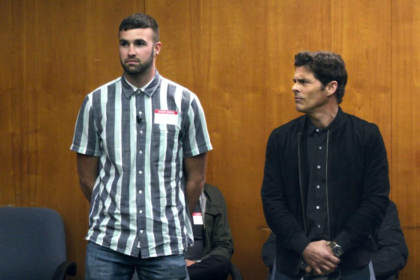
Ironically, the most difficult sequence in Ready or Not 2: Here I Come does not involve bloodshed, elaborate kills, or physical chaos — elements typically associated with the franchise. Instead, it centers on a dialogue-heavy scene early in the film, where Elijah Wood’s attorney character explains the rules of a newly expanded and far more consequential game.
“We joke that we have that scene in all of our movies,” Bettinelli-Olpin said. “There’s always a scene where the entire ensemble is in a room having some big conversation. We try to have a different approach every time so it doesn’t get stale.”



This particular sequence involves 14 characters sharing the screen, each with varying degrees of participation. Some characters drive the narrative through dialogue, while others exist primarily through reaction and physical presence — a dynamic that introduced significant logistical and creative challenges.
“We’re shooting that scene over two or three days, but you have to maintain the sense that it’s happening in 15 minutes,” Bettinelli-Olpin explained. “It’s one of two places in the movie where we backed ourselves into a corner, because the tone has to live confidently in a scene that is essentially Elijah Wood giving rules for 10 minutes.”



Breaking Down Complexity: How the Directors Structured the Scene
To manage the complexity, the directing duo approached the sequence as a series of smaller narrative units.
Rather than treating it as a single continuous block of exposition, they divided it into “mini-acts,” each designed to carry its own narrative weight. This allowed them to maintain pacing and engagement, even as the scene delivered critical information about the film’s expanded premise.
However, execution proved demanding. Keeping energy consistent across multiple days of shooting required careful coordination, particularly when some actors were less active in certain segments.
“There’s something really wonderful about those scenes as a mile marker,” Gillett noted. “This is the reason we brought all of these people together, to play off of each other, and we get to do that in one big, fun, long scene.”



The directors also adjusted their shooting schedule around performers’ emotional and physical demands:
“When someone has a trying scene, an exhausting scene, we usually ask, ‘Do you want us to start with you or end with you?’” Bettinelli-Olpin said.
Why Reactions Matter More Than Dialogue
A defining element of the filmmakers’ approach lies in their emphasis on reaction shots. Rather than focusing solely on dialogue delivery, they prioritize how characters respond to information — visually and emotionally.
“It’s not just what’s said,” Gillett emphasized. “It’s how people respond and react to what’s said.”
This philosophy drives their insistence on extensive coverage. Multiple angles, shot sizes, and character perspectives are captured to ensure flexibility in post-production. According to the directors, this allows the story to be shaped dynamically during editing — even to the point where it could theoretically be told from any character’s point of view.
The Editing Room: Where the Scene Was Rewritten
Despite careful planning, the sequence underwent significant restructuring in post-production.
“We had to make sure we didn’t have repeat moments that were sneakily hiding in there,” Bettinelli-Olpin explained. “We did a kind of mix-and-match puzzle game where we had to move the rules around.”
The challenge was not simply clarity, but rhythm. Information that felt coherent on paper risked becoming repetitive or disjointed on screen. The solution involved regrouping related concepts and reordering dialogue to maintain narrative flow and audience comprehension.
This iterative process underscores a broader truth about filmmaking: even the most meticulously planned scenes often evolve dramatically in the edit.
From Contained Horror to Expansive Mythology
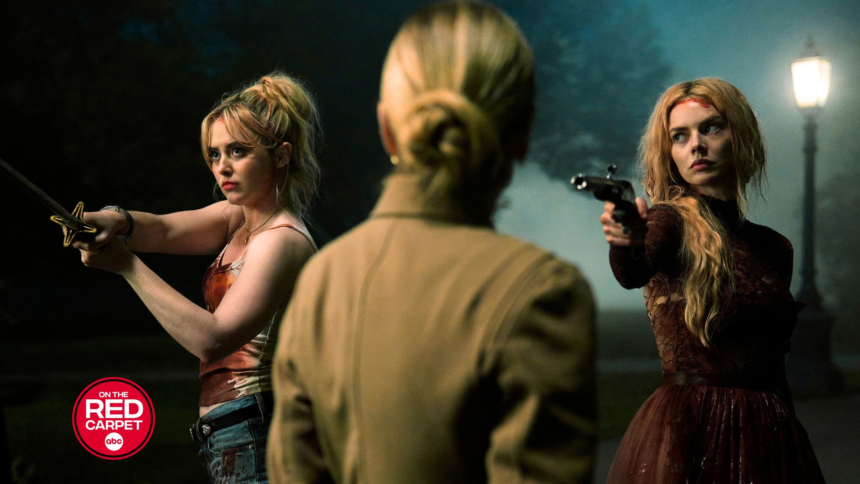
Narratively, Ready or Not 2 pushes far beyond the original film’s premise. The story resumes immediately after the events of the first installment, following Grace (Samara Weaving) as she navigates the aftermath of surviving a deadly ritual.
This time, the stakes are significantly elevated. According to the film’s internal logic, Grace’s survival has triggered a wider conflict involving multiple powerful families competing for dominance. Each faction must attempt to kill her before dawn in order to claim supremacy.
This shift transforms the film’s scope. What was once a contained survival scenario becomes a sprawling conflict with implications that stretch toward global power structures.
However, this expansion comes at a cost. Critics have noted that the increased reliance on mythology and exposition dilutes the immediacy and emotional clarity that defined the original.
A Shift in Tone: Horror, Action, or Something Else?
The tonal identity of Ready or Not 2 is notably different. While the first film balanced horror and satire with relative precision, the sequel leans more heavily into action-comedy territory.
The result is a film that prioritizes spectacle and pacing over psychological tension. The inclusion of larger set pieces and more elaborate kill sequences reflects this shift, as does the emphasis on humor rooted in excess and absurdity.
At the same time, attempts to deepen character dynamics — particularly through the introduction of Grace’s estranged sister Faith — aim to add emotional weight. Whether this effort succeeds is a point of contention.
Cultural Context: The “Eat-the-Rich” Narrative Evolves
The original Ready or Not arrived before the “eat-the-rich” theme became a dominant trend in contemporary cinema. Since then, numerous films have explored similar territory, often with varying degrees of success.
By the time the sequel arrives, the concept is no longer novel. Instead, it exists within a crowded genre landscape that includes multiple high-profile entries.
This context influences how the film is received. What once felt sharp and timely now risks feeling repetitive, particularly when combined with familiar genre tropes and stylistic choices.
The Filmmaking Philosophy Behind the Chaos
Despite mixed reception, the directors remain committed to their creative process — one defined by patience, experimentation, and iterative decision-making.
“Any movie is just a series of choices with pressure over time,” Gillett said. “It’s easy to just want to be at the end, but you have to be patient because it’s in the doing of it that you experience all the wonderful discovery.”
This perspective is evident throughout the film. From the ambitious ensemble scenes to the extensive post-production restructuring, Ready or Not 2 reflects a willingness to embrace complexity, even when it introduces risk.
Conclusion: A Sequel That Expands—and Complicates—Its Own Identity
Ready or Not 2: Here I Come represents a clear evolution of the franchise, both in scale and ambition. It pushes beyond the boundaries of its predecessor, introducing broader stakes, larger set pieces, and a more intricate narrative framework.
At the same time, these expansions create new challenges. The reliance on exposition, the shift in tone, and the saturation of familiar themes all contribute to a film that is less focused but more ambitious.
For audiences, the experience will likely depend on expectations. Those seeking the sharp, contained energy of the original may find the sequel overextended. Others may appreciate its willingness to experiment and escalate.
What remains consistent is the filmmakers’ commitment to craft — particularly in how they approach storytelling through performance, reaction, and editorial precision.