






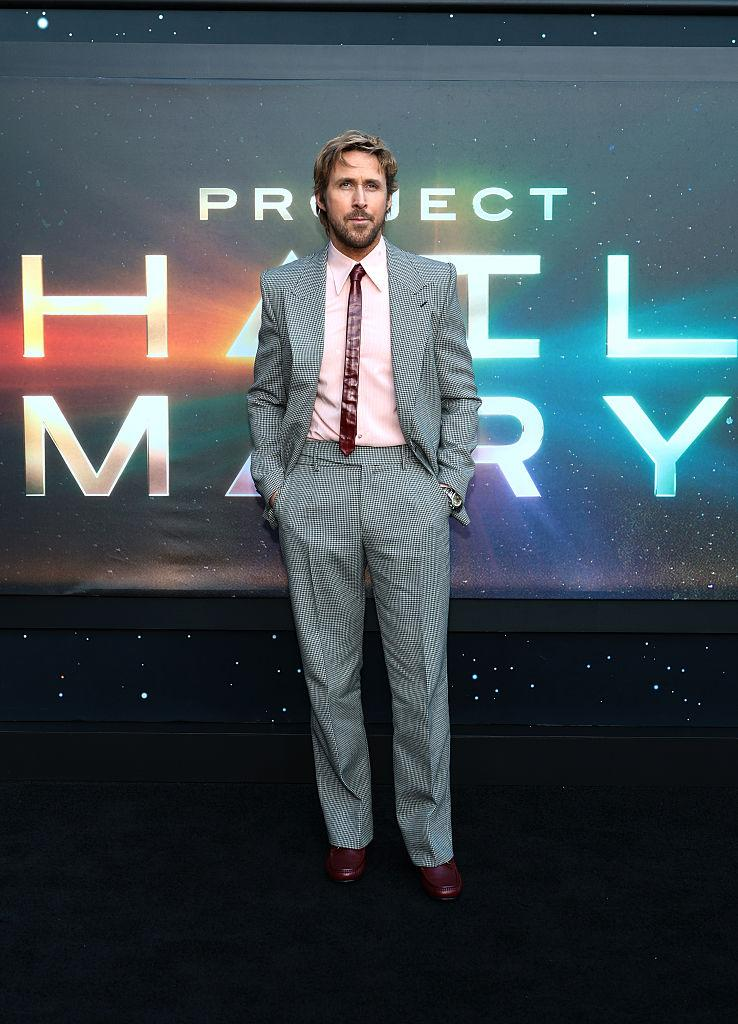
Hail Mary in Space: How “Project Hail Mary” Blends Science, Fiction, and Human Curiosity
A High-Stakes Mission Rooted in Science
Few science fiction stories attempt to balance spectacle with scientific credibility. Project Hail Mary, the film adaptation of Andy Weir’s bestselling novel, positions itself squarely in that space—combining an existential threat to Earth with detailed explorations of astrophysics, orbital mechanics, and space engineering.
- A High-Stakes Mission Rooted in Science
- The Central Mystery: Science Meets Speculation
- Engineering the Impossible: Where the Film Gets It Right
- First Contact: Rethinking Alien Life
- Where Fiction Pushes Too Far
- The Human Element: Science as Collaboration
- Box Office Momentum: Science Fiction Finds an Audience
- Why “Hail Mary” Stories Still Matter
- Conclusion: A Calculated Leap Between Fact and Fiction
At its core, the story follows Ryland Grace, a teacher-turned-astronaut played by Ryan Gosling, who awakens alone aboard a spacecraft on a mission to save humanity. Earth’s Sun is mysteriously dimming, threatening a global ice age, and Grace must travel across interstellar space to uncover the cause.
The premise is ambitious, bordering on implausible. Yet, as astrophysicist Jacqueline McCleary notes, the film succeeds in grounding its narrative in a framework that is “treated very fairly.” It operates within a set of internal scientific rules—what she describes as “a grammar unto itself, but it’s legible.”
The Central Mystery: Science Meets Speculation
The driving force of the story is the discovery of a microorganism-like entity known as astrophage, which absorbs energy from stars. This fictional organism is responsible for draining sunlight and triggering catastrophic cooling across planets.



While inspired by real biological processes—some microbes do absorb light for energy—the scale presented in the film stretches beyond scientific plausibility.
McCleary highlights a critical limitation:
“There’s orders of magnitude mismatch between what a microbe could store … and what the sun actually puts out in terms of energy.”



To contextualize this, the Sun emits approximately 10²⁶ joules per second—a level of energy that dwarfs humanity’s total annual consumption within seconds. For any organism to survive near the Sun’s atmosphere, where temperatures can exceed 5 million degrees Fahrenheit, and simultaneously absorb such energy, remains firmly in the realm of fiction.
Yet this is where Project Hail Mary deliberately leans into speculative science—building a narrative that stretches reality without abandoning it entirely.
Engineering the Impossible: Where the Film Gets It Right
Despite its more imaginative elements, the film demonstrates a strong commitment to scientifically grounded engineering concepts.
One standout example is the design of the spacecraft itself. The ship incorporates a rotating section to simulate gravity using centrifugal force—a concept well understood in physics.



As McCleary explains:
“That’s a force, and if it’s a reasonable rate of speed, not so fast that you feel dizzy, that force that you feel pushing you back will feel like gravity.”
This approach reflects real theoretical designs for long-duration space travel, where artificial gravity could mitigate the physiological effects of weightlessness. While no such spacecraft currently exists, the principles behind it are “totally conventional, well-accepted physics.”
In this sense, the film bridges imagination and feasibility, offering viewers a glimpse of what future space engineering might realistically look like.
First Contact: Rethinking Alien Life
One of the film’s most compelling elements is the introduction of Rocky—an alien from another star system facing the same astrophage-driven crisis.
Unlike many traditional depictions of extraterrestrial life, Rocky is intentionally unfamiliar. His biology, communication style, and physical form challenge human assumptions about life beyond Earth.
McCleary notes that this portrayal may actually be more accurate than typical science fiction:
“People are now starting to talk about sentient plasmas as a potential lifeform. The notion of a completely different biology… is very clever.”
Even communication between species avoids clichés. Instead of instant understanding, Grace and Rocky must gradually develop a shared language, emphasizing the complexity of interspecies interaction.
This portrayal aligns more closely with scientific thinking about exoplanets and the possibility that life elsewhere may be radically different from Earth-based biology.
Where Fiction Pushes Too Far
Not all elements of Project Hail Mary withstand scientific scrutiny.
The concept of induced coma for long-duration space travel is one such example. McCleary bluntly points out the likely consequences:
“You’d have brain damage.”
Similarly, the astrophage organism remains the film’s most significant leap beyond current scientific understanding. While imaginative, it introduces a scale mismatch that cannot be reconciled with known biology or physics.
These deviations, however, are not arbitrary. They serve a narrative purpose—enabling a story that explores survival, cooperation, and discovery on a cosmic scale.
The Human Element: Science as Collaboration
Beyond its technical details, Project Hail Mary captures something more fundamental about science itself.
At its heart, the story is about problem-solving. Grace and Rocky, despite originating from entirely different worlds, come together to tackle a shared existential threat.
McCleary emphasizes this as the film’s most authentic aspect:
“We like to come together to solve problems or learn something new about the universe.”
This collaborative spirit reflects real scientific practice, where progress often depends on bridging gaps—whether cultural, disciplinary, or even planetary.
Box Office Momentum: Science Fiction Finds an Audience
The film’s impact extends beyond its scientific discussion. Early box office performance indicates strong audience interest.
Preview screenings generated over $11 million, marking the strongest preview performance of 2026 and surpassing notable benchmarks such as Oppenheimer’s $10.5 million. Industry projections suggest a potential $100 million global opening, signaling robust demand for original, non-franchise storytelling.
Within the broader film industry, this performance carries significance. As one distribution insider noted, the success of a non-franchise title “is good for the business,” demonstrating that audiences remain receptive to original science-driven narratives.
Why “Hail Mary” Stories Still Matter
Ultimately, Project Hail Mary operates at the intersection of realism and imagination. It may “drift to the outer reaches of reality’s orbit,” but it remains anchored by a genuine engagement with science.
Its value lies not in perfect accuracy, but in accessibility. By presenting complex astrophysical concepts within a compelling narrative, it introduces audiences to ideas they might otherwise never encounter.
As McCleary concludes:
“It exposes people to real scientific ideas who might not otherwise see it. It may still make new scientists.”
Conclusion: A Calculated Leap Between Fact and Fiction
“Hail Mary” is more than just a dramatic term—it represents a bold, last-ditch attempt against overwhelming odds. In Project Hail Mary, that concept is expanded into a cosmic scale, where science becomes both the problem and the solution.
The film succeeds not because it is entirely accurate, but because it is internally consistent, intellectually engaging, and grounded in recognizable scientific principles.
In doing so, it reaffirms a central truth: science fiction, at its best, does not just imagine the future—it inspires it.