





Jury Duty Season 2: What Comes Next for TV’s Most Unusual Social Experiment?
A Concept That Redefined Reality Comedy
When Jury Duty debuted, it quietly reshaped expectations around unscripted television. Positioned as a hybrid between reality TV and scripted comedy, the series followed one unsuspecting participant navigating what he believed to be a real jury trial—while everyone else, from jurors to attorneys, were actors.
- A Concept That Redefined Reality Comedy
- Why Season 1 Worked: Authenticity Meets Controlled Chaos
- The Core Challenge: Can the Concept Be Repeated?
- Possible Directions for Season 2
- The Role of Returning Elements
- Cultural Impact and Industry Significance
- What a Second Season Must Get Right
- Looking Ahead: A Format With Long-Term Potential
- Conclusion
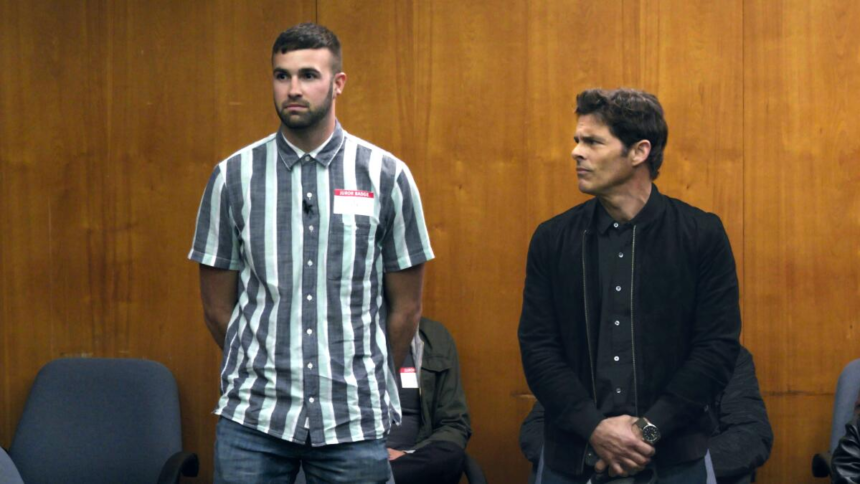
At the center of the experiment was Ronald Gladden, whose authentic reactions became the emotional anchor of the show. Alongside him was actor James Marsden, playing an exaggerated version of himself, adding a layer of meta-humor that blurred the line between fiction and reality.
The result was a rare cultural moment: a series that was both absurdly comedic and unexpectedly sincere.
With growing audience interest and strong word-of-mouth momentum, attention has shifted toward one central question—what would Jury Duty Season 2 look like?
Why Season 1 Worked: Authenticity Meets Controlled Chaos
The success of Jury Duty was not accidental. It relied on a carefully engineered structure:
-
A single real participant placed in a fabricated legal environment
-
A fully scripted cast maintaining character throughout
-
Improvised responses shaped by the participant’s real decisions
This format created a feedback loop between reality and performance. The unpredictability of human behavior drove the narrative forward, while the scripted elements ensured comedic payoff.


Crucially, the show avoided cynicism. Instead of humiliating its central subject, it elevated him—turning Ronald Gladden into a relatable figure whose kindness and integrity became the story’s emotional core.
That balance between humor and humanity is what any second season must preserve.
The Core Challenge: Can the Concept Be Repeated?
A second season introduces structural constraints that were absent in the first:
1. Awareness Problem
The novelty of the first season depended on total ignorance. With the show now widely known, future participants may suspect the premise, undermining authenticity.



2. Escalation Pressure
Audiences expect a bigger, more complex scenario. However, increasing absurdity risks breaking realism—the very element that made the original compelling.
3. Casting Complexity
Finding a participant who is both unaware and naturally engaging is statistically difficult. The success of Season 1 hinged on an unusually cooperative personality.
Possible Directions for Season 2
While no confirmed storyline has been provided, several logical directions emerge based on the original format:
1. A New Setting Beyond the Courtroom
Expanding the concept into different institutional environments—such as corporate offices, academic settings, or public services—could preserve the “one real person” structure while avoiding repetition.
2. Multiple Real Participants
Introducing more than one unaware individual could create layered dynamics:
-
Collaboration vs. suspicion
-
Conflicting interpretations of events
-
Emergent social alliances
However, this increases production complexity significantly.
3. A Meta Evolution of the Format
Season 2 could acknowledge the first season’s popularity and incorporate that awareness into the narrative—potentially creating a more self-referential experiment.
The Role of Returning Elements
A key question is whether figures like James Marsden would return.
His presence in Season 1 served two purposes:
-
Providing recognizable star power
-
Acting as a comedic disruptor within the group
If Season 2 proceeds, a similar role—whether reprised or replaced—would likely remain essential to maintain tonal consistency.
Cultural Impact and Industry Significance
Beyond entertainment, Jury Duty has broader implications:
Redefining Reality Television
The series demonstrates that reality formats can be:
-
Constructed yet emotionally genuine
-
Scripted yet reactive
-
Comedic without exploitation
Audience Preference Shift
Viewers responded strongly to:
-
Authentic human behavior
-
Ethical storytelling
-
Low-conflict, high-empathy narratives
This contrasts sharply with traditional reality TV, which often prioritizes conflict and sensationalism.
Production Innovation
The show highlights a scalable model where:
-
Narrative arcs are pre-designed
-
Outcomes remain unpredictable
-
Editing becomes a key storytelling tool
What a Second Season Must Get Right
For Jury Duty Season 2 to succeed, three elements are non-negotiable:
Maintain Authentic Stakes
The participant must genuinely believe in the environment. Any hint of artificiality weakens the premise.
Preserve Emotional Integrity
The show’s impact came from its respect for its central figure. Replicating that tone is critical.
Balance Structure and Improvisation
Too much scripting risks rigidity; too little risks incoherence. Season 1 succeeded because it calibrated both precisely.
Looking Ahead: A Format With Long-Term Potential
If executed carefully, Jury Duty could evolve into a long-running anthology of social experiments. Each season could explore a different environment while maintaining the core premise: one real person navigating a constructed reality.
The concept’s adaptability gives it strong long-term viability—but only if it continues to prioritize authenticity over spectacle.
Conclusion
Jury Duty Season 2 sits at a critical intersection of expectation and innovation. The first season proved that audiences are receptive to unconventional storytelling—provided it is grounded in real human experience.
The challenge now is not simply to repeat success, but to refine and expand a format that thrives on unpredictability. If the creators can preserve the delicate balance between sincerity and satire, the series has the potential to remain one of the most distinctive experiments in modern television.