






R.E.M.: Legacy, Lyrics, and a New Chapter Unfolding
A Band That Still Echoes Through Modern Music
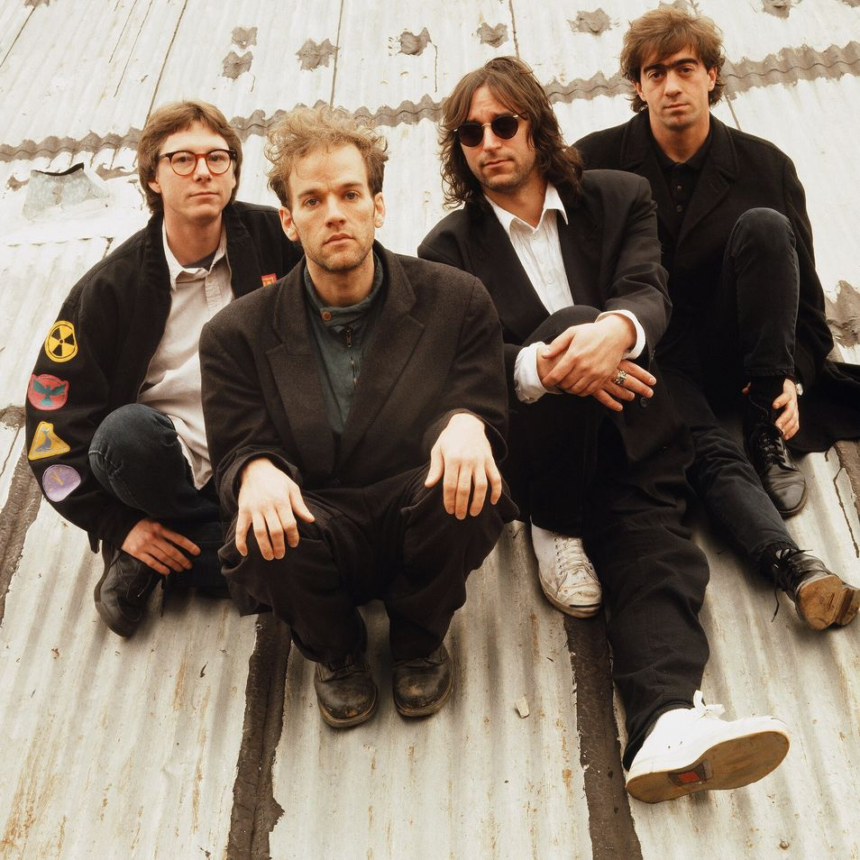
Few bands have shaped alternative rock as profoundly as R.E.M.. Emerging from Athens, Georgia, in the early 1980s, the group—fronted by Michael Stipe alongside Peter Buck, Mike Mills, and Bill Berry—helped define a generation of introspective, guitar-driven music.
- A Band That Still Echoes Through Modern Music
- The Emotional Web: Cobain, Love, and R.E.M.
- The Power of Suggestion in Songwriting
- After the Breakup: Silence, Then Return
- The Long Road to a Solo Debut
- A Reunion Without Reunion
- Revisiting the Lyrics: A Dialogue with Fans
- Cultural Impact: Why R.E.M. Still Matters
- What Comes Next?
- Conclusion: An Ongoing History
Even years after their amicable split in 2011, the band remains culturally relevant. Recent developments—from renewed attention to their songwriting inspirations to Stipe’s long-awaited solo project—underscore how R.E.M.’s influence continues to evolve rather than fade.
This is not simply nostalgia. It is an ongoing narrative.
The Emotional Web: Cobain, Love, and R.E.M.
One of the most enduring threads in R.E.M.’s story is its connection to Kurt Cobain and Courtney Love.
The relationship was not superficial. It was rooted in proximity and mutual respect. When Peter Buck relocated to Seattle, he became neighbors with Cobain and Love, placing R.E.M. at the center of the grunge movement’s inner circle.
Following Cobain’s death in 1994, Stipe channeled his grief into the song “Let Me In,” featured on the Monster album. The track stands as one of the band’s most emotionally raw compositions, reflecting a sense of helplessness—an inability to reach someone in crisis.



But the connections did not end there.
Two additional songs—“Country Feedback” and “Crush with Eyeliner”—have long been rumored to reference Courtney Love. While R.E.M. has never formally confirmed these interpretations, listeners and critics continue to dissect the lyrics, sustaining the theory across decades.
This ambiguity has become part of the band’s mythology. The lack of confirmation invites interpretation, reinforcing R.E.M.’s reputation for layered, enigmatic songwriting.
The Power of Suggestion in Songwriting
R.E.M.’s lyrical style has always resisted straightforward explanation. Stipe, in particular, built a reputation for abstract, impressionistic writing—lyrics that suggest rather than declare.



The alleged references to Courtney Love exemplify this approach. Rather than explicit storytelling, the songs offer fragments of emotion and perspective. This allows multiple readings to coexist:
-
Personal reflection
-
Observational commentary
-
Cultural critique
The result is durability. Songs remain relevant because they are not locked into a single meaning.
After the Breakup: Silence, Then Return
When R.E.M. disbanded in 2011, it marked the end of a 30-year career that had produced landmark albums and global hits. For Stipe, the split initiated a period of deliberate withdrawal from music.
He later explained that he needed distance. “When the band split, I just needed a break. I took five years but I got pulled back into music.”
That return, however, has been gradual and complex.
Stipe has released only a handful of solo tracks over the years, including:
-
“Your Capricious Soul” (2019)
-
“Drive To The Ocean” (2020)
-
“No Time For Love Like Now” (with Big Red Machine)
More recently, he collaborated with Andrew Watt, Josh Klinghoffer, and Travis Barker on “I Played The Fool” for the show Rooster.
Yet the larger project—a full solo album—has remained elusive.
The Long Road to a Solo Debut
In 2026, Stipe provided one of his most candid updates on the long-awaited record.
“I’m working on a solo album,” he said. “But it’s taken longer than I wanted.”
The delays are multifaceted. The COVID-19 pandemic disrupted timelines, but the deeper challenge appears internal. Stipe is confronting the legacy of R.E.M. itself.
“I want it to be great, but I’ve got the pressure of having been in R.E.M. and it’s a high bar, because I want this to be as good as that, and that’s near impossible.”
He also acknowledged stepping into unfamiliar creative territory:
“I’m doing the music for the first time too, and I think I’m good at it but not great.”
At present, eight songs remain unfinished. Despite this, Stipe is working toward a release before the end of 2026, with a tentative title: ‘Meet THE Michael Stipe’.
The tone of his comments reveals a duality—excitement paired with anxiety. This is not merely a new project; it is an attempt to redefine identity after decades within a collective.
A Reunion Without Reunion
Although R.E.M. has not formally reunited, the band members remain on good terms. Their appearance together in 2024 at the Songwriters Hall of Fame induction provided a rare moment of convergence.
During that event, the quartet performed an acoustic version of “Losing My Religion”—their 1991 breakthrough hit. It was their first live performance together since 2007.
Subsequent appearances have reinforced this sense of quiet continuity:
-
Stipe joined Michael Shannon and Jason Narducy for anniversary performances of Lifes Rich Pageant
-
Songs like “These Days” and “The Great Beyond” have resurfaced in live settings
-
Classic tracks continue to be revisited, reinterpreted, and debated
These moments suggest that while R.E.M. as a band may be inactive, its creative ecosystem remains alive.
Revisiting the Lyrics: A Dialogue with Fans
Another recent development highlights the band’s enduring engagement with its audience.
Stipe has taken to clarifying lyrics from “It’s The End Of The World As We Know It (And I Feel Fine)”, addressing decades of misheard lines. This interaction reflects a broader trend: legacy artists actively reshaping how their work is understood in the digital age.
For R.E.M., whose lyrics often invite ambiguity, this process is particularly significant. It bridges the gap between original intent and audience interpretation.
Cultural Impact: Why R.E.M. Still Matters
R.E.M.’s relevance in 2026 is not accidental. It stems from several enduring qualities:
1. Emotional Authenticity
Songs like “Let Me In” demonstrate a willingness to engage with grief and vulnerability without compromise.
2. Lyrical Ambiguity
Their refusal to provide definitive answers keeps the music open to reinterpretation.
3. Cross-Generational Influence
From alternative rock to indie music, countless artists trace their lineage back to R.E.M.
4. Continued Evolution
Through solo work, collaborations, and public engagement, the band’s members remain active contributors to music culture.
What Comes Next?
The most immediate development is the anticipated release of Michael Stipe’s solo album. If completed and released in 2026, it will represent a significant milestone—not just as a debut, but as a post-R.E.M. statement of artistic identity.
Beyond that, the band’s legacy will likely continue to unfold in less predictable ways:
-
Archival releases or reissues
-
Occasional collaborative performances
-
Continued reinterpretation of their catalog
R.E.M.’s story has shifted from active production to cultural resonance. The band no longer defines the present moment in music—but it continues to shape how that moment is understood.
Conclusion: An Ongoing History
R.E.M. occupies a rare position in music history. It is both complete and unfinished.
The connections to figures like Kurt Cobain and Courtney Love reveal a band deeply embedded in the emotional currents of its time. Meanwhile, Stipe’s ongoing solo work demonstrates that the creative impulse behind R.E.M. has not diminished—it has simply changed form.
What remains constant is the band’s ability to provoke thought, invite interpretation, and sustain relevance across decades.
In that sense, R.E.M. is not just a band of the past. It is an ongoing conversation.