





Dhurandhar 2: A High-Stakes Spectacle Navigating Censorship, Hype, and Global Expectations
The Build-Up to a Cinematic Event
Few films in recent Indian cinema have generated as much anticipation as Dhurandhar 2: The Revenge. Positioned as the sequel to one of the highest-grossing films in Bollywood history, the film arrives not just as a continuation of a story but as a cultural moment—one that blends box office ambition, political undertones, and intense public scrutiny.
- The Build-Up to a Cinematic Event
- From Record-Breaking Origins to Sequel Expectations
- A Film Defined by Scale and Violence
- Inside the CBFC Cuts: What Changed
- Public Reaction: A Divided Audience
- Box Office Momentum: Numbers Behind the Hype
- Ranveer Singh’s Vision: A Turning Point for Indian Cinema
- Competitive Landscape and Strategic Timing
- Beyond Entertainment: Cultural and Political Layers
- Conclusion: A Film at the Intersection of Power, Policy, and Popularity
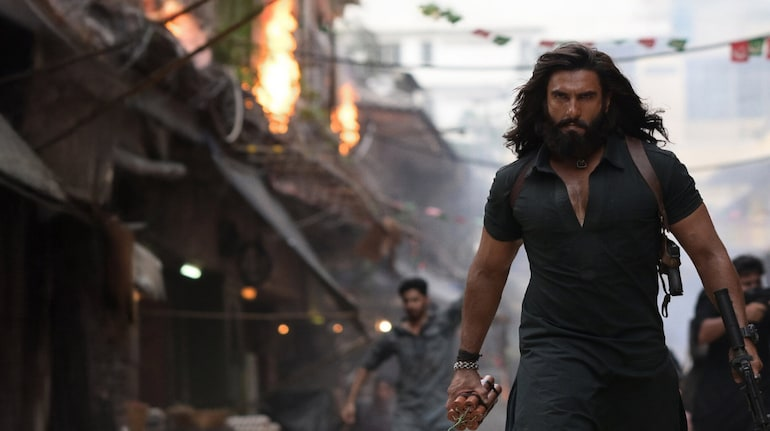
Directed by Aditya Dhar and led by Ranveer Singh alongside Arjun Rampal, R. Madhavan, and Sanjay Dutt, the film is set for its theatrical release on March 19, following paid previews that have already drawn massive crowds. However, even before its official release, Dhurandhar 2 has become a focal point of debate—primarily due to significant censorship decisions in India.
This dual narrative—of unprecedented hype and controversial edits—has shaped the film’s trajectory in a way few modern releases experience.
From Record-Breaking Origins to Sequel Expectations
The foundation of Dhurandhar 2 lies in the extraordinary success of its predecessor. Released in December 2025, the first Dhurandhar film achieved a historic milestone by collecting over ₹1300 crore worldwide. It became the first Bollywood film to cross ₹1000 crore domestically, setting a new benchmark for commercial cinema in India.
The story centered on an Indian spy infiltrating Karachi’s criminal and political networks, weaving together real-world geopolitical events such as:
-
The 1999 IC-814 hijacking
-
The 2001 Indian Parliament attack
-
The 2008 Mumbai attacks
-
Operation Lyari
This blend of fiction and real-world events contributed to its appeal, positioning it as both a mass entertainer and a politically charged narrative.


The sequel builds directly on this foundation, with Ranveer Singh returning in dual roles as Jaskirat and Hamza—characters now depicted in a darker, more aggressive arc driven by revenge.
A Film Defined by Scale and Violence
The trailer released on March 7 set expectations for a more intense and visually aggressive sequel. High-octane action, brutal combat sequences, and emotionally charged storytelling dominate the film’s tone.
This escalation in violence, however, became a central issue during the certification process.
What the Censorship Process Achieved
The Central Board of Film Certification (CBFC) evaluates films to ensure they align with regulatory standards for public exhibition in India. Its role is not merely to assign ratings but, in certain cases, to mandate modifications that reduce potentially harmful or excessively graphic content.



For Dhurandhar 2, this process resulted in a series of significant edits.
Inside the CBFC Cuts: What Changed
According to the certification report, the CBFC suggested 21 modifications, with 4 major ones specifically targeting extreme violence. These included reductions in scenes described as:
-
“smashing the eye”
-
“beheading and kicking”
-
“hitting the head with a cement block”
-
“hitting the head with a hammer”
Additional adjustments were also made:
-
Subtitles referencing demonetization dates were corrected
-
The term “Lahore” was replaced with “Delhi” in information text
-
The filmmakers submitted official permission for using Prime Minister references and news footage
Runtime Impact
The cumulative effect of these edits reshaped the film’s runtime:
-
Submitted version: approximately 3 hours 51 minutes
-
Indian theatrical version: 3 hours, 49 minutes, and 36 seconds
-
Overseas version: approximately 3 hours 55 minutes
Overall, the Indian release is more than 6 minutes shorter than its international counterpart.
Despite these cuts, the film received an ‘A’ certification, restricting it to adult audiences.
Public Reaction: A Divided Audience
The censorship decisions triggered immediate reactions across social media, highlighting a broader debate about creative freedom versus regulatory oversight.
Some viewers questioned the logic of editing an already adult-rated film:
“What’s the point of an A-rated age restriction when there will be cut scenes in action sequences?”
Others criticized the scale of intervention:
“Dhurandhar got 22 cuts… censor board, are you here to edit the film or the audience’s brain?”
There were also more systemic critiques of the certification system itself:
“Censor Board shouldn’t exist. There should only be ratings, and grown-ups need to grow some confidence to tackle any kind of films instead of relying on boomers to decide it for them.”
These responses indicate that Dhurandhar 2 has become part of a larger conversation about censorship in Indian cinema—particularly in an era where global audiences often have access to uncut versions.
Box Office Momentum: Numbers Behind the Hype
While controversy has dominated headlines, the film’s commercial trajectory remains strong.
Key performance indicators include:
-
₹40.54 crore generated from paid previews
-
Over 4.70 lakh tickets sold for opening day
-
₹29.02 crore in advance bookings for March 19
-
Screen count exceeding 15,000 shows across India
In some regions, demand has been so high that theatres in Mumbai have scheduled early shows starting at 2:15 AM, with ticket prices reaching up to ₹1,000.
The film is being released in five languages—Hindi, Tamil, Telugu, Malayalam, and Kannada—further expanding its reach.
Ranveer Singh’s Vision: A Turning Point for Indian Cinema
At the film’s promotional events, Ranveer Singh emphasized the significance of the sequel, framing it as a potential inflection point for the industry.
He stated:
“Doston aapne Dhurandhar ko, humari film ko ek aithihasik mukaam tak pahunchaya hai aur yeh sirf aapke pyaar aur sammaan ki wajah se hai… Aaj pure vishwa ki cinema going audience ko, aap sabko, humari team se dhayanwad…”
He further added:
“Aur itna bata doon, ab indian cinema ka mustaqbil ab Dhurandhar: The Revenge tay karega.”
These statements reflect both confidence and pressure—the expectation that Dhurandhar 2 could redefine commercial filmmaking standards in India.
Competitive Landscape and Strategic Timing
Originally slated for a major box office clash with Yash’s Toxic, the competition shifted after the latter moved its release to June 4. However, Dhurandhar 2 still faces competition from Pawan Kalyan’s Ustaad Bhagat Singh, also releasing on March 19.
This creates a high-stakes opening weekend where audience attention—and revenue—will be closely contested.
Beyond Entertainment: Cultural and Political Layers
What distinguishes Dhurandhar 2 from standard action films is its intersection with real-world themes. Its narrative incorporates geopolitical tensions and national security narratives, which contribute to both its appeal and its sensitivity.
The film’s use of real events, political references, and news footage required explicit permissions—highlighting the fine balance between storytelling and representation.
Moreover, its global visibility—evidenced by discussions involving international figures such as the Finland President and Canadian Prime Minister—suggests that the film has transcended traditional entertainment boundaries.
Conclusion: A Film at the Intersection of Power, Policy, and Popularity
Dhurandhar 2 is not just another blockbuster release. It is a case study in how modern cinema operates at the intersection of artistic ambition, regulatory frameworks, and audience expectations.
On one hand, it represents the scale and confidence of contemporary Bollywood—pushing boundaries in storytelling, production, and global reach. On the other, it exposes ongoing tensions around censorship, creative freedom, and the evolving role of regulatory bodies.
As it hits theatres, the film’s ultimate legacy will depend not only on its box office performance but also on how it shapes future conversations about cinema in India—what can be shown, who decides, and how audiences respond.