



Deadloch Season 2: A Hotter, Wilder, and Sharper Return
A Shift in Atmosphere — From Cold Noir to Tropical Chaos
When Deadloch first arrived, it carved out a distinctive identity: a sharply written, darkly comic crime drama set against the moody chill of Tasmania. Season two takes that identity and deliberately disrupts it. The result is not just a continuation, but a transformation.
- A Shift in Atmosphere — From Cold Noir to Tropical Chaos
- Barra Creek: Where Fiction Rewrites Reality
- Plot Expansion: More Threads, More Stakes
- Climate as Character: The Role of Heat in Performance
- Genre Evolution: From Noir to Tropical Gothic Western
- Writing with Dual Purpose: Comedy Meets Commentary
- Community Engagement and Cultural Context
- Expanding Cast and Energy
- Scaling Success: Building on a Global Hit
- Conclusion: A Series That Reinvents Without Losing Its Core
The series relocates to Australia’s Top End, swapping icy coastal gloom for relentless heat, humidity, and dust. This environmental shift is not cosmetic—it reshapes tone, pacing, and performance. The fictional town of Barra Creek, brought to life in Batchelor near Litchfield National Park, becomes more than a backdrop; it acts as a pressure cooker for both characters and narrative.
As Madeleine Sami succinctly puts it: “Everything is that bit more extreme, including the weather.”
Barra Creek: Where Fiction Rewrites Reality
The production’s takeover of Batchelor in late 2024 was as immersive as it was surreal. A quiet town with a population of just over 500 was temporarily transformed into Barra Creek, complete with:
- A rebranded general store turned Barra Creek Tavern
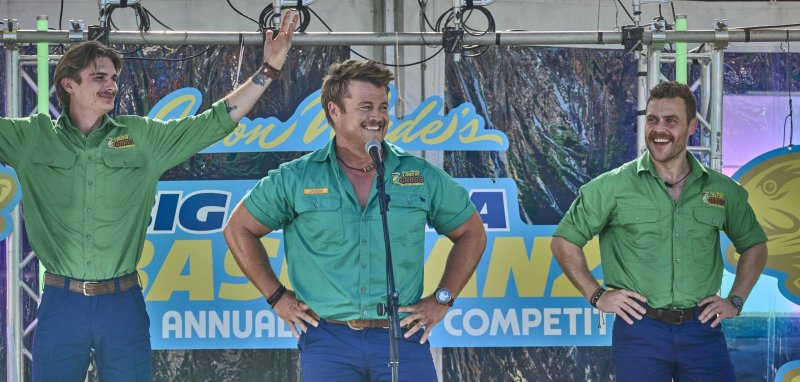
- A deliberately absurd billboard for “Don Darrell’s Best Best Jumping Croc Tours”
- Visual gags like graffiti-laced signage
- Props including oversized rubber crocodiles
Production designer Helen O’Loan described the operation bluntly: “We own it for a couple of weeks.” The set became both a filming hub and an accidental attraction, with curious travelers—and even wild brumbies—wandering through.
This transformation underscores a key element of season two: world-building that is immersive, chaotic, and deliberately exaggerated.


Plot Expansion: More Threads, More Stakes
Season two widens its narrative scope significantly. The core detective duo—Dulcie (Kate Box) and Eddie (Madeleine Sami)—return alongside Cath (Alicia Gardiner), but the case they face is more complex and fragmented.
At the center is the death of Eddie’s former partner, Bushy. However, this is only one piece of a larger puzzle involving:
- Dismembered body parts
- Rival crocodile-wrangling families
- Missing backpackers
- A constant, unpredictable presence of crocodiles
Sami describes the narrative structure clearly: “There are more threads and more stories; more mysteries going on.”
This multi-layered storytelling approach pushes the series closer to ensemble-driven crime drama, without abandoning its comedic DNA.


Climate as Character: The Role of Heat in Performance
Unlike many productions where environment is incidental, Deadloch integrates climate directly into character behavior and performance.
Filming conditions—38°C heat and 95% humidity—were not merely endured; they were incorporated into the storytelling. Actors describe tangible effects:
- Alicia Gardiner: “The sweat was literally dripping down my back.”
- Sami: “The dust is so fine and it sticks to everything.”
The result is visible on screen. Characters are irritable, fatigued, and physically uncomfortable. This feeds into the show’s tone, amplifying tension while enhancing comedic absurdity.
The local phrase “going troppo”—losing composure in extreme heat—becomes an informal thesis for the season.
Genre Evolution: From Noir to Tropical Gothic Western
Kate Box frames the shift in genre terms: season one operated as a “noir,” while season two leans toward a “western.”
This hybridization produces what can be described as tropical gothic:
- Harsh landscapes replacing bleak coastlines
- Lawlessness and frontier energy replacing insular small-town dynamics
- Heightened absurdity layered over darker themes
Despite this evolution, the core identity of Deadloch remains intact: character-driven storytelling anchored by sharp, often irreverent humor.
Writing with Dual Purpose: Comedy Meets Commentary
Showrunners Kate McLennan and Kate McCartney continue to balance tonal extremes with precision. On the surface, the show thrives on:
- Crass humor
- Rapid-fire dialogue
- Absurd scenarios
Underneath, it engages with substantive themes. Season one explored misogyny, homophobia, and small-town politics. Season two expands into:
- Race and cultural dynamics
- Kinship care
- Crime in remote communities
Madeleine Sami highlights this duality:
“They have an amazing, crass, comedic voice, but then there is that beautiful political undercurrent as well.”
Kate Box reinforces the approach:
“They draw you in with s…s and giggles and then start talking about something wildly important.”
This layered writing is central to the show’s continued relevance and appeal.
Community Engagement and Cultural Context
The production also demonstrates a deliberate effort to engage with local communities. Filmmaker Cian McCue joined as Indigenous community engagement officer and associate producer, ensuring:
- Proper permissions for filming locations
- Cultural awareness in storytelling
- Inclusion of local youth through outreach programs
This approach adds authenticity while grounding the show’s themes in real-world contexts.
Expanding Cast and Energy
Season two introduces new dynamics and characters, including Luke Hemsworth as a crocodile wrangler—fitting seamlessly into the chaotic ecosystem of Barra Creek.
Returning cast members, including Nina Oyama and Alicia Gardiner, benefit from expanded roles within a more complex narrative structure. The ensemble feels less contained and more volatile, reflecting the broader thematic expansion.
Scaling Success: Building on a Global Hit
The first season of Deadloch achieved significant international success, topping Prime Video’s streaming charts and attracting a global audience.
Season two builds on that foundation by:
- Increasing narrative complexity
- Expanding thematic depth
- Elevating visual and environmental intensity
Sami summarizes the ambition succinctly: “Everything from season one is levelled up.”
Conclusion: A Series That Reinvents Without Losing Its Core
Deadloch season two does not attempt to replicate the success of its debut—it deliberately reinterprets it. By relocating the story, intensifying its environment, and expanding its narrative scope, the series achieves a rare balance: evolution without dilution.
The humor remains sharp, the characters remain compelling, and the social commentary remains embedded beneath the surface. What changes is the scale, the texture, and the intensity.
The result is a season that feels both familiar and fundamentally different—hotter, louder, and more chaotic, yet still anchored by the same narrative intelligence that defined its success.
As Kate Box distills it:
“Crocs. Bugs, dirt, heat rash, lesbians… No, but seriously, it really hits your heart.”