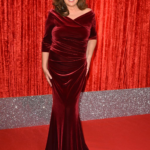







Claire Foy’s Next Chapter: From Royal Precision to Dark Satire in Savage House
A Career Defined by Transformation
Few contemporary actors have navigated the balance between historical gravitas and modern storytelling with the same precision as Claire Foy. Known for her meticulous performances and restrained emotional intensity, Foy has built a reputation anchored in discipline, character immersion, and an ability to convey complex inner lives with minimal theatrical excess.
- A Career Defined by Transformation
- Inside Savage House: A World of Decadence and Decay
- The Role of Lady Savage: A Strategic Departure
- Visual Language and Tonal Intent
- Collaboration with Richard E. Grant
- Cultural and Industry Context
- Why This Role Matters for Claire Foy
- Looking Ahead: What Comes Next
- Conclusion
Her trajectory—from portraying monarchic restraint to stepping into morally ambiguous roles—has positioned her as one of the most adaptable performers of her generation. The announcement of her latest project, Savage House, signals another deliberate shift, this time into darker, satirical territory.
Inside Savage House: A World of Decadence and Decay
At the center of current attention is Savage House, a darkly comedic period drama co-starring Richard E. Grant. The film is set against a volatile historical backdrop:
-
18th-century England
-
A devastating pox outbreak
-
The political unrest of the Jacobite Uprising
This is not a conventional historical drama. Instead, it operates as a satirical dissection of class ambition and moral collapse.
The narrative follows Sir Chauncey Savage (Grant) and Lady Savage (Foy), a couple consumed by their relentless pursuit of status and prosperity. Their ascent is marked not by dignity, but by chaos—scandal, violence, and a steady erosion of ethical boundaries.
Described as a story “filled with duels, decadence, and bloodshed,” the film constructs a stylized environment where aristocratic elegance masks systemic rot. The tone is intentionally exaggerated—almost theatrical—allowing the satire to cut deeper into themes of power and privilege.

The production is scheduled for theatrical release on June 5, positioning it within the mid-year cinema window typically reserved for prestige and genre-blending films.
The Role of Lady Savage: A Strategic Departure
Foy’s portrayal of Lady Savage is particularly significant when viewed against her broader career. While she is widely associated with composed, historically grounded figures, this role appears to subvert that expectation.
Lady Savage is not a passive observer of aristocratic decline. She is an active participant—equally ambitious, equally complicit. The character embodies:
-
Strategic social maneuvering
-
Moral ambiguity
-
A willingness to embrace excess
This represents a recalibration of Foy’s screen persona. Rather than restrained authority, she engages with volatility and satire, expanding her interpretive range.



Visual Language and Tonal Intent
The trailer for Savage House reinforces the film’s conceptual direction. It presents a world “dripping in decadence, where powdered wigs barely conceal moral decay.” This visual metaphor is central to the film’s critique.
Key stylistic elements include:
-
Lavish costume design juxtaposed with violent undertones
-
Opulent interiors contrasted with social instability
-
Heightened performances that border on grotesque
This aesthetic strategy aligns the film with contemporary period satires that prioritize thematic commentary over strict historical realism.
Collaboration with Richard E. Grant
The pairing of Foy with Richard E. Grant introduces a dynamic interplay of performance styles. Grant, known for his expressive and often flamboyant delivery, contrasts with Foy’s controlled intensity.
This duality is likely intentional. It allows:
-
A tension between restraint and excess
-
A layered portrayal of the Savage household
-
A more unpredictable tonal rhythm
Their on-screen relationship is positioned as both collaborative and destructive—a partnership driven by shared ambition but undermined by its consequences.
Cultural and Industry Context
The emergence of Savage House reflects a broader trend within the film industry: the resurgence of period pieces as vehicles for contemporary critique.
Rather than presenting history as static or reverential, films like this reinterpret it through:
-
Satire
-
Dark humor
-
Psychological complexity
In this context, Foy’s casting is strategic. Her established credibility in historical roles lends authenticity, while her shift into satire introduces novelty.
Why This Role Matters for Claire Foy
From a career perspective, Savage House functions as a pivot point. It demonstrates:
-
Range Expansion – Moving beyond restrained historical figures into morally fluid characters
-
Genre Diversification – Engaging with dark comedy and satire
-
Sustained Relevance – Aligning with evolving audience preferences for complex narratives
For an actor already associated with precision and depth, this transition reinforces long-term adaptability.
Looking Ahead: What Comes Next
The film’s June 5 release will serve as a key performance indicator for both Foy and the project itself. If successful, it could influence several trajectories:
-
Increased demand for satirical period dramas
-
Broader casting opportunities for Foy in unconventional roles
-
Greater emphasis on hybrid genres blending history with commentary
More broadly, it signals a continued shift in how audiences engage with historical storytelling—less as passive observation, and more as critical reflection.
Conclusion
Claire Foy’s involvement in Savage House is not simply another addition to her filmography. It represents a calculated evolution—one that leverages her strengths while challenging her established screen identity.
Set against a backdrop of disease, political unrest, and aristocratic excess, the film offers a layered exploration of ambition and decay. Through Lady Savage, Foy enters a narrative space defined by contradiction: elegance and brutality, ambition and downfall.
The result is a project that is both stylistically bold and thematically relevant—positioning Foy once again at the intersection of performance craft and cultural commentary.