

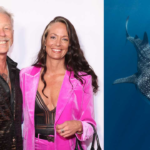





Alexandra Paul: When Activism Crosses the Line Between Protest and Law
A Dramatic Morning in Wisconsin
In the early hours of March 17, 2026, a scene unfolded in Blue Mounds, Wisconsin, that felt less like a routine protest and more like a high-stakes intervention. Dozens of activists—estimated between 50 and 60—entered the grounds of Ridglan Farms, a controversial dog-breeding facility known for supplying animals for scientific research.
Among them was Alexandra Paul, the 62-year-old actress widely recognized for her role as Stephanie Holden in the iconic television series Baywatch. What followed quickly escalated from a coordinated act of protest into a law enforcement operation.
Activists began removing beagles from the facility, attempting to relocate them from what they considered harmful conditions. Authorities from the Dane County Sheriff’s Office responded promptly, arresting around 20 individuals, including Paul. She now faces allegations of trespassing, with investigations still ongoing.
What Happened at Ridglan Farms?
Ridglan Farms is one of only two major facilities in the United States that breed dogs specifically for scientific and research purposes. This status has made it a focal point for animal rights activism.
During the operation:
-
Activists entered the property without authorization
-
Multiple beagles were physically removed from the site
-
Law enforcement recovered some of the animals, while others initially remained unaccounted for
-
Authorities confiscated two vehicles, tools associated with forced entry, and other materials
Sheriff Kalvin Barrett summarized the official stance:



“Our Aufgabe ist es, für die Sicherheit aller zu sorgen und bei rechtswidrigen Handlungen einzugreifen. Wir ermutigen jeden, der Bedenken hinsichtlich des Tierschutzes oder der Forschungspraktiken hat, sich auf rechtmäßige und konstruktive Weise einzubringen.”
The statement underscores a recurring tension: the balance between moral activism and legal boundaries.
Alexandra Paul: From Television Icon to Full-Time Activist
For many, Alexandra Paul remains synonymous with Baywatch, where she became a defining figure of 1990s television alongside stars like David Hasselhoff and Pamela Anderson. However, her public identity has gradually shifted from entertainment to advocacy.
Her commitment to animal rights is not recent or symbolic—it is deeply embedded in her lifestyle and professional decisions:
-
She became a vegetarian at age 14
-
Transitioned to veganism at 47
-
Insisted on cruelty-free makeup clauses in her acting contracts
-
Actively participates in environmental and animal welfare campaigns
Beyond acting, Paul has also worked as a producer and author, often focusing on sustainability and ethical issues. Over time, activism has become central to her public persona.



A Pattern of Civil Disobedience
The Wisconsin arrest is not an isolated incident.
In September 2021, Paul was detained after removing two chickens from a transport truck owned by Foster Farms. The case went to court, and in March 2023, she was acquitted.
This pattern reflects a broader philosophy often associated with direct-action activism—where participants intentionally challenge legal frameworks to highlight perceived injustices.
While supporters view such actions as morally necessary, critics argue they undermine legal processes and public safety.
The Legal and Ethical Fault Line
The events at Ridglan Farms highlight a complex intersection of issues:
1. Animal Welfare vs. Scientific Research
Facilities like Ridglan Farms operate within legal frameworks to support biomedical research. However, activists question the ethics of breeding animals specifically for experimentation.
2. Protest vs. Trespassing
Authorities emphasize that entering private property and removing animals constitutes criminal behavior, regardless of intent.
3. Public Perception
The involvement of a recognizable public figure amplifies attention. For some, Paul’s actions reinforce her credibility as an activist. For others, they risk damaging her legacy.
A Turning Point for Ridglan Farms
The timing of the protest is notable. In October 2025, local authorities in La Crosse County reached an agreement with Ridglan Farms requiring the facility to cease selling dogs for research purposes by July 1, 2026.
This development suggests that the facility’s role is already under transition. However, the protest indicates that activists remain unwilling to wait for regulatory timelines.
Cultural Context: A Star Rewriting Her Narrative
Alexandra Paul’s trajectory reflects a broader trend among public figures who leverage their visibility for advocacy. Unlike performative activism, her involvement includes personal risk—legal consequences, reputational shifts, and direct confrontation with institutions.
At the same time, her absence from the planned Baywatch reboot underscores how her career path has diverged from mainstream entertainment. While former co-stars revisit nostalgia-driven projects, Paul’s focus has moved toward activism-driven impact.
What Comes Next?
The legal proceedings stemming from the March 15 incident are ongoing, and outcomes could range from fines to more serious penalties depending on the charges pursued.
More broadly, several developments are likely:
-
Increased scrutiny on animal research facilities
-
Continued direct-action protests by activist groups
-
Public debate over the limits of civil disobedience
-
Potential policy acceleration ahead of the 2026 Ridglan Farms deadline
For Alexandra Paul, the incident reinforces a long-established identity—not simply as a former television star, but as a committed activist willing to operate at the edge of legality.
Conclusion
The arrest of Alexandra Paul is not merely a celebrity headline. It is a case study in the evolving dynamics of activism, legality, and public influence.
Her actions in Wisconsin reflect a deliberate choice to prioritize ethical conviction over legal compliance—a stance that continues to polarize opinion. Whether viewed as principled resistance or unlawful conduct, the incident underscores a persistent reality: the debate over animal rights is far from settled, and it increasingly intersects with high-profile figures willing to take risks to advance their cause.