






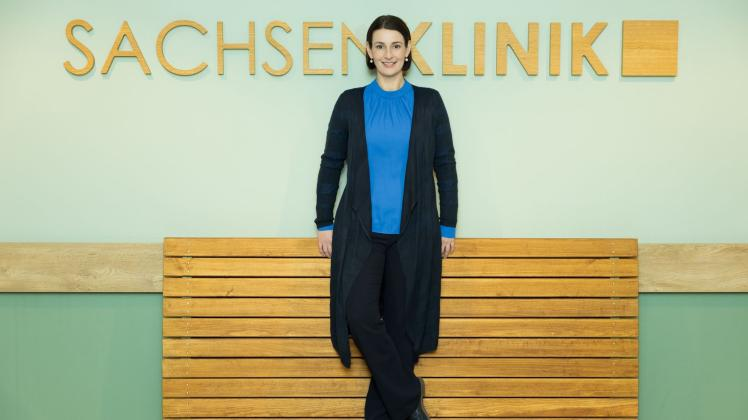
Annett Renneberg’s Farewell: A Narrative of Change, Closure, and Creative Renewal
A Defining Exit From a Beloved Role
After nearly a decade of steady presence in one of Germany’s most enduring television dramas, Annett Renneberg has entered a new chapter—one shaped not by her own decision, but by a creative shift within the long-running ARD series In aller Freundschaft.
- A Defining Exit From a Beloved Role
- The Unexpected Decision Behind the Departure
- Crafting a Sensitive and Dignified Goodbye
- A Deep Connection With Maria Weber
- The Broader Impact on the Series and Its Audience
- A Turning Point: “A Sign From Fate”
- What Comes Next for Annett Renneberg
- Conclusion: An Ending That Redefines a Career
For nine years, Renneberg portrayed Dr. Maria Weber, a character who became deeply embedded in the emotional fabric of the show. Now, that chapter closes with a storyline that is both medically grounded and emotionally resonant: Maria Weber succumbs to an incurable brain tumor that has infiltrated the brainstem.
The farewell is not just fictional—it reflects a real turning point in Renneberg’s career.
The Unexpected Decision Behind the Departure
Contrary to speculation, Renneberg did not choose to leave the series voluntarily. Addressing her audience directly, she clarified that the decision originated from the production team.
“When the production informed me about the end of my character at the beginning of last year, I was surprised, but I quickly accepted the new situation,” the 48-year-old explained.
This statement reframes the narrative around her exit. Rather than a planned departure, it was a structural decision within the show’s evolving storyline. Renneberg acknowledged the unpredictability of television contracts—often renewed season by season—and reflected candidly on her initial expectations.

“You should always expect that something like this can happen – the contracts are for one season at a time. I was surprised that the decision was made by my character – I thought that with a young child and my popularity, I was relatively safe in that regard.”
Her remarks reveal the tension between audience attachment and production realities, a dynamic common in long-running series where character arcs must continuously evolve.
Crafting a Sensitive and Dignified Goodbye
The narrative decision to end Maria Weber’s life through illness was not treated lightly. Renneberg played an active role in shaping how the storyline would unfold, particularly in its emotional and visual boundaries.
She emphasized that certain depictions of illness were deliberately excluded:


“But I want to say: For those who can’t watch this because they simply don’t want to see this cancer – there will be no chemotherapy. You won’t see me vomit. That’s exactly what I didn’t want to play.”
This choice reflects a careful balancing act between realism and sensitivity. Drawing from personal experiences with illness and loss, Renneberg advocated for a portrayal that avoided graphic or distressing imagery while still honoring the gravity of the subject.
The result, in her view, is a “dignified and moving farewell”—one that respects both the character and the audience.
A Deep Connection With Maria Weber
Over the course of nine years, Maria Weber evolved from a supporting figure into a central emotional anchor within the series. For Renneberg, the connection went beyond professional performance.
She openly acknowledged how closely she identified with the character and how difficult it was to let go. In a personal video message to fans, she expressed gratitude for their emotional investment:
“You show me how important the role of Maria Weber was and is to you.”
This reciprocal relationship between actor and audience underscores the cultural weight of long-running television roles. Characters like Maria Weber do not exist in isolation—they become part of viewers’ routines, memories, and emotional landscapes.
The Broader Impact on the Series and Its Audience
The departure of a central character inevitably alters the dynamics of a show like In aller Freundschaft, which has built its success on continuity and character-driven storytelling.
Maria Weber’s storyline—centered on terminal illness—also introduces a broader societal dimension. It invites viewers to confront themes of mortality, medical ethics, and emotional resilience, while doing so in a manner that prioritizes sensitivity over spectacle.
The production’s approach reflects an awareness of audience diversity. By avoiding explicit depictions of suffering, the series accommodates viewers who may find such content distressing, while still delivering a meaningful narrative conclusion.
A Turning Point: “A Sign From Fate”
Despite the initial surprise, Renneberg has reframed her departure as an opportunity rather than a setback.
“Life holds surprises, and since I never intended to stay with this format for so long, I felt it was a sign from fate that it was time for something new. And this feeling has been completely right and consistent ever since.”
This perspective signals a shift from closure to reinvention. It suggests that the end of one role can serve as a catalyst for broader creative exploration.
What Comes Next for Annett Renneberg
Renneberg’s post-series plans indicate a deliberate expansion beyond traditional acting roles. She has confirmed that she is currently working on a book and will launch a podcast in April.
At the same time, her description of personal priorities—family life, music, home projects, and time with her children—points to a recalibration of professional and personal balance.
“I’m never bored,” she noted, summarizing a phase defined not by loss, but by diversification.
This transition aligns with a wider trend among established actors who leverage their visibility into multi-platform storytelling—books, podcasts, and independent creative projects.
Conclusion: An Ending That Redefines a Career
Annett Renneberg’s departure from In aller Freundschaft is more than a routine cast change. It represents a convergence of creative decision-making, personal reflection, and audience engagement.
Her portrayal of Maria Weber leaves behind a legacy defined by emotional authenticity and narrative depth. At the same time, her response to the departure—measured, reflective, and forward-looking—positions her for a new phase of artistic and personal development.
In the end, the farewell is not simply about the loss of a character. It is about transition: from stability to uncertainty, from routine to reinvention, and from one defining role to the possibility of many others.