





Peaky Blinders Movie: A Narrative Return to Shelby’s War
A Story That Refuses to End
Nearly a decade after Peaky Blinders first captured global attention, the story of Thomas Shelby enters a new phase with Peaky Blinders: The Immortal Man. What began as a gritty British crime drama spanning six seasons from 2013 to 2022 has now transitioned into a feature-length continuation—one that shifts the narrative from post-World War I Birmingham into the looming devastation of World War II.
This is not simply a continuation; it is a tonal evolution. The film repositions Tommy Shelby not as a rising power, but as a man confronting the consequences of his past while being drawn back into a world he once tried to escape.
From Television Phenomenon to Cinematic Expansion
The journey from television to film reflects the sustained cultural weight of Peaky Blinders. Initially a modest production, the series grew into a global phenomenon, driven in large part by audience demand. That demand ultimately led to the creation of The Immortal Man, a project that brings together original cast members while expanding the narrative scope.
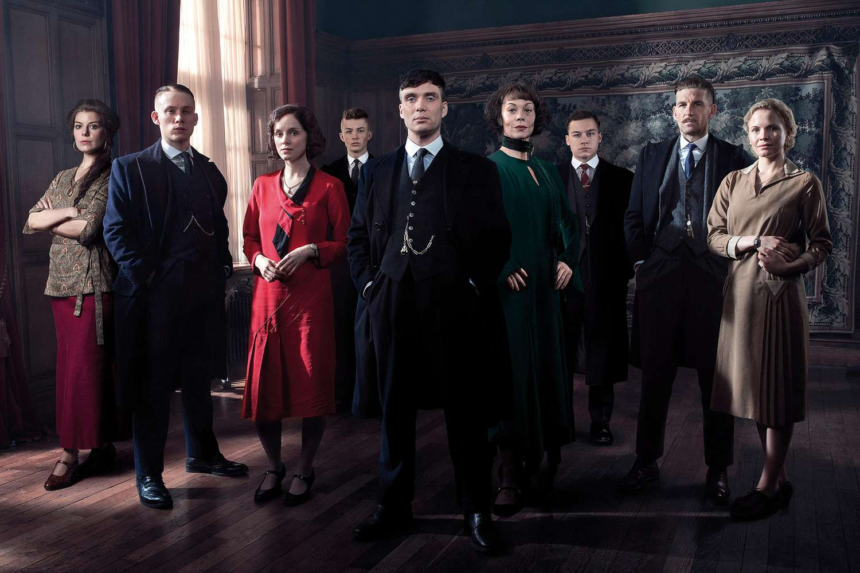
At the center remains Cillian Murphy as Thomas Shelby, returning from self-imposed exile. Alongside him, familiar faces such as Sophie Rundle, Ned Dennehy, Packy Lee, Ian Peck, and Stephen Graham reprise their roles. The film also introduces new characters portrayed by Rebecca Ferguson, Tim Roth, Jay Lycurgo, and Barry Keoghan.
The creative continuity is equally significant. The script is written by series creator Steven Knight, with direction by Tom Harper—ensuring that the film maintains the stylistic and narrative DNA that defined the original series.
A War-Torn Narrative: Shelby in World War II
The film’s setting marks a decisive shift. Rather than focusing on gang rivalries within Birmingham, The Immortal Man situates its characters against the backdrop of World War II—a context that raises both personal and geopolitical stakes.
Tommy Shelby is depicted as an isolated and haunted figure at the beginning of the film, accompanied primarily by his loyal associate Johnny Dogs. As the narrative unfolds, he is drawn back into conflict, with his actions intersecting with events that could influence the course of the war.
The relationship between Shelby and his son Duke—played by Barry Keoghan—adds another generational layer to the story. Their intertwined fates reflect a broader theme: the legacy of power, trauma, and survival across shifting historical landscapes.
Blending Fiction and History
One of the defining strengths of Peaky Blinders has always been its ability to merge fictional storytelling with real historical contexts. This approach continues in The Immortal Man.
As noted within the production, the narrative carefully integrates elements of real-world history, grounding the drama in a sense of authenticity. The proximity to historical truth enhances the stakes, making the story feel less like escapism and more like an alternative lens on real events.
This balance between fact and fiction allows the film to operate on two levels: as a character-driven drama and as a broader reflection on a world in crisis.
Theatrical Release and Streaming Transition
Peaky Blinders: The Immortal Man first debuted with a limited theatrical run, opening in U.S. theaters on Friday, March 6. This brief cinema window allowed audiences to experience the story on the big screen before its transition to streaming.
The film becomes widely accessible on Netflix starting Friday, March 20, 2026. It begins streaming at 12 a.m. Pacific Time (3 a.m. Eastern Time), aligning with the platform’s standard global release model.
For viewers, this dual-release strategy underscores a broader industry trend—where films leverage both theatrical exposure and streaming reach to maximize audience engagement.
Netflix’s subscription model, ranging from $7.99/month for ad-supported plans to $24.99/month for premium 4K streaming, ensures accessibility across different viewing preferences.
A Cast Reflecting Continuity and Change
The casting choices in The Immortal Man reinforce the film’s dual identity as both a continuation and a reinvention.
-
Returning cast provide continuity and emotional grounding for long-time viewers.
-
New additions, including Barry Keoghan and Rebecca Ferguson, introduce fresh dynamics and expand the narrative’s generational scope.
The inclusion of Duke as a central figure signals a potential shift toward the future of the Shelby legacy, suggesting that the story may extend beyond Tommy Shelby’s personal arc.
“The Final Chapter of This Part of the Story”
While The Immortal Man represents a major milestone, it is not positioned as a definitive end. According to creator Steven Knight, the film is “the final chapter of this part of the story.”
This phrasing is deliberate. It closes one narrative arc while leaving space for future developments within the Peaky Blinders universe. Plans for a return to television—focusing on a new generation of the Shelby family after World War II—indicate that the franchise is evolving rather than concluding.
Cultural Impact and Enduring Popularity
The transition from series to film highlights the sustained cultural relevance of Peaky Blinders. Even in 2026, the appetite for stories set in this world remains strong—not only among audiences but also within the acting community itself.
The show’s distinctive aesthetic—flat caps, tailored suits, and atmospheric storytelling—has influenced fashion, media, and popular culture globally. More importantly, its themes of ambition, loyalty, trauma, and power continue to resonate across different contexts.
The move into cinema amplifies these elements, offering a more expansive canvas while retaining the intimate character focus that defined the series.
What Comes Next for the Peaky Blinders Universe?
Looking ahead, the franchise appears positioned for further expansion. With hints of a new television series centered on the next generation, The Immortal Man functions as both a culmination and a bridge.
This strategy aligns with broader trends in entertainment, where successful properties evolve into multi-format universes. For Peaky Blinders, this evolution is grounded not just in commercial success, but in the depth and adaptability of its storytelling.
Conclusion: A Legacy Reinforced, Not Concluded
Peaky Blinders: The Immortal Man is less a farewell and more a recalibration. It revisits familiar characters while placing them in a dramatically altered world, using the scale of cinema to deepen both narrative and thematic complexity.
By shifting the story into World War II and introducing new generational dynamics, the film reinforces the enduring relevance of the Shelby saga. At the same time, it signals that the story is far from over.
For audiences, the message is clear: the world of Peaky Blinders is evolving, but its core—driven by character, history, and conflict—remains intact.