




Dune: Part Three Trailer Breakdown: A Darker Future Awaits on Arrakis
Introduction: A Return to Arrakis — But Not the Same Story
The first teaser for Dune: Part Three has arrived, offering a dense and revealing preview of what may be the most complex chapter in Denis Villeneuve’s ambitious sci-fi trilogy. Positioned as the concluding arc of Paul Atreides’ journey, the film pivots away from the heroic rise seen in earlier installments and moves toward a far more unsettling exploration of power, faith, and consequence.
Based on Dune Messiah, the teaser confirms a narrative shift: a time jump, a fractured empire, and a protagonist increasingly burdened by the very destiny he once embraced.
A 17-Year Time Jump Changes Everything
One of the most significant revelations from the teaser is the narrative leap forward. Roughly 12 to 17 years after the events of Dune: Part Two, Paul Atreides—played again by Timothée Chalamet—is no longer the rising revolutionary figure audiences followed before.
He is now:
-
Emperor of the Known Universe
-
A religious icon worshipped as Muad’Dib
-
A leader grappling with the consequences of a galaxy-wide holy war
The teaser reinforces this transformation through dialogue and tone. Paul’s voiceover—
“War feeds on itself… The more I fight, the more our enemies fight back.”
—signals a philosophical shift. This is no longer a story about victory. It is about the cost of it.
The Next Generation: The Future of the Atreides Legacy
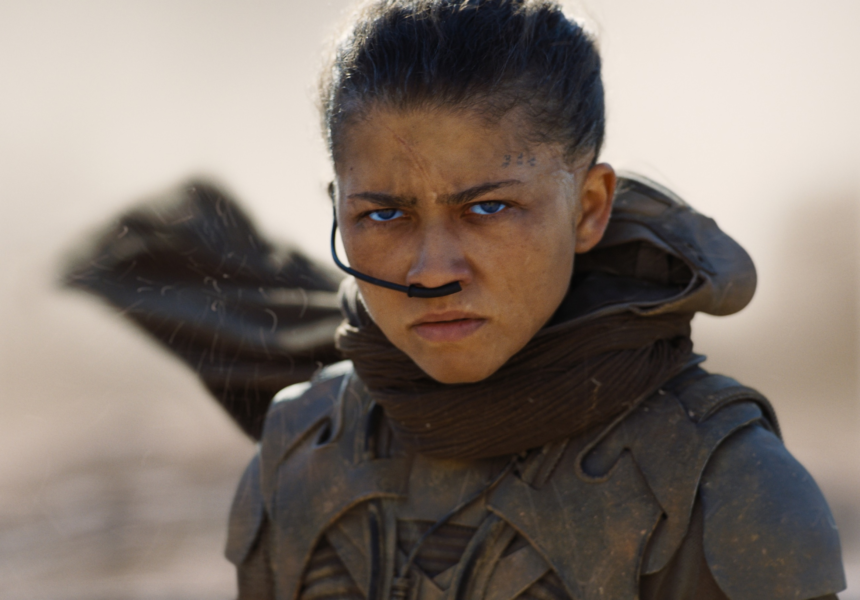
The trailer opens with a quieter but pivotal moment between Paul and Chani (played by Zendaya), discussing the naming of their unborn child.
-
“Ghanima” is suggested for a girl
-
“Leto” for a boy
For those familiar with the source material, this scene carries substantial weight. It confirms the arrival of Paul’s children—twins destined to shape the future of Arrakis and beyond.
Casting details reinforce this generational shift:
-
Ida Brooke as Ghanima
-
Nakoa-Wolf Momoa as Leto II
This signals a broader narrative expansion beyond Paul himself, setting up potential future adaptations.
War Without End: A Galaxy Still in Conflict
Despite Paul’s ascension to power, the teaser makes one thing clear: the war did not end—it evolved.
Led by Stilgar (Javier Bardem), Fremen forces continue to engage in violent campaigns across the galaxy. Control of Arrakis—and its vital spice, melange—remains contested.
A key exchange between Paul and his mother, Lady Jessica (Rebecca Ferguson), underscores the moral divide:
-
Paul seeks justification for his actions
-
Jessica responds bluntly:
“Your father never started a war.”
This moment encapsulates the film’s central tension: Paul is not becoming the leader he once admired—he is becoming something else entirely.
Resurrection and Identity: The Return of Duncan Idaho
A major reveal in the teaser is the return of Duncan Idaho, portrayed by Jason Momoa.
However, this is not the same Duncan who died in the first film.
He returns as Hayt, a “Ghola”—a cloned being reconstructed from the cells of the original. This introduces:
-
Themes of identity and memory
-
Questions about loyalty and manipulation
-
A deeper dive into the genetic engineering practices of the Bene Tleilaxu
This plotline is expected to play a central role in the political and psychological tension surrounding Paul.
Enter Scytale: Robert Pattinson’s Shape-Shifting Antagonist
One of the teaser’s most striking introductions is Scytale, played by Robert Pattinson.
Scytale is described as:
-
A Face Dancer (shape-shifter)
-
A spy aligned with Paul’s enemies
-
A morally ambiguous and potentially charismatic villain
His presence signals a shift toward espionage, conspiracy, and psychological warfare—moving the narrative away from large-scale battles and into more intricate political intrigue.
The Rise of a “God”: Paul’s Dangerous Transformation
Perhaps the most unsettling element of the teaser is Paul’s growing embrace of his mythic status.
The line:
“I’m not afraid to die… but I must not die…”
reflects a paradox at the heart of his character. He is both human and symbol—leader and deity.
The film appears set to explore:
-
The dangers of hero worship
-
The loss of personal identity under mass belief
-
The moral consequences of absolute power
This aligns closely with Frank Herbert’s original intent in Dune Messiah: a critique of charismatic leaders and blind devotion.
Expanding the Universe: New Locations and Factions
While Arrakis remains central, the teaser hints at a broader scope:
-
A more urbanized Arrakeen, reflecting societal transformation
-
Possible visits to other planets like Wallach IX
-
Deeper exploration of factions such as:
-
The Bene Gesserit
-
The Bene Tleilaxu
-
The Spacing Guild
-
These elements suggest a richer political landscape and a more layered narrative structure.
Returning and New Cast: A Conspiracy in Motion
The ensemble cast reflects both continuity and expansion:
Returning:
-
Timothée Chalamet (Paul Atreides)
-
Zendaya (Chani)
-
Florence Pugh (Princess Irulan)
-
Rebecca Ferguson (Lady Jessica)
-
Javier Bardem (Stilgar)
-
Josh Brolin (Gurney Halleck)
New Additions:
-
Robert Pattinson (Scytale)
-
Anya Taylor-Joy (Alia Atreides)
The inclusion of Alia, now fully realized as a character, introduces another layer of unpredictability, especially given her complex role in the source material.
Release Date and Industry Context
Dune: Part Three is scheduled for release on December 18, 2026—the same day as Avengers: Doomsday. This sets up a potential box office showdown that could dominate global cinema discourse.
Internally dubbed “Dunesday” by some involved, the simultaneous release could mirror past cultural phenomena where major films amplified each other’s visibility.
Conclusion: A Trilogy That Ends by Questioning Its Own Hero
The Dune: Part Three teaser positions the film not as a triumphant finale, but as a critical examination of everything the story has built so far.
Where earlier chapters explored destiny and revolution, this final installment appears focused on:
-
Consequence
-
Disillusionment
-
The burden of absolute power
If the teaser is any indication, Villeneuve is not interested in delivering a conventional ending. Instead, he is closing the trilogy by challenging the very idea of a hero.